
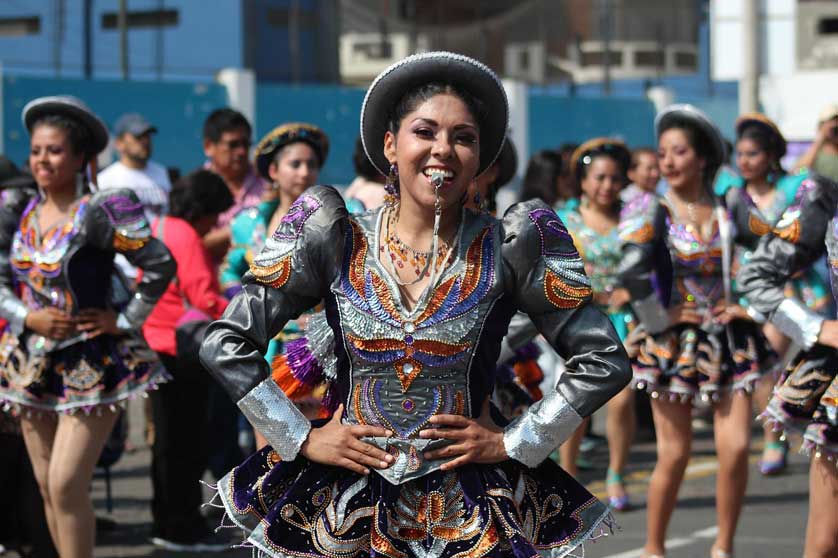
Lima: City of Kings: Peru's captivating capital emerges from the shadows
Daniel Allen
Lima History
Founded by Spanish conquistador Francisco Pizarro in 1535, Peruvian capital Lima was once known as "the City of Kings". While this coastal metropolis has long been shunned by overseas visitors, drawn to the rich archaeological heritage and outstanding natural beauty of the Peruvian hinterland, a culinary boom and ongoing architectural restoration mean this regal seat of power is now attracting the crowds once again.
Comprising 43 districts and home to nearly 9 million inhabitants, Lima is a study in contrasts, with chic seaside neighbourhoods juxtaposing gritty shantytowns that cling to barren hillsides. It is one of the world's few mega-capitals that can claim a golf course in the middle of the financial district, and where executives can go surfing before high-powered breakfast meetings. Although it's built in a desert - Cairo is the only other metropolis drier than Lima - it's known as the "Garden City", and is home to one of world's largest fountain parks.
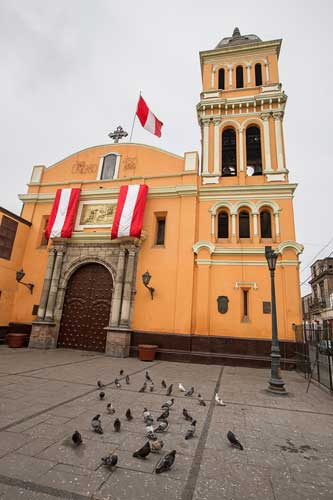
Lima's physical atmosphere is softened between the months of May and October by the garua, which is a fine mist that cloaks the city from dawn to dusk. Under its blanket, inhabitants meet at the penas (bars offering folk and Creole music), shop at al fresco markets, and dine at the city's celebrated restaurants. Several museums display and preserve Peru's golden past, most notably the internationally famed Museo Nacional de Antropologia y Arqueologia (National Museum of Anthropology and Archaeology).
The oldest city in the Americas, Lima has the continent's best cuisine and a multicultural vibe. It boasts stunning architecture from the past five centuries. As new money pours into regeneration and infrastructure - including conservation projects in the UNESCO-listed historic centre - it really does seem as if Lima's time has come again.

Lima Attractions
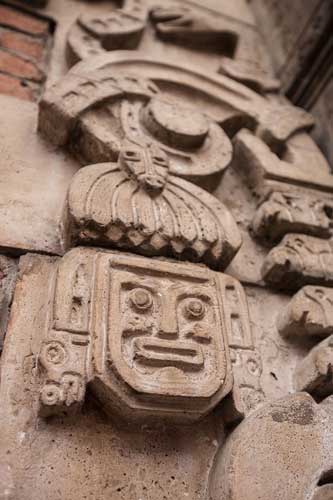
With a long and colourful history, Lima is one of the most fascinating cities in South America. Best explored on foot, leave your car behind to fully appreciate its architectural treasures. Across the urban landscape, a mish-mash of ancient pre-Columbian temples, colonial churches and mansions, abandoned haciendas, Republican houses, early twentieth century buildings and modern villas give this vibrant city an astonishing diversity.
Lima Walks is a recently launched initiative of Ronald Elward, a Dutchman who has lived and worked in the Peruvian capital since 2008. His tours, for groups of up to 10 people, offer a captivating insight into the architecture and history of the city, and include visits to local markets, coffee and chocolate tasting, and tips on dining and shopping.


"Lima really is South America's best kept secret," says Elward. "While a lot of limeños (inhabitants of Lima) don't see their city as a place to explore on foot, it is home to so many compelling historic landmarks. One of the best places to go for a taste of the past is the Monastery of San Francisco. Built in the 17th century, the stunning building is the perfect example of Spanish architecture."
To see the best of the city's eclectic architecture - including lovely colonial mansions with ornate balconies - catch a cab to the Plaza Mayor or Plaza San Martín and walk down Calles Ucayali, Conde de Superunda, Huancavelica or Jiron de la Union. The Cathedral (La Catedral) is a must see attraction; originally constructed in 1555 this central landmark still stands even after suffering earthquake damage twice in its history.

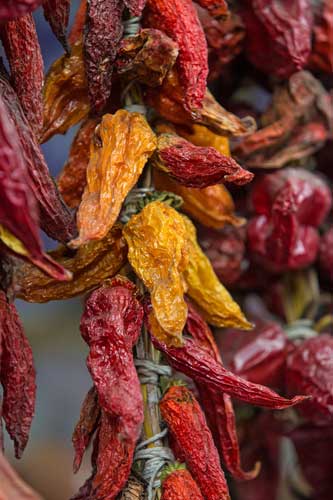
For a spot of retail therapy eager shoppers should make a beeline for the Indian Market in Lima's Miraflores neighbourhood. This bazaar-style area boasts cultural and modern souvenirs, as well as a cornucopia of products made from llama and alpaca wool. While some shop owners stand by their price, many allow some haggling.
Food Glorious Food
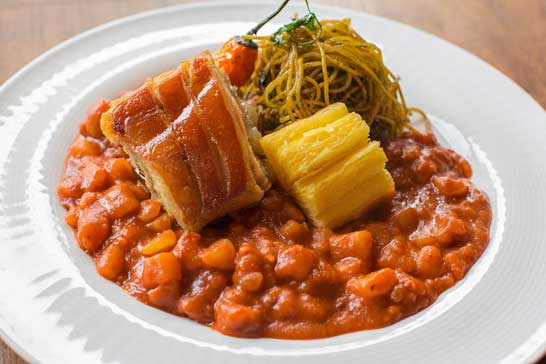
If old Lima is well endowed with history and architecture, then new Lima is so rich gastronomically that it has now become the Paris of Latin America in the culinary stakes. Today many visitors travel to the Peruvian capital simply para la cocina: for the food.
For many years, local Lima fare used to mean roast guinea pig or other, equally unappetizing dishes. The idea of coming here specifically to eat elicited bafflement, if not derision. Based on a booming economy, however, times are rapidly changing. The idea of going out for a Peruvian may not have caught on in Europe or America just yet, but the South American nation is now enjoying a gastronomic boom that is putting it on the A-list of global cuisine.
South America has long known about Peruvian food, but only in recent years has the rest of the world begun to catch on. In large measure this is due to the efforts of Gastón Acurio, a Peruvian now in his late 30s. With his wife, Astrid, they founded Astrid y Gastón, which has developed into one of Lima's most famous restaurants.
Peru's very own celebrity chef, Acurio is turning cooking into a national obsession. As well as having a TV show and numerous cookbooks to his name, the Lima native has recently set up a school for disadvantaged young apprentices in Pachacutec, a sprawling shantytown on a fog-covered hill 30 miles north of Lima.

"Acurio's food is an artful blend of traditional Peruvian dishes and contemporary preparation techniques," explains Lima-based food blogger Analia Arrata. "For generations, Peruvian food has been a fusion of all the cuisines developed here or brought from elsewhere: Spanish, Chinese, Japanese, Caribbean, Italian, African. Today, food has become as important to us as soccer is in Brazil."
"Peru gave the world the potato," she continues. "It grows here in thousands of varieties and in more colours than you can count. The potato remains essential to Peruvian cuisine, most notably in causa, a concoction of potato mashed in lime juice and the fiery indigenous pepper aji, and filled or topped with everything from crab to avocado."
As a coastal nation, seafood lies at the heart of Peruvian cookery. It is from the Pacific that Peru's two greatest dishes come. These are ceviche (or cebiche) and tiradito. The former is fresh, raw fish, often sole, cut into chunks and marinated in lime juice; the latter is fresh, completely raw sole or a native fish called corvina, thinly sliced and covered with one or more of Peru's innumerable sauces, many based in aji, or another hot Peruvian pepper, rocoto.
Lima's greatest concentration of eateries can be found in the neighbourhoods of Miraflores, Barranco and an Isidro, while lovers of the Peruvian twist on Chinese food often head for restaurants known as chifas in Chinatown, in the old centre of the city.
"The concentration of fine restaurants in Miraflores is nothing short of remarkable," says Analia Arrata. "Add to this the fact that Miraflores has many good hotels and shopping districts, is clean and safe, and offers breathtaking views along its three-mile malecon (oceanfront avenue), and it comes down to this: Miraflores is the perfect place for the traveller to discover and savour Peruvian food."

Grape Expectations
Think of South American wine and Chile and Argentina are the two countries that spring to mind; few people realize that Peru has been making wine since the Spanish conquistadores brought grape vines to cultivate in the 17th century. Yet today, with increasing investment, knowledge and consumption, Peruvian wine is on the up.
The centre of Peruvian wine culture is Ica, about a four hour drive south of Lima, and makes the perfect place to take a weekend break away from the capital. This is the area where wine grapes were first introduced and many smaller wineries still make use of ancient techniques to produce wines. The province of Ica is known as an area of sand, sea and oases. Despite its hot and dry climate, Ica is actually a perfect place to grow wine grapes. The fields are thoroughly irrigated with water from the Andes and virtually any crop in the world can grow here. Peru's best bodegas are located here.

Ica
In some ways, Ica is not just the cradle of Peru's wine culture, but of Peru as a whole. Saints and medicine men are a part of everyday life, and this is also where the best pisco brandy is distilled. Pisco has attained a certain degree of world fame and is considered to be Peru's national drink. Indeed, it would be hard to find a Peruvian winery that doesn't make Pisco alongside their wine.
Ica's Viñas Queirolo Hotel is the first and only hotel in Peru set amidst an exceptional winery (Santiago Queirolo). Indeed, there's no better place in the country from which to experience Peru's wine and pisco industry than this charming bodega-based hacienda. Surrounded by verdant vineyards, this stylish and recently-completed property fuses the bodega's historic atmosphere with modern, classy decor and top-rate amenities.
The framework of the Vinas Queirolo is comprised of more than 400 hectares of vineyards, set at the foot of the first spurs of the Cordillera of the Andes. The soil and climate here are perfect for cultivating the vines with which Santiago Queirolo's excellent Intipalka wines. The Republican-style hotel boasts a range of modern amenities - there are vineyard and wine introduction tours, a large pool, and the hotel restaurant offers some exquisite local cuisine.

Spirit of the Andes - Pisco
Though many traditional wines are made in Peru, a large amount of the industry actually consists of pisco production. Pisco is a distilled spirit, or brandy, made from grapes. Back in the 1500s the Spaniards brought grapes to the area from Europe, but in the seventeenth century the King of Spain banned wine entirely, which forced the locals to come up with another way of making alcohol from the grapes.
There are now over 600 different pisco makers in Peru. The pisco production process is similar to the wine making process, except instead of letting the grapes ferment for long periods of time in oak barrels, the pisco ferments for only seven to 10 days in stainless steel barrels. It is then distilled through copper alembics.
The national cocktail of Peru (also claimed by neighbouring Chile) is the pisco sour, a distinctive concoction of pisco, lime juice, egg whites and syrup. It is served up in bars, restaurants and bodegas across Peru. The egg white gives this tangy drink a smooth, full body, and it is particularly refreshing on a hot day.
The most famous of all pisco cocktails was created by an American, Victor V. Morris. A railroad man, he moved to Peru to work on new rail lines. In 1916, he left trains and moved to Lima to open the Morris Bar. Morris had a knack as a barman and invented a number of drinks using pisco. American expatriates and travelling businessmen flocked to his bar to speak English and imbibe great cocktails, which were not widely available in Peru at the time. Their favourite was his "pisco sour".
The recipe was so popular San Francisco bartenders borrowed it and began serving it in the United States. From there the recipe spread. Even after Prohibition made pisco scarce in America, the buzz about the drink continued and the recipe was published in Cocktail and Wine Digest (1946). It has been the most famous pisco cocktail ever since.
One of the best places to witness pisco production, and sample pisco sours, is at Ica's Hacienda La Caravedo, which produces a spirit called Pisco Porton. Daily tastings, tours and Peruvian horse rides are all offered here for free.
Dating back to 1684, the hacienda is home to the oldest working distillery in the Americas, which keeps alive centuries-old traditional pisco making methods without the use of electricity or modern machinery. For example, a large wooden lagar (press) does the work of pressing the grapes, and gravity fed channels move the pisco from one step of the pisco making process to the next. The gentle touch this gravity fed system ensures the quality and smoothness of the final spirit.
The Ruta de Pisco ("pisco route") is a very new concept, launched in August last year by Peru's Ministry of Foreign Trade and Tourism. The route of pisco takes in seven pisco distilleries in Ica and Chincha provinces, including La Caravedo (more details available on the Peruvian Tourism Board website: http://visitperu.com).
Lost city
Without doubt the country's pre-eminent and most famous attraction, the Inca site of Machu Picchu is Peru's equivalent of the Great Wall of China. No other South American archaeological site comes close when it comes to visitor numbers and broad appeal (coach tourists mingle with backpackers and hardcore hikers at the ruin every day of the year). Only Sacsayhuamán in Cusco - which is usually part of a Machu Picchu itinerary - is comparable for sheer scale and architectural audacity.
But with a bit of careful planning and the right approach, many find Machu Picchu as enchanting and engaging as any other historical structure on the planet. The draw of the site (which means "old mountain" in the Quechua language) is obvious: a 550-year old citadel built by the most advanced - and in Peru the very last - pre-Columbian society in the spectacular setting of a saddle between two forest-clad Andean peaks that has been preserved enough to be recognisable as a city.

Machu Picchu
Machu Picchu is high: 7,973ft above sea level. It is large: the ruins are the size of a town, and combined with adjoining forest and wilderness park, cover more than 116 square miles. It is also mysterious: we know its functions were partly residential and partly religious, but historians and archaeologists are still guessing about its cosmic positioning and academic importance to the Inca civilization.
Machu Picchu is set in humid subtropical forests, providing a protected habitat for ferns and palms and several endangered species, notably the spectacled bear. Add in swirling clouds, llamas grazing on the terraces and the option to arrive following a hike on mountain trails or a train trip through the valley of the Urubamba River (also know as the "Sacred Valley"), and you have a memorable trip that can last anything from two days to two weeks.
Cusco
Gateway to Machu Picchu, Cusco is also well worth a couple of days' exploration. Nestling majestically in the belly of a highland valley and fed by two rivers, the city's layout was designed by the Incas in the form of a puma. Many of Cusco's finest Inca architectural treasures were so masterfully constructed out of local stone that they are still in great shape today, and the city is ripe for exploration: one minute you're walking down a shadowy, stone-walled alley, the next you burst onto a plaza full of brightly dressed dancers from the countryside, joining in what, at times, seems like the endless carnival and religious festival celebrations for which Cusco is famous.
Nearly every site you'll want to visit in Cusco is within walking distance of the main Plaza de Armas, and you can easily cover the main features of each quarter of the city in half a day. You should be able to cover most of Cusco Town in two or three active days, allowing a little extra time for hanging out in the bars and shops en route.
Today Lima has a huge amount to offer the inquisitive visitor. From the best of its colonial neighbourhoods, with their churches, hidden houses and grand buildings, to what you might call the real Peruvian capital - a busy, bustling and cosmopolitan city complete with shops, markets, nightlife and top notch restaurants - this metropolis is packed with treasures old and new. Throw in the fine wines of Ica and awe-inspiring architecture of Machu Picchu and Cusco, and Peru has the power to make any holiday seem like a pleasure cruise fit for a king.
Book a room at the Inkaterra Machu Picchu Pueblo Hotel

Accommodation in Peru
Hotels in Lima Peru - compare and book hotels in Lima Peru.
Hostels & budget hotels in Peru - find affordable, secure, low cost accommodation in all areas throughout Peru.
Guides to Brazil & South America
Bonito - an eco-tourism center in the western Brazilian state of Matto Grosso do Sul.
Pantanal - home to a population of jaguars and the largest continental wetland in the world.
São Paulo architecture - this vast city has some of South America's most striking architecture.
Rio's economy - growth and investment continue to climb ahead of the 2014 World Cup & the 2016 Olympics.
Things to do in São Paulo, the biggest city in size in Brazil, for visiting soccer and travel fans.
The Best of South America - recommended places throughout South America for adventure holidays and eco-retreats: Machu Picchu, Fazenda Barranco Alto, Mashpi Lodge, Mt Cotopaxi, Mount Roraima and the Iguazu Falls.
Map of Brazil - see a map of this huge country showing the main towns and cities.
Estadio Municipal Gerardo Lara Guerrero Caraz
Buy tickets for soccer matches around the world