
Transforming the Beautiful Game in Hong Kong From the Bottom Up. Mark Sutcliffe - Chief Executive of the Hong Kong Football Association
Christopher KL Lau
Hong Kong prides itself on its reputation as an innovative financial and business hub yet scratch under the surface and for all the glitz and glamour that its people exude, it is still a city of contrasting inequalities.
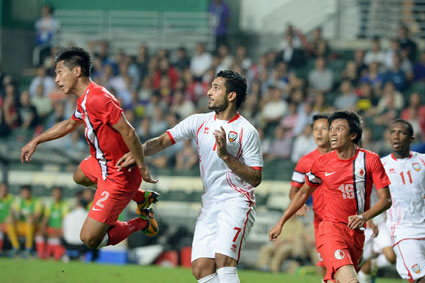
Though, whisper it quietly and what unites many in the city, is the global game, football. Like many other nations, football is woven into the fabric of everyday life in Hong Kong. The game is played, watched and discussed by people from all segments of society and backgrounds. From tycoons to the middle classes to blue collar workers, football is always a topic of conversation.
Many residents may support far flung teams in distant lands but deep down many still hark back to the good old days of local football and long for the national team to be major players on the regional scene. The man who is set to lead Hong Kong back on the road to glory is the Chief Executive of the Hong Kong Football Association, Mark Sutcliffe.
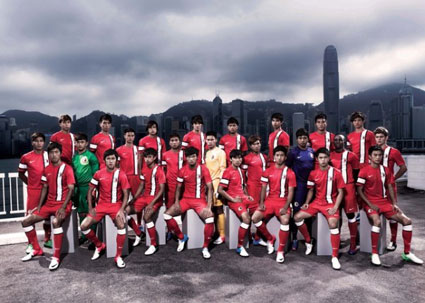
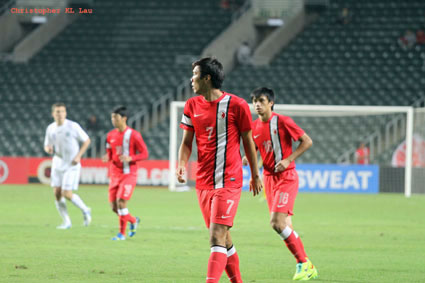
Sutcliffe is faced with the challenging task of overhauling Hong Kong football from the grassroots level right through to the professional leagues. One of goals of the restructuring is to make the national team competitive at international level.
The way forward is in the form of the much vaunted "Project Phoenix" which has thirty ground-breaking proposals to revolutionize the game. These include improving local football as a product for spectators and advertisers, establishing a national football training centre, establishing a new premier league, fostering grassroots and community football development, training up coaches and ultimately improving the national team. Sutcliffe first came into contact with Hong Kong football as a consultant and now will lead the game forward.
Sutcliffe is hugely experienced in the field of sports management. On a global scale, he has acquired a wealth of knowledge and expertise around the world including work on the development of a football centre of excellence in Singapore, the refurbishment of the National Stadium in Kiev (venue for the final of the European Football Championships 2012) and venue planning and legacy strategies related to facilities linked to London 2012. With his impeccable credentials, Hong Kong football fans can be rest assured that the right person is at the helm.
Currently, Sutcliffe and the HKFA are working hard to develop the the professional game as a marketable product in order to draw back the legions of fans who have drifted away from the stadiums.
Many have become disillusioned with local football and the lack of sense of community does little to entice them back. Around the world, fans are tied to their teams through history, family, community and culture. Though Hong Kong does have all the aforementioned factors, it also has huge socio-economic disparities which have caused a 24/7 work culture; time is money and working hours can be long and drawn out.
In the rush of constant urbanization, close knit communities are fragmenting and even football teams offer a minimal sense of community belonging. Another simple reason for dwindling crowds? There are simply too many alternative distractions in Hong Kong.
This decline has seen attendances which once peaked at 30,000 to 40,000 now barely register 2,000 to 3,000 even for the biggest games. Teams like South China and Kitchee have hardcore supporters though not enough to fill the stadiums on a regular basis.
Generations of Hong Kongers frequently hark back to the golden days of the game in the city when Hong Kong could match and defeat current powerhouses such as South Korea and Japan in competitive internationals.
From the fifties up to the early nineties, crowds used to fill the old Hong Kong Stadium to capacity to cheer on their heroes. Now defunct teams, Seiko SA and Bulova, used to draw in thousands against long established teams such as Eastern, South China, Sing Tao and Rangers.
In the seventies and early eighties, players like Arie Haan, Jim Liddell, Willie Henderson and Derek Currie used to play shoulder to shoulder with such Hong Kong stars as Fung Chi Ming and Kwok Ka Ming (who coached Hong Kong to their famous world cup qualifying win over China in 1985).
Later players such as Leslie Santos, Au Wai Lun, Steve Neville, Dale Tempest, Paul Nixon, Ross Greer amongst many others would entertain Hong Kong crowds through the late eighties and early nineties.
Established players such as John Spencer (Chelsea, QPR and Scotland) and Craig Foster (Crystal Palace, Portsmouth, Australia and now media personality) used Hong Kong as a stepping stone onto the bigger stage with the now defunct Lai Sun and Ernest Borel respectively. Players like Neil Webb (Instant Dict) and Frank McAvennie (South China) made fleeting blink and you missed them appearances. Those days are long gone and presently, local fans are practical and realistic in their expectations.
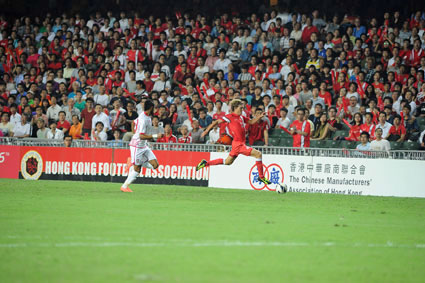
Generational change is possible with nations like Japan in the 90s and South Korea in the 80s launching their own professional leagues with both nations currently reaping the rewards. Chinese football, which has seen a decade of decline, is now on the up and riding high after Guangzhou Evergrande's success in the AFC Champions League.
Hong Kong football is in danger of being left behind unless radical changes are made. The last time Hong Kong qualified for a major tournament was for the 1968 Asian Cup; with the radical proposals of Project Phoenix maybe Hong Kong fans will one day have the chance to cheer for Hong Kong at a major international tournament. Hong Kong football fans may long for days gone but with the leadership of Mark Sutcliffe, a golden future may dawn.
In an exclusive interview, Mark Sutcliffe, Chief Executive of the Hong Kong Football Association, takes time out of his busy schedule to answer a few questions about the state of the game and the HKFA's plans for the future.

1). As a person who came from abroad to help revolutionize the Hong Kong game, how connected are you to local Hong Kong fans? Is there a forum for fans to interact and voice their opinions?
There are a lot of public football forums on the internet that I follow and I have my own blog which I use to keep fans informed about what is going on at the HKFA. I often receive comments on the subjects featured on the blog and it is always useful to receive feedback and ideas. There is always more that can be done but I have tried to make myself as accessible as possible to fans and the media.
2). Back in the seventies and eighties, Hong Kong could match nations like Japan and South Korea while top league matches could attract up to 30,000 people; will these heights ever be reached again? Why has Hong Kong fallen behind its regional rivals?
The average attendance at our 1st Division matches is around 1,000. That statistic just serves to underline how far the top tier of Hong Kong football has sunk since the halcyon days. Getting back to crowds of 30,000 will be difficult to say the least. Many things have changed since the so-called glory days of Hong Kong football not least the fact that you can now watch top teams from Europe on the TV every day. Another important factor is that other Asian countries have caught up and surpassed Hong Kong and it is now much more difficult to compete. The main problem however is that the football 'product' has got steadily worse. The quality of football being played is not as good as it should be and the entertainment value of the experience of going to watch a match is low. Add to that the fact that the environment in which the matches are played is also poor, the pitch and the facilities for spectators, it is no wonder that fans would rather watch EPL games from the comfort of their own homes.
3). You became involved with the local game via the government football development project "Dare to Dream". What was your initial impression of Hong Kong football and its potential? Which areas did you think were in need of improvement? What impressed you?
Yes, I first started to work in Hong Kong football in 2009 but I had been here before in 2005 and 2007 where I had seen first hand the passion of the Hong Kong people for football when I watched Liverpool and Manchester United play here. Once I was immersed in local football while working on the Government's strategy that perception was reinforced. The love of the sport shown by Hong Kong people convinced me that there is huge potential. The main areas for improvement I saw then were the Governance and Management of the sport, the facilities, the professional game, the lack of focus on the National Team and the fact that grassroots football and youth development were so fragmented.
4). Project Phoenix has thirty-three wide ranging recommendations to transform the game from top to bottom. What are the main areas you hope to improve and are the targets realistic?
We have already fully implemented 19 of the 33 recommendations of Project Phoenix and the others are all on-going. The report was sub-titled Develop - Deliver because it was acknowledged that the HKFA needed to transform itself before it could lead the transformation of the sport. The 'develop' phase is virtually complete and we have significantly enhanced the Governance, Management and Operation of the HKFA. Now these foundations are now in place, we are moving into the 'delivery' phase. The priorities haven't changed and we intend to improve systems and structures from the grassroots all the way through to the elite level. The development of better facilities including the provision of a National Training Centre remains critical as does the establishment of a new Premier League. Project Phoenix got off to a slower start than envisaged and some of the targets may need to be revised as a result. They remain relevant and achievable however.
5). How close is Project Phoenix to raising the standard of grassroots football in Hong Kong? How does the HKFA ensure that young talent is nurtured and does not slip through the ranks? How are coaches being developed?
The HKFA Technical Director is developing a new National Football Curriculum which is designed to ensure a consistent style and system of play. This will be incorporated into our Coaching programmes and syllabus. The Curriculum involves a new approach to grassroots football based on small-sided games between the ages of 6 and 12. Football will be introduced in a systematic and consistent way. We are hoping that the Curriculum will be adopted by schools, amateur clubs, commercial soccer schools etc to ensure continuity across Hong Kong. Talent will be identified and nurtured so that those with potential are propelled along well signposted development pathways.
6). Hong Kong is a football mad city yet local game attendances are still relatively low. How does the HKFA plan to attract back your average fair-weather fan to the stadiums?
In the answer to question 2, I alluded to the difficulties in attracting fans back to local football. The Premier League is the key to this and over time we hope that a more professional league will attract better players and coaches and that in turn will bring in more spectators and commercial interest. It is about converting the downward spiral into a virtual circle.
7). Many Hong Kong fans support overseas teams and seek to identify with them. How does the HKFA work to build a greater community feel, support and sense of belonging towards the local club teams?
Our Premier League will be based on a 'home and away' system and we hope that CSR projects and community development will be part of the Clubs raison d'etre. Building a local fan base will be critical to the success of the Clubs.
8). Great things are happening just across the border with Guangzhou Evergrande winning the final of the AFC Champions League. Do you ever cast an envious eye across the border in terms of how teams are developing in the Chinese super league?
Of course! I was at the AFC Champions League final last Saturday which was won by Guangzhou Evergrande and it was an amazing night with a packed stadium and great atmosphere. However you have to bear in mind the fact that the city is much bigger than Hong Kong and there is only one team to support. Not to mention the bank-rolling of the Club.
9). You have global working experience which includes developing a football centre of excellence in Singapore and the refurbishment of the National stadium in Kiev. Have your overseas experiences proven invaluable in Hong Kong?
I think the experience I have gained in other countries has been useful in that it has given me an appreciation of cultural differences. What works in one place doesn't automatically work in another. But equally, it has also shown me what can happen even when at first it looks like change is impossible. I believe that I can look at things strategically and independently as a result of my international experiences.
10). Hong Kong have gotten off to a solid start in their Asian cup qualifying campaign with a decent set of results against Uzbekistan, Vietnam and the UAE. Does this mark a pivotal turning point for the national team?
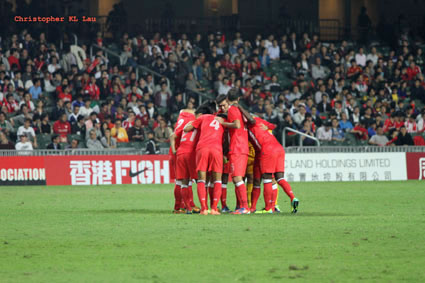
In reality I think it is too early to say. We now have a motivated and experienced coach that can get the best out of a hard-working and passionate team. We also have plans to develop future players from the grassroots up but this will take time. We are moving in the right direction and that is the important thing.

11). Hong Kong has a small population yet nations likes Ireland, Wales, Belgium and the Netherlands, have even smaller figures yet can produce global household names. Is it down to simply access to facilities and youth development?
Facilities are obviously critical but having a footballing culture is equally important. Football needs to be part of a nation's DNA and I don't think that is the case here … yet. Achieving success in international sport is not rocket science. It needs resources, people and systems. We are working on all three.
12). How do you see the state of Hong Kong football ten to fifteen years down the line?
I would like to think that we would have implemented all of the recommendations of Project Phoenix and that that would have resulted in:
- A consistent style of play
- Excellent coaching and coach education
- Accessible and quality facilities
- Development pathways
- A high-performance culture and National Training Centre
- A fully professional league with teams playing in the AFC Champions League
- The national team and academy squads regularly qualifying for and being competitive in regional finals
- More people playing football, more regularly at a higher standard
Related Football Articles
Buy tickets for soccer matches around the world