
Saint Petersburg
Daniel Allen
On 24 February 2022, Russia launched a large-scale military invasion of Ukraine, its neighbor to the southwest, marking an escalation to a conflict that began in 2014 with the Russian annexation of Crimea and the Donbass region.
Bolshevik Beat: Take an anniversary tour of St. Petersburg's revolutionary distractions
It was exactly a hundred years ago that the Russian Empire came to a crashing end, with a Bolshevik-led revolution that led to the establishment of the Soviet state.
In 1917, as a venerable autocratic system gave way to a supposedly classless regime, the centre of events was the sophisticated, distinctly European city of St. Petersburg, perched at the western edge of Russia on a finger of the Baltic Sea.
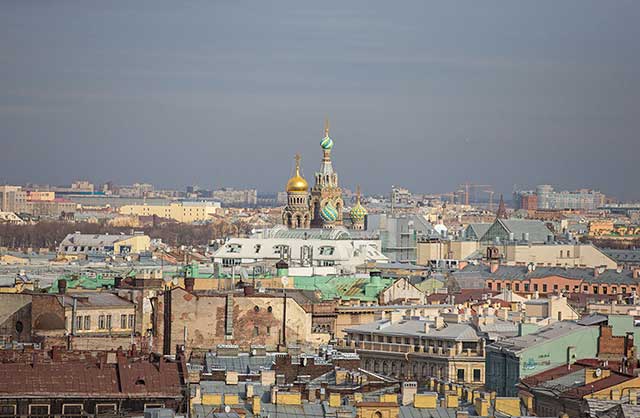
Many will have marveled at the grandeur of the St. Petersburg depicted in the recent television adaptation of Tolstoy's "War and Peace". Indeed, the city's tourist trail today typically involves exploring its imperial past - all fountains and Fabergé eggs, Baroque architecture and Renaissance masterpieces.
But for those interested in more contemporary history, there are plenty of St. Petersburg sights which still embody the political machinations and violent upheaval of early twentieth century Russia.
Aurora
There is perhaps no better place to kick off a revolutionary tour of Russia's second city than the naval cruiser Aurora. Now moored in the River Neva as a free museum and maintained by cadets from the nearby Nakhimov Navy School, it was a blank shot from this impressive ironclad that signaled the beginning of the Russian Revolution.
"On the fateful night of October 25, 1917, a single discharge from the Aurora led workers, soldiers and sailors of St. Petersburg to storm the Winter Palace," says Jonathan van Dijk, a Dutch Russophile who conducts revolutionary tours of the city in a Soviet-era Volga car (http://wowrussiatours.com/en). "They overthrew the Provisional Government, which had only been in power for eight months following the abdication of Tsar Nicholas II."
It was the start of over 70 years of Communist leadership.
Peter and Paul Fortress
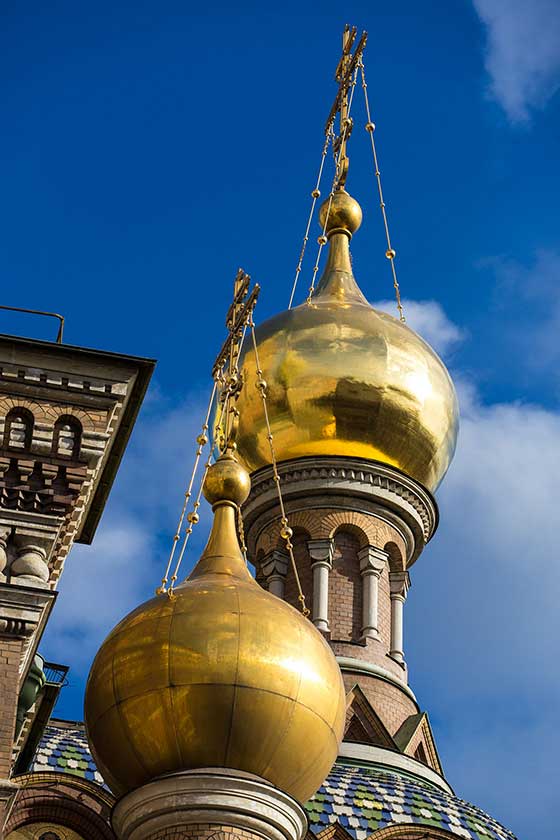
Daria Shishkova giggles as she stumbles across the cobblestoned courtyard of the Peter and Paul Fortress - high heeled boots are hardly the ideal footwear for exploring this iconic St. Petersburg landmark. Above the Russian student the burnished golden spire of the Peter and Paul Cathedral soars into a cloudless sky.
The original citadel of St. Petersburg, the Peter and Paul Fortress was built to Swiss-Italian architect Domenico Trezzini's design from 1706 to 1740. It not only served as a city garrison, but also as a prison for political prisoners. The roll call of those incarcerated here includes such historical luminaries as Leon Trotsky, Maxim Gorky, Fyodor Dostoevsky and Lenin's brother, Alexander Ulyanov.
As the Aurora fired its solitary shot, the cannons of the fortress also began a short bombardment of the Winter Palace.
"At the start of the revolution the fortress garrison quickly declared their allegiance to the Bolsheviks," explains Shishkova. "After the Winter Palace was taken the ministers of the Provisional Government rapidly became the building's new convicts."
In Russian folklore, the Peter and Paul Fortress is depicted as a Dantean place, where armies of prisoners suffered endlessly in squalid, overcrowded cells. Things could hardly be more more different today, with strategically sited battlements offering panoramic views of the Neva and the long line of opulent, pastel-hued mansions on the opposing shore. St. Petersburg's so-called "walruses" - believers in the therapeutic effects of freezing water - use the sandy beach below the fortress to stage icy dips in winter, while sun worshipers gather here in summer to bronze themselves and barbecue shashlik (kebabs).
Many visitors stop in one corner of the fortress courtyard to take photos with a curious statue of Peter the Great.
"Because of its tiny head and enlarged body many locals used to hate this statue," says Shishkova. "But now everyone rubs one of Peter's fingers in the hope of becoming rich. In our new capitalist revolution people have learned to forgive its strangeness."
Winter Palace
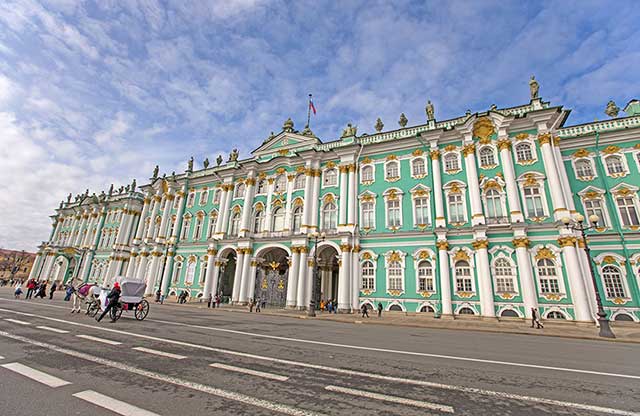
The most memorable depiction of the storming of St. Petersburg's Winter Palace is the scene from Soviet director Sergei Eisenstein's 1927 film "October". An ant-like swarm of sailors run across a deserted Palace Square towards the Tsar's residence, scaling the gates and surging up the sweeping staircase in an irrepressible wave.
"In reality, the Palace assault was a far more clandestine affair," says Jonathan van Dijk. "The sailors and soldiers involved actually crawled across Palace Square as they were scared of being shot."
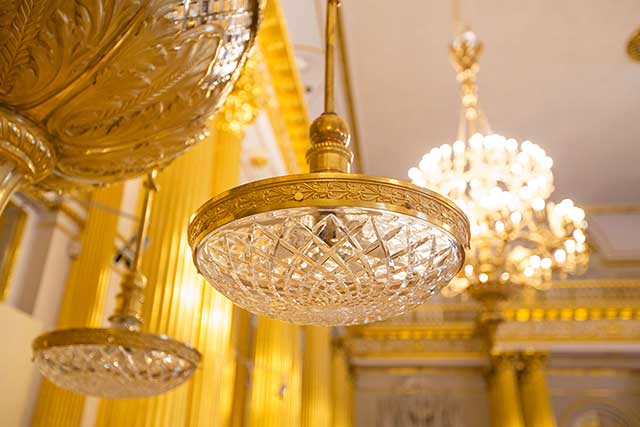
Visitors to the Winter Palace today, a sprawling wedding cake of a building better known as the Hermitage Museum, are wowed by a seemingly never ending succession of gold leaf, chandeliers and priceless works of art. In amongst this maze of ostentatious finery is the modest dining hall where members of the Provisional Government held their final meeting.
"And it was here that the Red Army soldiers surrounded and arrested them," says Jonathan van Dijk. "The hands of the bronze clock on the mantelpiece in this room have stopped at 2.10 a.m. This is the exact time that the Russian Empire was consigned to history."
Elizarov Apartment Museum
As the architect of the Russian Revolution, Vladimir Ilyich Ulyanov, better known as Lenin, left his imprint across much of St. Petersburg. At the Elizarov Apartment Museum on Ulitsa Lenina, visitors can see the place where the Communist leader and his wife lived between April and July 1917. Objects on display here include Lenin's chess set, bed and toothbrush, as well as the wheelchair in which he spent most of his dying days in the early 1920's.
St. Petersburg's fascinating State Museum of Political History was once the home of Mathilde Kschessinska, a prima ballerina with the Imperial Ballet. Her palace was taken over by Lenin and his friends in April 1917, soon after the revolutionary mastermind returned to Russia from Switzerland.
It is here that Lenin's desk has been preserved in a room that served as the office of the Communist Party newspaper, Pravda. Lenin himself often made speeches from the nearby balcony, overlooking Kronverkskiy Prospekt.
Also be sure to check out the square in front of Finlyandsky Rail Station, from where trains now depart daily to Helsinki. It is here that Lenin arrived in St. Petersburg from exile in early 1917, ready to lead the revolution. A giant statue depicts Lenin in mid-speech, exhorting his fellow comrades to rise up and rebel.
St. Petersburg's revolutionary trail even extends to a little retail therapy, with Soviet memorabilia for sale at the "Udelka" flea market on Udelny Prospekt (located just outside Udelnaya subway station), a stone's throw from Lenin's last safe house.
Hunt through the bric-a-brac for Soviet badges, pins and board games, and Christmas tree decorations in the shape of Russia's revolutionary, five-pointed star. You'll need to look hard - a century on from the great events of October 1917, and a year before the World Cup kicks off in Russia in June 2018, the country's revolutionary spirit remains a sought after commodity.
Take a Pass
With the recent launch of PassCity (https://passcity.ru/en), which includes access to sights such as the State Museum of Political History, the Winter Palace and various attractions at the Peter and Paul Fortress, it's never been easier to follow St. Petersburg's revolutionary trail. With Android and iOS-based apps offering free audio guides in English, the pass can be ordered online and delivered to your hotel.
Map of Russia - shows the venue cities of the 2018 World Cup.
Nevsky Prospekt - Saint Petersburg's most famous street.
St Petersburg Contemporary Art Scene - modern art in Saint Petersburg.
Saint Petersburg In Winter - see the best of Russia's second city in the snow.
Buy tickets for soccer matches around the world