
UK Stadiums: Ewood Park, Blackburn, England
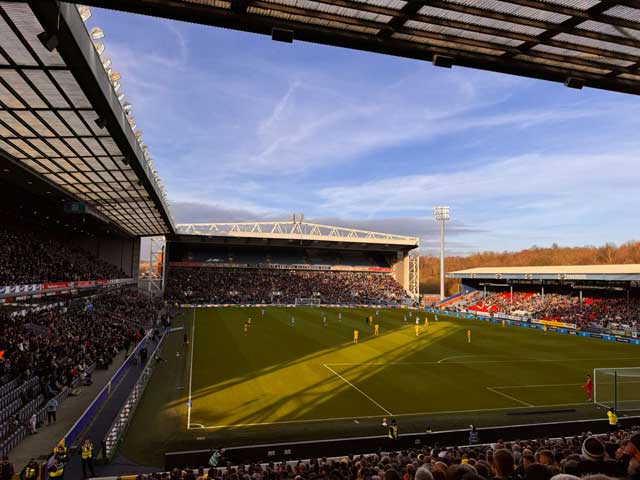
Ewood Park in Blackburn, Lancashire, England, is an all-seater stadium with a capacity of 31,367. It is the home of Blackburn Rovers Football Club. It has been the venue for Blackburn games since 1890, making it one of the oldest stadiums in the country. According to the history books, four matches were played at the Ewood Park site in 1881, but as it was no more than a field, some may disagree that it should be registered as official.
Ewood Park officially opened in April 1882 and staged football, athletics and some form of greyhound racing during the 1880s. Rovers returned to the ground in 1890 for an encounter against Accrington F.C. (not to be confused with Accrington Stanley). The Blackburn management team came under heavy criticism when part of a stand collapsed in 1893 in a match with Everton.
The Nuttall Street Stand, designed by Scottish architect Archibald Leitch, was constructed in 1904. Leitch is a significant figure in British football stadia, designing multiple arenas, including Old Trafford, Hampden Park and Celtic Park. His most famous contribution is his design of the Bill Struth Main Stand at Ibrox.
The 1913 Incident
Between 1912 and 1914, suffragettes in the United Kingdom and Ireland mobilized for a bombing and arson campaign in support of women's suffrage (the right to vote). They targeted heavy infrastructure, especially government-related buildings and churches. Emmeline Pankhurst, a political activist from Moss Side in Manchester, is seen as a key figure of the movement. In November 1913, Ewood Park was targeted, but their efforts were foiled. A similar incident occurred at Deepdale, whilst Arsenal's then-stadium in South London was successfully destroyed.
The Stands
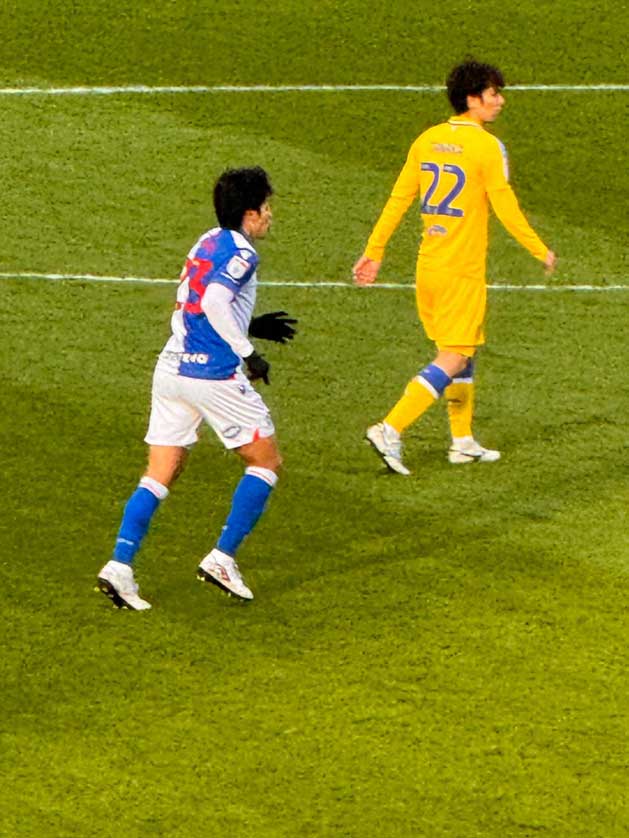
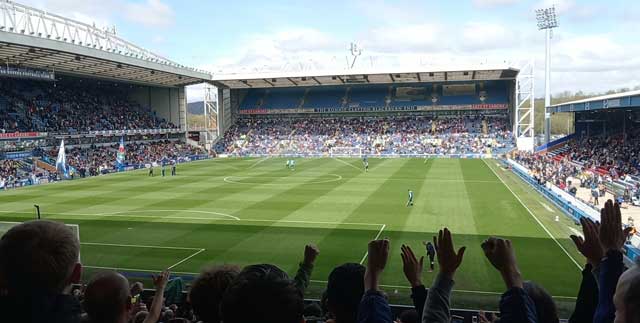
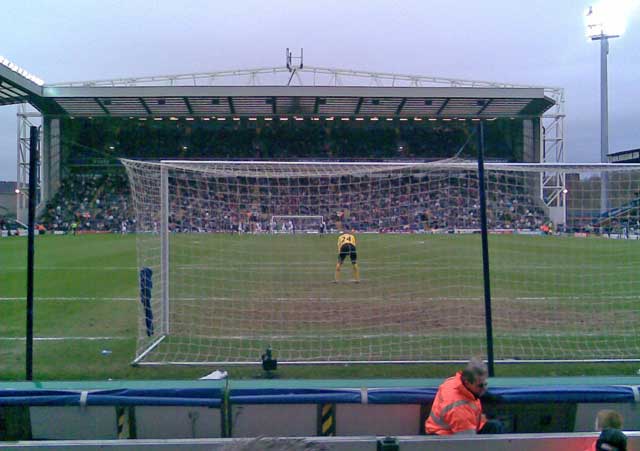
Blackburn's modern history cannot be told without the generosity of Jack Walker, a local fan who made his fortune in the steel industry. He had taken control of the club by the end of 1990-91 and refurbished Ewood Park into a modern all-seater. The four stands of the stadium are - The Jack Walker Stand, The Ronnie Clayton Blackburn End, The RFS Riverside Stand and The Bryan Douglas Darwen End.
The Jack Walker Stand is named after Rovers' favourite owner. It was rebuilt during the redevelopment project of the early 90s. To make way for the stand, the old Nuttall Street Stand was demolished along with the nearby houses. It has changing rooms and conference rooms. The Premier Suite and Jack's Kitchen will provide exceptional hospitality for VIP customers. The club mascot Rover the Dog likes to loiter at the lower tier of the stand. Outside the stand, a popular food truck serves up slow-smoked brisket burgers.
The Ronnie Clayton Blackburn End, often referred to as the Blackburn End Stand, is where most of the vocal supporters tend to gather. A memorial garden and a statue of Jack Walker entitled "Rovers' Greatest Supporter" are located. The Roverstore club shop is situated here. It is named in honour of Ronnie Clayton, a player who made close to 600 club appearances and served as a tour guide of the ground for many years. The Bob Crompton Suite provides corporate services. Ninety minutes before kick-off, a sensory room opens in the Strikers Lounge. No adults are allowed in this room unless accompanied by a child.
By the 1980s, the old Riverside Stand was a crumbling edifice, as it failed a safety check in the wake of the 1985 Bradford City stadium fire. In 1988, a new roof and terracing were provided by a local steel firm, Walkersteel, facilitated by Walker, who was yet to be club owner. Regulatory Finance Solutions is the current sponsor of the stand. It is the sole single-tier stand at Ewood Park, and it is also the oldest. Plans have been made since the turn of the millennium to expand the stand and increase the capacity to 40,000, but nothing has so far materialized.
The Darwen End is named after the market town of Darwen, located to the south of Blackburn. Behind the stand is the Blackburn Rovers Indoor Centre, where community coaching and soccer schools are often held. The new two-tiered Blackburn and Darwen End stands were opened in 1994 with car parks behind both stands. To accommodate the car parks, Fernhurst Mill was demolished along with several terraced houses in Nuttall Street. The Darwen End is now the Bryan Douglas Darwen End, named after a club legend renowned for his dominance on the wings.
Stadium Miscellaneous
The record attendance at Ewood Park is 62,522 in an FA Cup tie with Bolton Wanderers. Floodlights were installed in 1958 and made their debut in a friendly against Werder Bremen.
Rovers have adopted "Arte Et Labore" as their club motto. It translates to "by skill and by labour" and is visible on the club logo. The motto was taken from the town slogan, which has remained unchanged since 1852.
Club History
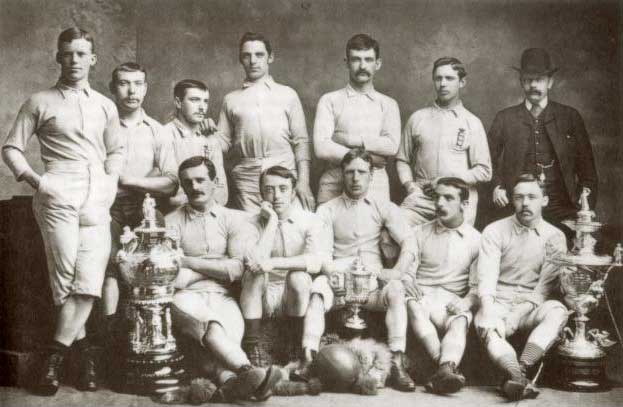
At the Leger Hotel, Blackburn, two old-boys of Shrewsbury School were discussing the formation of a football club. Their names were John Lewis, who refereed the gold medal football match in the 1920 Olympic Games in Antwerp and Arthur Constantine. Blackburn Rovers were formed on 5 November 1875. A month later, they participated in their first game in Church, a large village in Lancashire.
The Riversiders, as they are sometimes referred to, featured in the FA Cup for the first time in 1879 against Tyne Association Football Club.
Rovers qualified for their first FA Cup final in 1882 and faced Old Etonians at the Kennington Oval in front of a crowd of 6,500. The match is noteworthy for being the last time a Southern "gentleman amateur" team claimed the trophy. Other famous amateur gentleman teams included Royal Engineers, Oxford University and Wanderers FC.
Blackburn didn't need to wait long for FA Cup glory, however, as they defeated Scottish side Queen's Park in the final in 1884 and 1885. Due to these two games, Blackburn essentially denied a Scottish team ever laying their hands on the FA Cup trophy. Rovers completed a three-peat in 1886 by getting the better of West Bromwich Albion after a replay.
When reviewing the history books, the name of Blackburn Olympic FC appears as 1883 winners, but their history only lasted eleven years. Safe to say Rovers escaped a similar fate.
Rovers were one of the original twelve members of the Football League in 1888-89. It was the famous campaign where Preston North End were crowned champions unbeaten. Blackburn ended in fourth place.
The club enjoyed more FA Cup success for two seasons running from 1889-90. Blackburn eviscerated The Wednesday (now called Sheffield Wednesday) 6-1 in the 1890 final. William Townley helped himself to three goals, the first time the FA Cup final recorded a hat-trick. Wednesday could have blamed on external circumstances, as captain Henry Winterbottom was unable for selection due to an injury he sustained from their semi-final tie with Grimsby Town.
Townley was again on the scoresheet in the 1891 Final, contributing to Blackburn overcoming Notts County.
Rovers were a solid First Division outfit until relegation in the 1935-36 season. Their relegation, along with Aston Villa's, meant that no clubs from the original Football League remained without having experienced life in the second division.
Rovers qualified for the 1960 FA Cup final against Wolverhampton Wanderers, but the occasion was calamitous. The 0-3 defeat is largely attributed to the injury of full-back Dave Whelan, who would later become the much-loved owner of Wigan Athletic. As there were no substitutions in that era, Blackburn had to contest the whole of the second half a man short. The media dubbed the match "The Dustbin Final", as there was a sense that it did not live up to its billing. The occasion ended on a sour note, as the incensed Blackburn fans hurled match programmes, paper cups and general debris toward the Wolves players during their celebrations.
There was plenty of hope that the glory days were returning to Ewood Park in 1963-64 when a remarkable 8-2 win over West Ham at Upton Park made them top the First Division on Boxing Day. But they failed to sustain momentum in the second half of the campaign, slipping to seventh in the standings.
Hitting the Jack Walker Jackpot
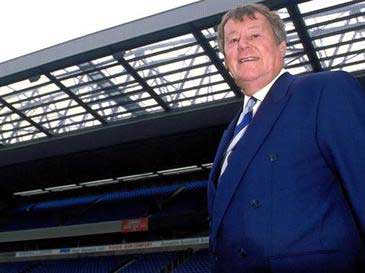
From 1966-67, Blackburn became a stable second-tier outfit with intermittent periods in the third division. That long spell of mediocrity was to change drastically due to one man, Jack Walker.
A business magnate and Blackburn through and through, Walker did not have much formal education, leaving school at age 13. Walker then worked as a sheet metal employee and served for the Royal Electrical and Mechanical Engineers as a conscripted craftsman. By 1990, steel processing company Walkersteel had become so profitable that they had 3,400 workers at 50 sites. Though it may be typical for powerful businessmen to hold onto their companies, Walker had the foresight to sell the business to British Steel Corporation (BSC) for a reported £360m in 1989. This was the biggest sale of a British private company at the time. For the BSC, however, the purchase has since been evaluated as somewhat unsuccessful, as the early 1990s recession caused a slump in the steel market.
Walker took full charge of Rovers in January 1991, but it is said he contributed monetarily from the 1987-88 season onwards. Despite being an unfashionable Division Two team, Blackburn were able to attract Ossie Ardiles and Steve Archibald, but neither made an impact, with Ardiles particularly disappointing. From 1987-88, Rovers qualified for the promotion playoffs for three seasons running by finishing fifth each time. Blackburn were unlucky to face first tier Chelsea in the playoffs in 1988, as they were well beaten 1-6 on aggregate.
1988-89 was their best effort, but a 3-1 advantage from the first leg in the final against Crystal Palace was overturned at Selhurst Park after extra time. Ian Wright was the hero on the night, scoring two goals.
The following campaign ended in more disappointment, this time losing out to Swindon Town.
Jack Walker's first season, 1990-91, ended in an unremarkable 19th place. But Blackburn were to be taken much more seriously in 1991-92 when the club lured Sir Kenny Dalglish. Dalglish was a Liverpool and Scotland superstar as a player, but also a successful and mostly underrated coach. He had brought domestic glory to Merseyside with three league titles and two FA Cups. "King Kenny", as he is called, walked away from Liverpool, citing stress following the Hillsborough disaster. So the appointment of Dalglish was a coup for a second-division Blackburn team and signalled a changing landscape within the English game. Blackburn just about squeezed into the playoffs, taking on Leicester City in the final. A Mike Newell penalty on the cusp of half-time was enough for Blackburn to slide into the first edition of the rebranded Premier League.
Blackburn made headlines right off the bat during the pre-season of 1992-93. Alan Shearer was signed for a British record fee and was deadly in front of goal, scoring 16 goals despite tearing his anterior cruciate ligament in December. Blackburn acquired Henning Berg, Graeme Le Saux and Patrik Andersson mid-season, with Berg and Le Saux becoming crucial in their later success. Blackburn finished fourth, but they were not rewarded with European football.
Blackburn went toe-to-toe with Manchester United for the title in 1993-94 but eventually lost out to The Red Devils. A 2-0 home win over Man United in early April looked consequential, but one win from their last five matches allowed United to clinch the trophy with an eight-point cushion. Rovers secured participation in a UEFA competition for the first time though, in the form of the UEFA Cup. There was excitement in the post-season when Blackburn beat out Arsenal and Man United for the race of the signature of Chris Sutton, joining the club for a record English fee.
1994-95 Season
1994-95 is a season etched in Premier League folklore. There was early failure in the UEFA Cup as Blackburn were eliminated by Swedish outsiders Trelleborg in the first round. That said, Blackburn undoubtedly had a strong core, with Jason Wilcox and Stuart Ripley feeding quality crosses to Shearer and Sutton. Captain Tim Sherwood and Mark Atkins/David Batty provided flair and solidity, while Ian Pearce and Colin Hendry gave nothing away in defence.
Despite losing both of their matches with Man United, one of them being a classic 90s Premier League encounter ending in a 2-4 home defeat, Rovers had a two-point advantage heading into the final day. Man United manager Sir Alex Ferguson would bemoan the loss of Eric Cantona mid-season for their loss of form, when the Frenchman was handed a lengthy ban following his outburst and kung-fu kick on a belligerent Crystal Palace supporter in January 1995.
The permutations were crystal clear on the final day, with a Rovers win at Anfield securing the title whatever the outcome of West Ham versus Man United at Upton Park. Jamie Redknapp's exquisite free-kick right at the end gave Liverpool all three points. But, due to Man United's draw, Rovers supporters celebrated alongside the Kopites in one of the most bizarre post-match atmospheres the league has ever seen. Although it is not rated as the greatest underdog title charge of the English game because of Walker's backing, there is no doubt it is the second most remarkable Premier League win after Leicester City in 2015-16.
Dalglish made a sudden switch to become director of football. To fill King Kenny's shoes, Blackburn promoted the assistant manager Ray Harford. Their title defence was sluggish, losing to lowly Coventry City 0-5 at Highfield Road on matchday 17. There wasn't much to shout about for the supporters, finishing seventh, except for yet another magnificent campaign for Shearer, recording 37 goals in all competitions. On the continental stage, Blackburn were bitterly disappointing, seeing elimination in a group containing Rosenborg and Legia Warszawa, neither of whom were powerhouses in the Champions League era. Their struggles were symbolized in their 0-3 defeat to Spartak Moscow at the Luzhniki Stadium on a frigid night, where Le Saux and Batty had an altercation during the match. At the end of the campaign, Newcastle United splashed the cash, a world record £15 million to be precise, to lure the Geordie back to his hometown club. It signalled the denouement of a superb period for Rovers.
Post-Walker
Blackburn were relegated to the second tier in 1998-99 but returned to the top flight after two seasons.
Jack Walker would pass away in August 2000, but the club was in a steady financial position as it was placed in a family trust structure, with the trust making a remittance of about £3 million every year.
2002 League Cup Final
Blackburn bought reinforcements in their front line for 2001-02, acquiring Andy Cole from Manchester United for £8million. It was a season resulting in silverware, as they defeated Tottenham Hotspur in the 2002 League Cup final. On the route to the final, Blackburn dismantled Arsenal 4-0 at the quarter-final stage, Matt Jansen proving unstoppable by scoring a hat-trick. In the final of what was then named the Worthington Cup, Blackburn took the lead through Jansen, who grabbed his sixth tournament goal. Spurs equalized less than ten minutes later when Christian Ziege tapped in after a well-constructed move. Rovers clinched the trophy at the Millennium Stadium in Cardiff as Cole took advantage of some slack Spurs defending in the 68th minute. The Riversiders have not won a major trophy since.
Due to their League Cup win, Blackburn qualified for the 2002/03 UEFA Cup. Rovers' first opposition was against CSKA Sofia from Bulgaria. CSKA were an awkward adversary, as they would win their league that season. After a lowkey 1-1 draw at Ewood Park, Blackburn were in dreamland at the Stadion Balgarska Armia as they led 3-0 with half an hour remaining. But CSKA and Emil Gargorov gave the Lancashire side an almighty scare, levelling the scoreline to 3-3. Rovers advanced by the virtue of away goals.
Blackburn supporters were hoping for a glamorous away day but had to contend with a trip to Celtic Park to face The Bhoys north of the UK border in the first leg. Blackburn looked the more likely to open the scoring, but Celtic legend Henrik Larsson deflated their optimism with a late strike. Rovers were disappointing in the return match and were eliminated 0-3 on aggregate. Larsson and Chris Sutton (now at Celtic) unsurprisingly produced the goals. Celtic would ultimately reach the final but missed out on the trophy by losing to FC Porto at the Estadio La Cartuja in Seville.
On the final day of the 2002/03 Premier League season, Blackburn needed a favour from Manchester United to do a job on Everton at Goodison Park, whilst Rovers themselves required a win at White Hart Lane to secure a top-six spot and another season in Europe. Blackburn wiped the floor with the Spurs team, who had nothing to play for by a 4-0 scoreline. As for the match at Everton, Ruud van Nistelrooy's winner guaranteed Blackburn's European adventure next season at The Toffees' expense.
Graeme Souness
Graeme Souness was entering into his fourth full season in 2003-04 but it would prove to be a challenging period. The European dream that they had worked so hard to earn the previous season was dashed in round one when they were outclassed by Turkish club Gençlerbirliği. After a substandard 1-3 first-leg loss at the Ankara 19 Mayıs Stadium, Blackburn could only draw in the return match. In domestic cup competitions, Rovers also failed to win a single tie. It is said that the departures of Damien Duff and David Dunn were the biggest reason for their sudden drop in form. Rovers ensured survival in the top flight by claiming four consecutive wins in the latter part of the season.
Mark Hughes
There were drastic changes at Ewood Park in September 2004 as Souness replaced Sir Bobby Robson as head coach at Newcastle United. Mark Hughes, who spent two years at Blackburn before retiring as a player, filled Souness' shoes. Hughes was a popular figure amongst Rovers fans whilst playing, so it was no surprise to see him bring the feel-good factor despite finishing 15th in the Premier League once more.
Optimism was high throughout 2005-06, with Rovers returning to the top six and progressing to the semi-finals of the League Cup. After a 1-1 draw in the semi-final first leg at home, Blackburn had an opportunity to qualify for the League Cup final for the first time since they last won the trophy. But it was Manchester United who had the last laugh when Louis Saha spooned in the winner at Old Trafford. Spearheaded by the goals of Craig Bellamy, Blackburn in this period had a solid core of players, with goalkeeper Brad Friedel and captain Ryan Nelsen especially reliable. Premier League fans nostalgic for football in the 2000s loved the brilliance of set-piece specialist Morten Gamst Pedersen.
In the following season, Old Trafford would be the stage for yet another semi-final agony, this time in the FA Cup versus Jose Mourinho's Chelsea. Michael Ballack scored the winner in extra-time. As for Europe, Blackburn gave a better crack of the whip compared to usual seasons by reaching the group stage of the UEFA Cup after seeing off Red Bull Salzburg 4-2 on aggregate. Rovers topped Group E by grabbing a last-gasp Lucas Neill winner on the final matchday against Nancy. Their first opposition in the knock-out rounds was Bayer Leverkusen, who were lucky to avoid elimination in the group phase. With Bayer missing their key defenders Juan and Roque Junior, Blackburn headed into the first-leg tie at the BayArena in a confident mood. Although Rovers shipped three goals, they felt they were in a strong position when Shabani Nonda had his say and brought back a 2-3 deficit to Ewood Park. But Blackburn rarely threatened the German outfit in the return leg, as they were dumped out of the competition in frustration.
2007-08 Season
Blackburn ended the 2007-08 league campaign in a commendable seventh spot, but these results convinced an ambitious Manchester City board to lure Mark Hughes to the City of Manchester Stadium for 2008-09. Hughes would have to contend with the head-spinning acquisition process of Man City by Sheikh Mansour just a month into his spell as coach. A somewhat shell-shocked Blackburn singled out Paul Ince as the replacement for Hughes. It was a significant appointment as Ince became the first black coach to lead a team in the English top flight. Ince had been building a credible CV at Macclesfield Town and MK Dons beforehand. Unfortunately for the ex-Internazionale midfielder, his time in Lancashire did not last long. After an abysmal 0-3 loss at the DW Stadium against Wigan Athletic in mid-December, the Rovers board swiftly recruited Sam Allardyce to steady the ship. Improvement was instantaneous, as they defeated Stoke City 3-0 at home in Big Sam's first game in charge, with Benni McCarthy helping himself to two goals in the first half. Although Blackburn's road to safety was bumpy at times, suffering 0-4 losses at Anfield and the Emirates, Big Sam ultimately guided the club to 15th.
Venky's
Blackburn were moving along nicely but a consequential event occurred in November 2010, as Venky's London Ltd paid £23m for a 99.9% stake in the club. In a Guardian article from the same month [1], chairperson Anuradha J Desai explained that the takeover was conducted with hopes to promote their brand overseas. Venky's, or the V H Group, have promised commitment to preserving the legacy of Jack Walker, as they have kept the name of The Jack Walker Stand and have not removed the statue of the famous owner. The takeover was unpleasant news for Sam Allardyce's job security, as he was relieved of his duties a month into the acquisition to make way for his assistant coach Steve Kean. It was Kean's first managerial role, as he had mostly worked as Chris Coleman's assistant with Fulham, Real Sociedad and Coventry since retiring as a player. Due to his fluency in the Portuguese language acquired when playing for Académica de Coimbra and Associação Naval 1893, there were talks in the summer of 2008 that Kean would become the assistant coach of Luiz Felipe Scolari at Chelsea, which did not materialize.
The change of the guard was a baffling decision for supporters, knowing Big Sam's track record was rock solid whereas Kean was an unknown quantity. For the 2010-11 season, Blackburn confirmed survival despite a winless run from February to late April after an entertaining 3-2 victory on the final day of the season against Wolves away at Molineux.
2011-12 Relegation
2011-12 has been the final Premier League season for Rovers as of April 2025. Although Blackburn recorded some memorable wins throughout the season, chiefly the 4-3 home win over Arsenal and a 3-2 victory at Old Trafford which severely damaged Man United's title charge, it was grim viewing for the fans in general. The one shining light for the team was the last hurrah of Yakubu Ayegbeni, who rolled back the years in his final Premier League season before his transfer to Guangzhou R&F, now a defunct club. His best performance came in a 4-2 demolition job of Swansea City, where he bagged all four goals.
Although fans were vocal in their contempt for the manager throughout the season, Kean was under heavy criticism, particularly after admitting that he had intentionally fielded a weakened line-up for their League Cup quarter-final fixture against Cardiff at the Cardiff City Stadium. The supporters believed that his naive comments in press conferences such as these epitomized the incompetent nature of Venky's ownership.
Post-Premier League Relegation
Blackburn had to endure another season of turmoil in 2012-13 after Kean announced his resignation in bizarre fashion a day before their league match at The Valley against Charlton Athletic. Blackburn would go through two more permanent managers in Henning Berg and Michael Appleton, neither lasting in the hot seat for a significant period. Blackburn would avoid relegation largely due to the freakish goalscoring ability of Jordan Rhodes. The club sprung a surprise in the FA Cup fifth round by beating Arsenal away from home but were eliminated by Millwall in the following round.
Relegation to League One was confirmed on the final matchday of 2016-17 despite a 3-1 win over Brentford at Griffin Park. The Riversiders went toe-to-toe in that season's FA Cup fifth-round tie versus Manchester United, but substitute Zlatan Ibrahimovic showed his class with a late winner.
As of 2025, the 2017-18 League One season remains the only campaign where a former Premier League champion has occupied the third tier. Blackburn gained automatic promotion as runners-up, two points behind Wigan Athletic. Bradley Dack was lethal, recording 18 goals in all competitions.
Blackburn were inches away from securing a promotion playoff berth in 2022-23 under the management of Jon Dahl Tomasson but missed out due to their inferior goal difference compared to Sunderland. Positives were also found in the FA Cup when Rovers dumped Premier League Leicester out in round five. Blackburn could not reach Wembley as they succumbed to Sheffield United at Bramall Lane in the quarter-finals in a see-saw type game ending in a 2-3 loss.
Tomasson left the club by mutual consent in February 2024, with the Dane being replaced by John Eustace. On 13 February 2025, Derby County announced they had poached Eustace from Ewood Park despite Blackburn placing above Derby in the Championship standings. Twelve days later, Blackburn confirmed the hiring of Valerien Ismaël, who has a good managerial pedigree in the EFL with West Brom and Barnsley.
The East Lancashire Derby (History)
The North-west of England is home to many historic and significant clubs but matches against Burnley are the most meaningful from a Blackburn perspective. Blackburn and Burnley are both mill towns and lie 11 miles (18 km) apart.
The first fixture between the two sides took place in September 1884, when Blackburn emerged victorious 4-2 in a friendly. As both were founding members of the Football League, the 1888-89 season was the first time a competitive fixture was held. In November 1888, Turf Moor witnessed a Blackburn masterclass as the away team annihilated The Clarets 7-1.
Although the East Lancashire derby, sometimes dubbed the "El Lanclasico", was a regular fixture from the 1880s to the 1940s, there have been decades-long spells of dormancy. Since the 2010s, as both sides started to occupy similar divisions, the rivalry has somewhat reignited since. Burnley currently claim the bragging rights in head-to-head in both official and unofficial (chiefly the Lancashire Cup) matches.
After World War I, Blackburn and Burnley faced off for 11 uninterrupted years in the top tier. During this time, Burnley had the edge, securing the 1920-21 First Division title. Burnley were relegated to the second tier in 1929-30 and would not play Blackburn until The Riversiders' demotion in 1935-36.
The first fixture in the second tier ended goalless. In the return fixture, Jack Bruton contributed to Blackburn's 3-1 win. Bruton remains the only person to have scored in this rivalry as a Blackburn and Burnley player, as he had a four-year stint at the Turf Moor club in the 1920s.
Few fixtures were played during the 1970s in Division Two and the Anglo-Scottish Cup. Burnley dominated the rivalry, with Blackburn only winning once on Boxing Day of 1977.
Burnley's relegation to the third tier in 1982-83 would prove consequential, as it was the last time the two teams would meet in the 20th century. Blackburn defeated The Clarets on both occasions that season.
2009-10 has been the only season so far where the clubs occupied the Premier League. Blackburn eked out narrow wins home and away, as Burnley suffered ignominy. Violent scenes erupted during the first match at Ewood Park, where 55 arrests were made. In the return match, there was lunacy in the away end as roughly 150 seats were ripped up and the sinks in the toilets were vandalized. The police made 42 arrests.
Since Blackburn's relegation from the Premier League in 2011-12, they are yet to claim a win over their neighbours. That unwanted streak continued in 2024-25, Zian Flemming's diving header ensuring a 1-0 Burnley away win in January 2025.
Featured for both Blackburn and Burnley
A small number of Burnley players crossed the divide in the 1950s and 60s. One of them was John Connelly, an outside forward. After featuring for Burnley for eight years, Connelly made the switch to Manchester United and won the 1964-65 First Division. He was a squad player for Sir Alf Ramsey's legendary 1966 World Cup-winning English team. Connelly transferred to Rovers after the tournament.
Owen Coyle's name was cemented in the history books when he was appointed Blackburn boss in 2016, as it meant he was the first to manage the two clubs. All four English clubs Coyle has managed are based in the North West, among them Bolton and Wigan. He currently works as head coach of Chennaiyin FC.
Major Honours
League:
First Division / Premier League (level 1)
Champions: 1911-12, 1913-14, 1994-95
Second Division / First Division / Championship (level 2)
Champions: 1938-39
Runners-up: 1957-58, 2000-01
Playoff winners: 1992
Third Division / League One (level 3)
Champions: 1974-75
Runners-up: 1979-80, 2017-18
Cup:
FA Cup Winners (six times): 1883-84, 1884-85, 1885-86, 1889-90, 1890-91, 1927-28
Runners-up: 1881-82, 1959-60
Football League Cup Winners: 2001-02
Accessibility
For supporters seeking additional help over and above what Blackburn's Special Assistance Team can provide, it is recommended to enter the Assisted Supporters' Scheme.
Applicants for the scheme may be asked to submit further documentation from a healthcare professional, social care worker, or other relevant specialist at an appropriate time. To initially proceed with the application, please contact the Ticket Office on 01254 372000, and a phone call appointment will be made accordingly.
Appointments must be made two weeks before the match of your choice and cannot be processed on matchdays.
For those unable to transfer to a stand seat, Ewood Park has 262 wheelchair/scooter spaces at pitch-level. Although plastic rainwear is available, fans in this area will be exposed to the elements.
Access - Getting There
Ewood Park can be described as a fairly accessible stadium. For supporters using public transport, the nearest train station is Mill Hill Station, a mile from the ground. The official Blackburn Rovers webpage suggests it will be no more than a 10-minute walk. Alighting at Blackburn Station is also an option, but walking time will double compared to Mill Hill. Services to these two stations are available from Manchester Victoria, Salford Crescent, and Preston.
If you're travelling to the arena from Bolton or Chorley, taking an Arriva bus could be a smart choice, as there are plenty of services running to Ewood Park on matchdays.
There are three official car parks, two at Darwen End. Parking will set you back £15 on matchdays but can claim a £3 discount if pre-booked.
The club has been advertising the fanzone heavily in recent times, situated at the (Ronnie Clayton) Blackburn End. The area opens three hours before kick-off, and it is the place to congregate when looking for the Roverstore and pre-match refreshments.
Address: Nuttall Street, Blackburn, Lancashire, BB2 4JF
Nearby Hotels
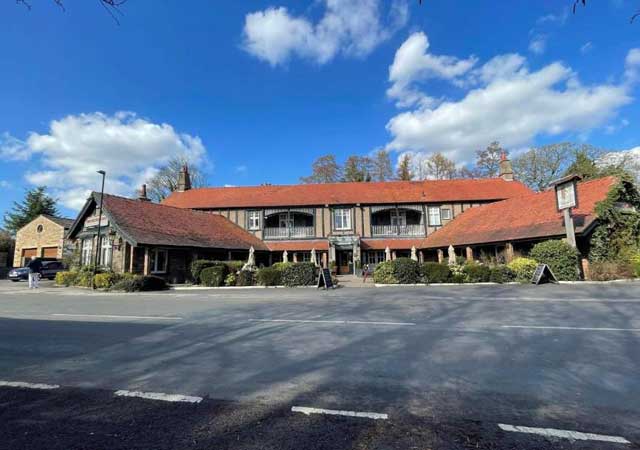
Some recommendations include the adults-only Ribchester Arms. The Hampton By Hilton Blackburn is 3-star and offers a restaurant, fitness centre, and bar. Hotel Rafay has comfortable rooms with free WiFi, air-conditioning, and soundproofing.
See here for a complete listing of hotel accommodation in Blackburn.
Reference The Guardian
More UK Stadiums
Kirklees Stadium (John Smith's Stadium)
©Soccerphile.com
Buy tickets for soccer matches around the world