
A VISIT TO MILAN'S FAMOUS STADIUM UPON NEWS OF ITS PLANNED DEMOLITION
Sean O'Conor

San Siro is a name that chimes.
The Milan megastadium, home to two Italian club giants A.C. Milan and Internazionale, is striking at first sight, the mark of any great work of art. It really is, to use an overused adjective, iconic, not just a shrine to football but one of the game's true cathedrals.
The initial ground opened in 1926, was added to in the 1950s and in 1980 was officially renamed after the Italian World Cup winner and former Inter and Milan star Giuseppe Meazza, although the original name San Siro has stuck.
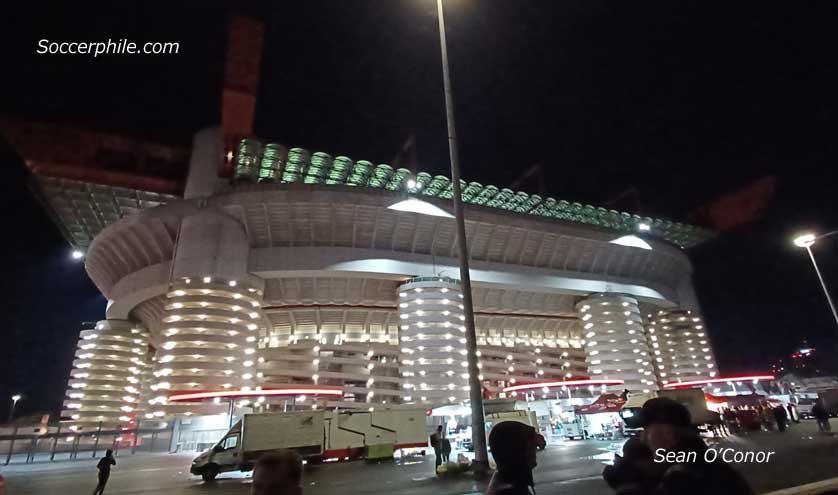
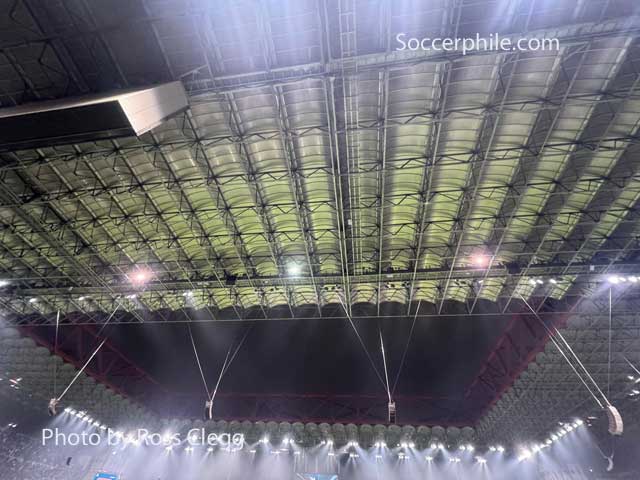
Following a large-scale renovation for the Italia '90 World Cup, its distinctive design features huge red girders jutting out from the roof, tall and chunky rectangular stands surrounded by 19 spiral walkways, as if propped up by giant springs, and concrete honeycomb interior corner towers. Commanding views of the city's northwest, it looks like an alien mother ship has landed in Italy.
Visuals aside, the San Siro match experience is also world class. Desperate to catch a game there before its mooted disappearance, I jetted out last weekend to see Milan play Roma on a Sunday evening and cross it off my list.
I carefully booked a hotel in the west of the city not too far away, arrived by bus and returned by tram, but there is also an underground metro station close by, such are the fine transport links.
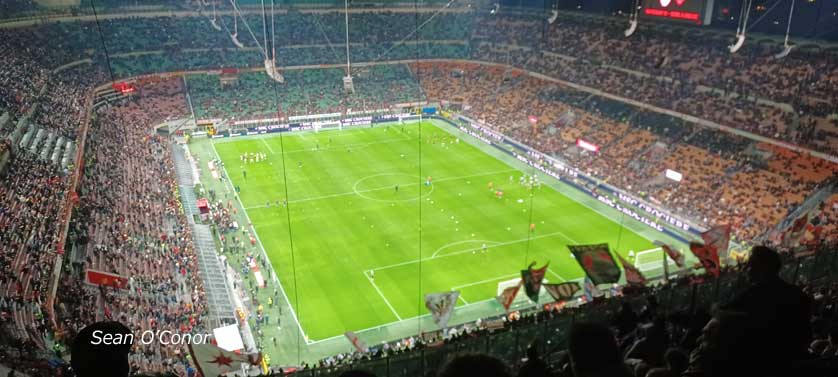
Match Day
However you get there, the fortress stands like an impregnable castle amid a vast square, rising high and proudly into the Lombardy air. Flanked by a long avenue of food stalls and souvenir shops on match night, the mighty fort was illuminated in Italian tricolour lights. I felt excited.
As a police helicopter buzzed above us and various uniformed cadres of men - TV crew, stadium staff and paramedics, shuttled around the queues of fans awaiting the show, there were all the signs of a big night at the theatre ahead. San Siro shares the city of Milan with another building famous for flamboyant drama on a grand scale, La Scala, the world's most famous opera house, four miles to the east.
After the electronic entry gate, I found myself ascending the famous spiral ramps ever upwards towards a celestial destination, if like me, you had bagged a cheap seat in the upper tier. It is a long climb to the top of San Siro, which lacks Wembley's escalators, but the ramps are easier than stairs and the gold at the end of the rainbow beckoned enticingly. On the ramps, some fans were slowing to catch their breath and give their muscles respite but kept moving, accepting there is no gain without some pain.
Finally inside the inner sanctum, the sightlines were great even from the top tier behind its fine-meshed sheets to stop any missiles and you felt part of an enclosed and intensely shared experience. The whirling red and black flags of the Milan ultras were below me, the visiting Roma fans high to my far left. As a large football venue it is an undisputed triumph.
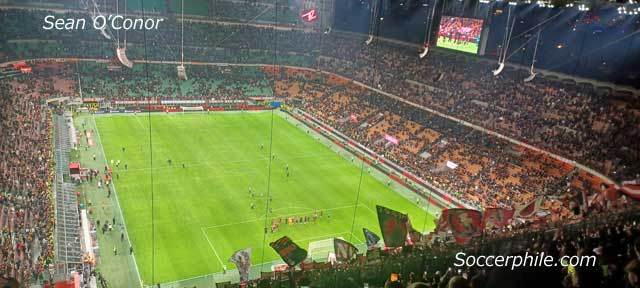
Fan Culture
It had been a while, the 1990s to be specific, since I had been to watch Serie A live, but not much had changed beyond a cooler police presence this time. I recall more armed carabinieri when I watched Parma regularly back then, but the same orchestrated fan chanting was there. That would be my one big criticism of Italian fan culture, that it lacks the humour and spontaneity of English supporters.
Nevertheless, like in Genoa's Luigi Ferraris stadium, England was the inspiration for San Siro's rectangular shape and it marries that wisdom to one that Italy gave the world from the Colosseum of ancient Rome - a huge and fiery sporting spectacle.
The Stadio Giuseppe Meazza, to give it its proper name (San Siro is strictly speaking the area) has hosted four European Cup finals, European Championship games and World Cup matches in both 1934 and 1990. With an 80,000 capacity, it is Italy's largest arena, is about to celebrate its centenary and is set to welcome the opening ceremony of the 2026 Winter Olympics.
And yet, it is all going to be knocked down.

Why Demolition?
Many fans around the world are still scratching their heads at this one. On the face of it, it makes no sense when San Siro is one of football's architectural crown jewels. Why destroy something so well-loved as well as something that works so well?
And yet, the death knell for the great temple has rung. The spaceship of Italia '90 will soon be no more.
At the end of September 2025, Milan's city council sat through an extraordinary session that dragged on from 4.30 pm until 3.50 am, finishing with a 24 to 20 vote with two abstentions in favour of selling the stadium to its two tenants, Inter and Milan. The pair are clear they intend to demolish the venue and replace it with a new design with a smaller capacity.
Remember, remember the 5th of November, as on that date this year the two clubs completed the purchase of the site for €197 million, which sounds like a bargain, paving the way for demolition to begin in 2026 or 2027. The sale of the stadium to the clubs was completed just in time as the 10th of November would have been the 70th anniversary of the stadium's middle tier construction . After seven decades, the middle tier would have acquired listed status and forced the city council to issue a preservation order, obstructing demolition.
While the red girders are removed and the spiral towers knocked down, a new stadium will rise next door in time for Euro 2032, a process much like Tottenham Hotspur performed with White Hart Lane. But while Spurs replaced an ageing arena with an excellent new one, can Inter & Milan replace an excellent contemporary one with something even better..? It will be a challenge to find a design as stunning as the current one.
It still raises eyebrows in England, where municipal stadium ownership never took off, that in Italy, Spain and elsewhere, stadia are run by local councils, but that tradition began to change with the opening of Juventus' privately owned Allianz Stadium in 2011, replacing the spectacular looking but spectacularly unloved Stadio Delle Alpi, another of the icons of Italia ‘90. Only seven Italian stadia currently follow the English model, but that has now become eight with San Siro.
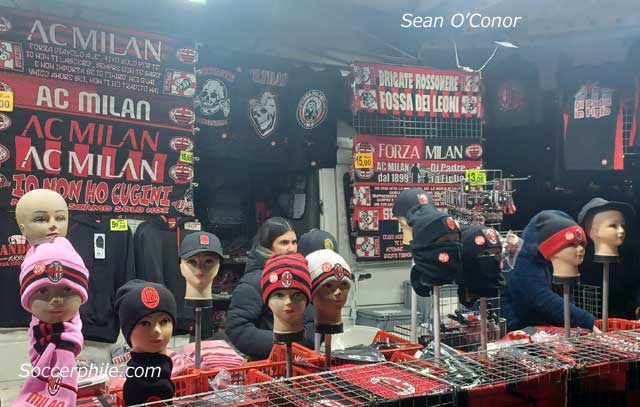
Out of Date?
The first stirrings of wrecking balls were heard back in 2019 when the two Milanese clubs announced they were exploring a replacement for their world-famous home ground, with the usual justification advanced that its facilities were outdated.
Milan Chairman Paolo Scaroni confirmed this argument, claiming, "It simply does not have all the facilities that are needed for modern football," although when I was there I could not see what it was obviously lacking, beyond executive boxes, which are luxury additions, not essential elements, for a football match. Surely they could install some if need be, I thought to myself. In terms of space around the stadium for big events, FIFA could hardly complain.
The entry process was smooth, the pedestrian areas large and well-signposted. There were big video screens, excellent lighting and sightlines. I did not visit the stadium snack bars or toilets but their condition alone should not be a reason to demolish the whole arena.
Everything seemed modern, solid and well-maintained, not a dinosaur in desperate need of renewal or replacement like the old Wembley Stadium was. Although built in 1990, it seemed a better overall visitor experience than the London Stadium, built for the 2012 Olympic Games and now used by West Ham in the Premier League.
San Siro is already a UEFA Category 4 stadium, the highest of all, so what exactly is it lacking that demands a wholesale reconstruction? UEFA press releases have not specified San Siro's shortcomings but turned it down for the 2027 Champions League Final because it might have clashed with refurbishment works for Euro 2032. The central argument still does not wash. Are there newer and better arenas out there? Yes, but why throw the baby out with the bath water?
It is true that Italian football in general, not just its arenas, has been overtaken by rivals in the last quarter century, but the awarding of Euro 2032 has given it a chance to assert itself again on an international stage, its first hosting since the 1990 World Cup. Yet this joint-hosting with Turkey is worrying the FIGC, Italian football's governing body.
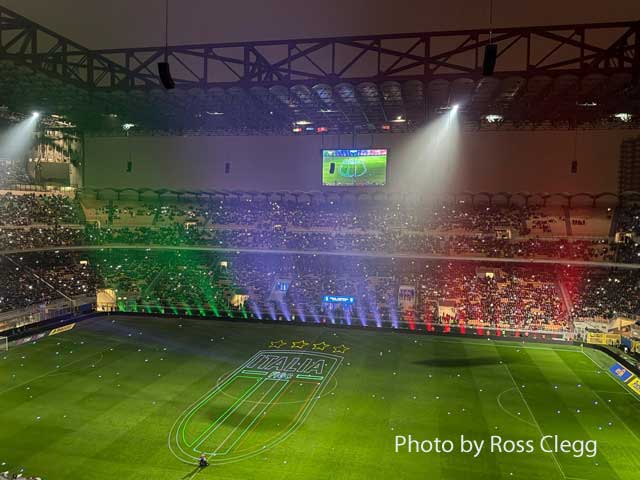
Euro 2032
Last May, UEFA boss Aleksander Ceferin revealed his exasperation with Italy's glacial stadium redevelopment, comparing it unfavourably with the Turkish venues co-hosting Euro 2032. The Slovenian said the country had "by far the worst infrastructure" of Europe's big football nations. How times have changed since Italia ‘90, when a gleaming set of new stadia including San Siro, dazzled the world and helped convince The Football Association for one that it needed to catch up.
Serie A President Ezio Simonelli echoed Ceferin, saying, "I'm really worried about Euro 2032…beyond Udine, Bergamo and Turin, the rest of our stadia are in a comatose state." Rebuilding San Siro, the flagship of Italia ‘90, is therefore a signature statement that Italian football means business again. The Stadio delle Alpi, the other standout design from Italia ‘90, a new home for Juventus and Torino, lasted less than 20 years before being demolished with few mourners due to its dreadful sightlines, a confirmation athletics tracks and football cannot mix happily.
The 1990 World Cup looks increasingly like peak calcio, as not only was the world wowed by stadia like Bari's San Nicola and Genoa's Luigi Ferraris, while it fell in love with an Italian summer, Nessun Dorma et al, but Serie A clubs had just completed a clean sweep of the three continental club competitions.
Over the last decade, Italy has carried out nine stadium renovations compared to Spain's 15, Germany's 19 and England's 24, so Simonelli has a point. But Italy's revenues are that much lower so the repair money is not there.



Revenue
Whenever new stadia are mooted there is usually a desire from clubs to install more corporate boxes, which bring in more revenue than standard seats, as well as plans for hotels, parking and other lucrative side dishes like hosting concerts. Milan chairman Paolo Scaroni told Rete 4 channel in Italy that in his opinion,
"The current area is either too empty or too crowded. We have a different idea - an area that is always alive…At Real Madrid's stadium for example there are seven restaurants that operate year-round."
That is true and I have dined at one myself as well as lodged at a hotel on the Bernabeu site, but I cannot help wonder how much useful revenue hotels and restaurants can bring into a big-spending football club. Again, are they reasons to demolish a beloved cathedral? In terms of space around it, San Siro has much more than the Bernabeu.
Of course, there is always money to be made from demolition and reconstruction contracts, buying the land and then renting or reselling it, and the entry of private investment into this purchase has raised questions. A finished stadium is like a built house - it increases in value over time and if renovated but only makes money if it is resold or its equity cashed in.
If anything, the desire for iconoclasm and reconstruction screams of a cry for help from a league that has been left trailing the juggernaut of the Premier League and has no idea how to catch up. Italian football is no longer the land of milk and honey and dreams of making Serie A great again.
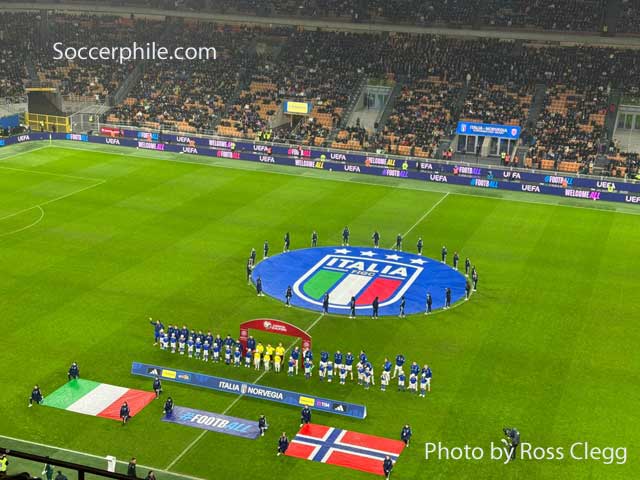
Serie A v Premier League
Deloitte’s annual review of football finances in 2025 placed Serie A fourth in European revenues, just ahead of France’s Ligue 1 but trailing England, Spain and Germany by some margin. A damning statistic is that Italy’s top flight teams have average revenues of €145 million versus the Premier League’s €386 million. Having sprinted clear of an envious world through the 1960s to the 1990s, Italian football is now lagging a country mile behind its rivals.
On every income metric - matchday, sponsorship and broadcasting, Italy's top division has less than half the punching power of England's. With the top stars now in the Premier League and in La Primera, Serie A has either to accept its fate or try something truly radical and thus far elusive, to compete financially. Accepting impotence is never easy.
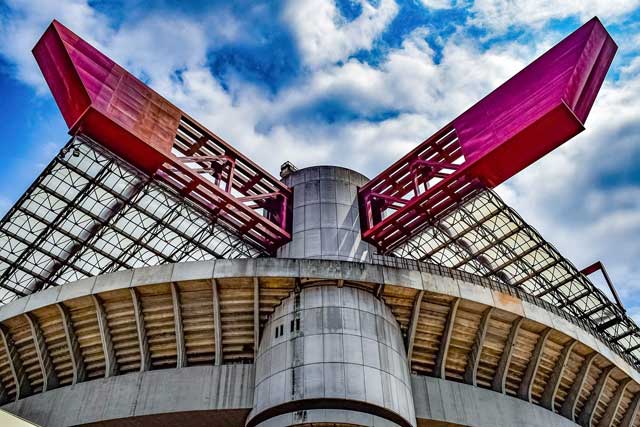
AC Milan
As for the once all-conquering Milan, they look back wistfully at the reign of their famous owner Silvio Berlusconi, whose bankrolling of Italy's top team from 1986 helped wash him into the office of Italian Prime Minister three times from 1994.
After the club's glittering trophy haul had dried up, the media mogul and property tycoon offloaded the club in 2017 and died in 2023. Milan's 2022 scudetto under Stefano Pioli was their first since 2011 but they have not won the Champions League since 2007 under Carlo Ancelotti. Inter, their cohabitors, have not won it since 2010 and that was their only triumph since 1965. Barça and Real they are not.
San Siro may be in the top tier of football stadia and its two clubs have big fan bases but its tenants are only the 13th and 14th richest clubs in Europe in 2025.

The Rossoneri's stars of yesteryear survived on nostalgic scarves on the souvenir stalls - Gullit, Van Basten, Shevchenko and Gattuso. I thought about the other greats to have donned the red and black in my lifetime - Baresi, Ibrahimović, Maldini, Pirlo, Rijkaard, Savićević and Weah. They all must be sighing at the decline of the club.
Milanello, their training centre, was considered the world's finest in the 1990s, a footballing school of excellence with the best in sports science, diet, psychology and tactical and technical expertise. Nowadays, you never hear about it as the ideas have been copied and exported like all advanced technologies are.
Their 1990s super sides, coached by Arrigo Sacchi and then Fabio Capello, were the best in the world. Swatting Johann Cruyff's Barcelona, featuring Romario, Ronald Koeman, Hristo Stoichkov and Pep Guardiola aside 4-0 in the 1994 Champions League final was probably the greatest ever performance by a team playing 4-4-2.
In 2025 Milan's brightest stars are Portugal attacker Rafael Leão (valued by Transfermarkt at €70 million), American dribbler Christian Pulisic (rated at €60 million) and 40-year old legend Luka Modrić (€4 million). Those are all good players and Leão proved his worth on the night by creating the winning goal, but Real Madrid by comparison boast Vinicius Junior (€150 million), Kylian Mbappé and Jude Bellingham (both €180 million).
The Milanese ultras still put on a big show with constant, militarised chanting, flags and banners, while the stadium P.A. revved up the passion and got the crowd to call out the players' names, but it is obvious the supremacy Serie A once owned had long since left the building.
Forbes' list of the richest clubs in 2025 noted Milan's revenue was barely half that of Manchester United's and a third that of Real Madrid's. With no Champions League win for almost 20 years, it may be understandable why their (and Inter's) owners are starting to panic.

Architects
Along with Manica, Foster & Partners, architects of Wembley Stadium, have got the gig for the new San Siro but have yet to release any artists' impressions or concept designs. The pair have already teamed up for Qatar's Lusail Stadium, host to the 2022 World Cup final, but as with Wembley, Norman Foster's firm face a battle persuading everyone of the benefits of iconoclasm.
The old Wembley was a much worse visitor experience than what replaced it, but nothing in the new English cathedral matches the arresting visual power of the old twin towers. While everyone accepts the Wembley seating and sightlines are much better now, there is still the palpable lack of a focal point, which the collapsing arch above does not adequately fulfill. The replacement San Siro may look elegant and futuristic when it is finished, but it is hard to believe it will be as iconic and unique-looking as the present construction.
While we have yet to see the new San Siro plans, they will surely be a case of steel and glass replacing concrete as the prime masonry material, with a translucent roof to allow more use of natural light, as evinced by recent Foster work. It will also most likely be of oval shape instead of the current English-inspired rectangular arena. The future capacity is currently believed to end up around 70,000, little more than Italy's second largest venue - Rome's 70,634 Stadio Olimpico.
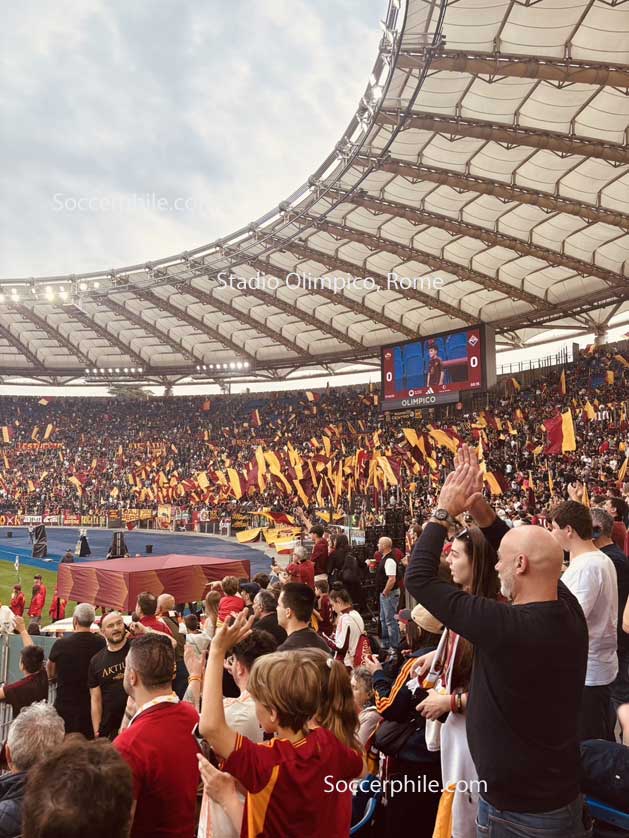
10,000 fewer seats sounds like a lot less revenue, but that is not taking the VIP boxes into account. Milan chairman Paolo Scaroni has even admitted he plans for one in seven seats, around 10,000 in the new arena, to be sold in corporate hospitality packages, a shocking figure to any traditionalists like me.
Legal battles have been yo-yoing on the sale, but now there looks like no turning back, with designs to be finalised over the following year and construction of the new arena set for 2027 before its opening in 2031, in time for the following year's European Championship. A stumbling block was the listed second tier, but that consideration has now been overcome.
Money talks in the end and whatever the aesthetic and cultural misgivings or legal challenges, it appears clear that San Siro is set to die and be reborn, but there lingers a sadness that a relatively recent stadium with such a stunning design will disappear when it probably could have kept its famous façade through interior renovation.
Sacred Space
Federico Meazza, grandson of Giuseppe, who played for both the nerazzurri and rossoneri but is best remembered overseas for captaining his country to two World Cups in 1934 and 1938, told Gazzetta dello Sport of his family's fears that the stadium's name will be erased when the new arena rises, replaced by an ephemeral corporate label.
"Because it's sacred," he explained. "Meazza is a symbol of Milan, uniting the two clubs." Furthering the idea that football has worth beyond financial value, Federico added,
"We are not just talking about some steps and some concrete but about culture and the emotions associated with Giuseppe Meazza, to those who cheered for him and for those who still talk about him today."
In referencing culture, emotion, memory and reverence forged by history, Meazza's grandson blows the argument promoted by the club and the football authorities out of the water. In the greater scheme of things, there is more to life than money, even if it has the last word on earth.
His use of the word sacred resonates, much like the hallowed turf of Wembley. San Siro is one of football's finest temples, named after a barrio named after a saint - Syrus of Pavia, around whom a cult emerged in the 4th century. Napoli's historic arena the San Paolo was named after a holy man too, before being rebranded in the 21st century after a modern hero/saint - Diego Maradona, who worked miracles in miserable Naples in the late 1980s.
Football is not literally religion but the parallels in devotional practice are unmissable. In the case of those two Italian grounds, the links with that nation's Christian heritage are umbilical. Yet the name of Saint Paul, the great propagator of the faith, has now left the home of Napoli, the city where he landed to bring the good news to Italy.
Soon it appears, San Siro will be but a memory too, unrecognisable in its architecture and probably bearing an ephemeral corporate name instead of a saint's.
While Inter, Milan and a host of businessmen in finely-tailored Milanese suits may make more money as a result of their awesome iconoclasm, what will football as a whole have lost?

Sean O'Conor & Soccerphile.com
10 Largest Football Grounds in Britain
Buy tickets for soccer matches around the world