
Euro 2028 Stadiums
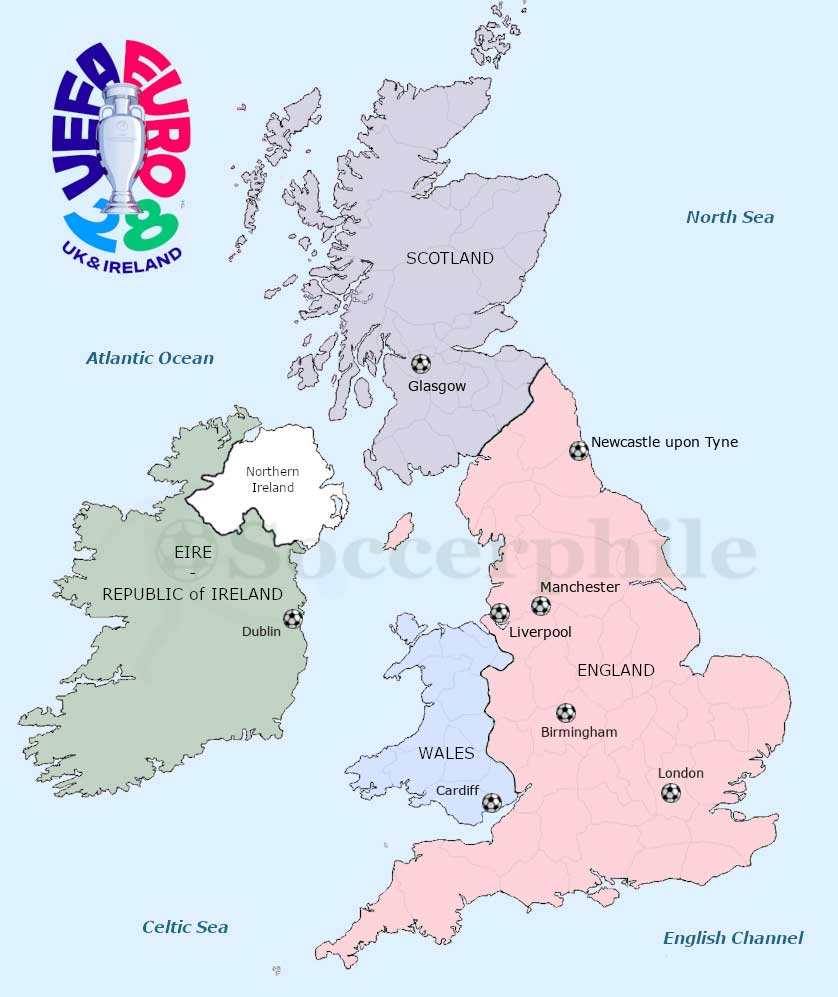
The Euro 2028 tournament will take place from 9 June to 9 July 2028 at 9 host stadiums in eight cities across the British Isles and Ireland.
The nine stadiums for Euro 2028 are Wembley Stadium and Tottenham Hotspur Stadium in London, City of Manchester Stadium in Manchester, Everton Stadium in Liverpool, St James' Park, Newcastle, Villa Park, Birmingham, Hampden Park in Glasgow, the National Stadium of Wales in Cardiff and the Dublin Arena in Dublin, Ireland.
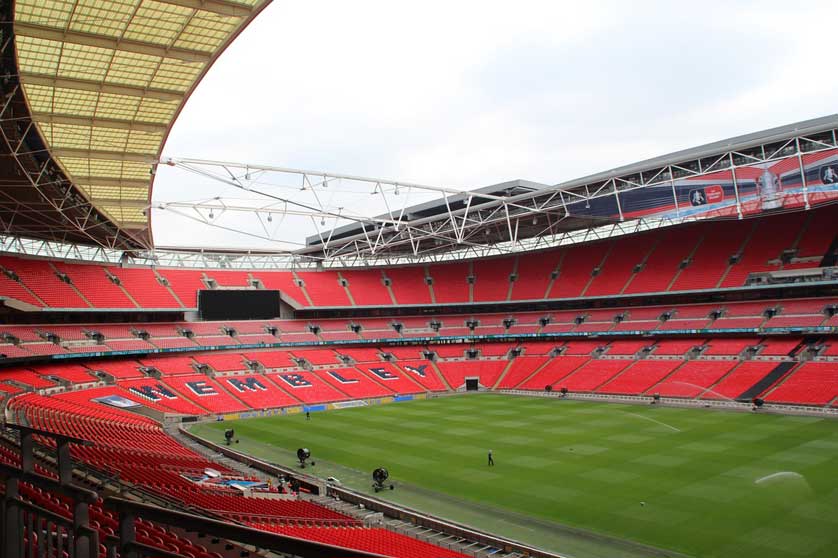
Wembley Stadium, London
Wembley Stadium, London (capacity 90,000) - Officially opened in 2007, the new Wembley was built on the site of the original Wembley Stadium, which hosted numerous historic events, including the 1966 FIFA World Cup Final. The modern stadium by architects Foster + Partners is renowned for its striking architecture, featuring a 133-meter-tall arch that spans the structure and has become a defining symbol of the venue. It is the largest stadium in the UK and one of the largest in Europe. It will stage the final and both semifinals at the 2028 tournament.
Wembley hosts a wide range of major events, including England national football matches, the FA Cup Final, international sporting events, and concerts by world-famous artists. Its state-of-the-art facilities make it a versatile and world-class venue.
Access: Wembley Park Station (London Underground Jubilee and Metropolitan lines); Wembley Stadium Station (Chiltern Railways); Wembley Central Station (London Underground Bakerloo line, London Overground, London Midland and Southern lines.
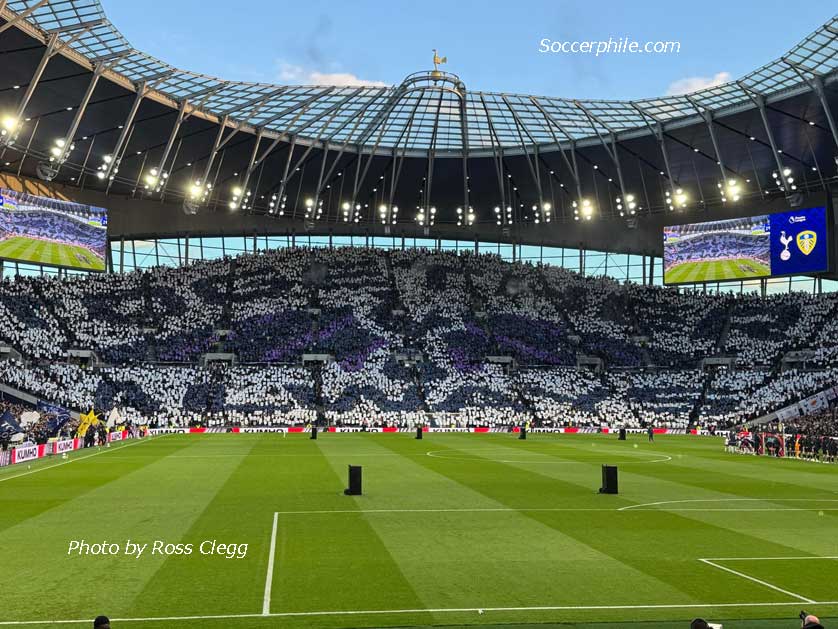
Tottenham Hotspur - Tottenham Hotspur Stadium, London
Tottenham Hotspur Stadium, North London (capacity 62,850) is a state-of-the-art multipurpose venue and the home of Tottenham Hotspur Football Club. Officially opened in April 2019, it replaced the club's former White Hart Lane ground and is widely regarded as one of the most advanced stadiums in the UK. With a seating capacity of over 62,000, it is the largest club stadium in London.
The stadium has a 17,500-capacity single-tier South Stand, creating a vibrant atmosphere on match days. In addition to football, the venue hosts concerts, American football, boxing matches, and other major events. Spurs' former ground White Hart Lane was completely demolished following the 2016-17 season. The venue will stage five matches at the 2028 tournament: four group games and a Round of 16 tie.
Access: White Hart Lane (London Overground): approximately 5 minutes walk to the stadium; Northumberland Park (Abellio Greater Anglia services): approximately 10 minutes walk to the stadium; Tottenham Hale (Victoria line and Abellio Greater Anglia services): about 25 minutes walk to the stadium; Seven Sisters (Victoria line and London Overground): around 30 minutes walk to the stadium.
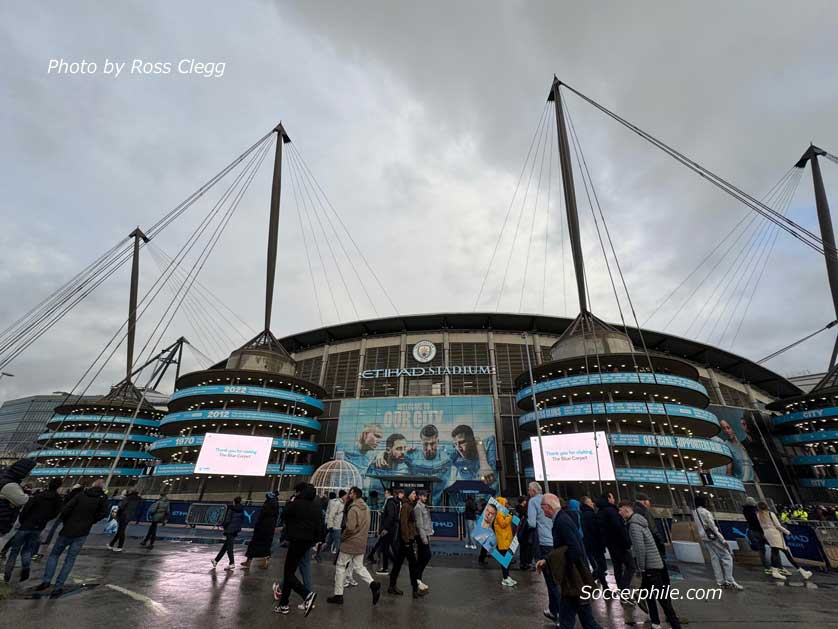
City of Manchester Stadium
The City of Manchester Stadium, (capacity 61,038), is the home of Manchester City and known as the Etihad Stadium in domestic competition. The stadium was built as the City of Manchester Stadium for the 2002 Commonwealth Games. The venue has hosted the 2008 UEFA Cup Final between Rangers and Zenit as well as international soccer including England v Japan in 2004, plus rugby games, boxing events and music concerts.
The stadium now has an expanded capacity from 53,600 to 61,038 making it presently one of the largest stadiums in Britain. The South Stand was expanded with a 7,000-seat third tier in August 2015, ahead of the 2015-16 campaign. In July 2023, a £300 million redevelopment of the North Stand (renamed the Pep Guardiola Stand) got under way, incorporating a 400-room hotel, a covered fan park for 3,000 people, and increasing total capacity to around 61,000. The work was completed in late 2026. The ground has five matches at the 2028 tournament: four group games as well as one Round of 16 tie.
Access: The nearest Metrolink station is the Velopark stop on the Ashton Line from Piccadilly Station. The journey from Piccadilly takes about 12 minutes. The tram stop is a short walk from the ground. The nearest railway train station is Ashburys Station a 20-minute walk away. There are trains from Piccadilly, Hadfield and New Mills Central. From Piccadilly Gardens take buses 216 or 230 to the Etihad Stadium stop.

Everton Stadium - Liverpool
Everton Stadium, known as the Hill Dickinson Stadium for domestic competition, is Premier League Everton FC's new ground at Bramley-Moore Dock on the waterfront in Liverpool, northwest England. Goodison Park was the home ground of Everton until 2025.
There are 4 main stands. These are the North Stand, a large, multi-tier stand for home supporters, the South Stand aka the "Home End" and designed to be a steep, single-tier, atmospheric stand. The East Stand on Regent Road, features a large concourse and the Everton Official Club Store. The West Stand has the Western Boardwalk with city views and premium hospitality. The Family Stand is within the lower tier of the West Stand. The estimated construction cost was around £750 million (approx. US $1 billion). The funding was sourced via private and institutional lenders rather than public money, and a naming rights deal with Liverpool law firm Hill Dickinson reportedly brings in around £10 m per year. Everton Stadium has 5 matches at Euro 2028: four group games as well as a Round of 16 tie.
Access: Sandhills railway station is the closest major rail connection for fans heading to the stadium via train (Note: fans have reported waits of up to an hour after matches). Liverpool city centre and Liverpool Lime Street station are both reachable by public transit, with frequent trains and buses on matchdays. The following buses stop near the ground: 2, 136, 800, and 838. From central Liverpool it is about a 20 to 30 minute walk (1.5-2 km) along the waterfront area.

St James' Park, Newcastle
St James' Park is the 52,264 capacity home of Newcastle United. The venue has hosted England internationals, rugby games, and concerts and is known for its passionate atmosphere created by the Toon Army. The stands at St James' are the Milburn Stand (West), the Leazes Stand (North), the Gallowgate End (South), and the East Stand.
First used for football in 1880 by Newcastle Rangers, St James' has been Newcastle United's home since 1892 and has undergone numerous expansions and renovations to reach its current seating capacity of over 52,000. The stadium is renowned for its asymmetrical design, with the towering Milburn and Leazes stands creating a distinctive landmark visible across the city. St James' Park is the venue for five matches at Euro 2028: four group games plus a Round of 16 fixture.
Access: The St James' Metro station is right at the stadium. Monument Station is also just a 5 minute walk and a key interchange for the green and yellow lines, connecting from the airport and coast. Newcastle Central Station is a 10-minute walk away, with frequent services on the East Coast Mainline connecting London, Edinburgh and Glasgow. The X50 bus runs directly to the stadium from the Metrocentre on matchdays. Local buses stop near Haymarket and Eldon Square, both a short walk away.
Villa Park, Birmingham
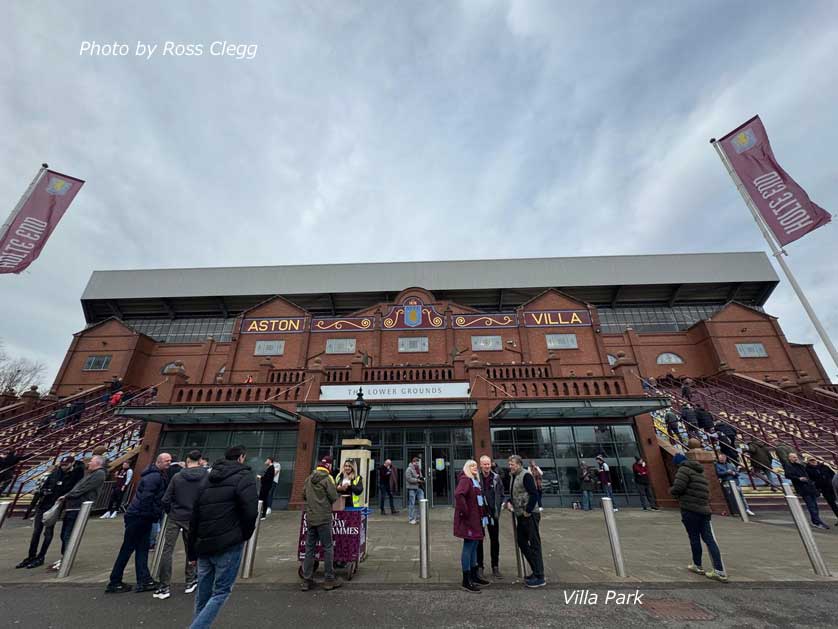
Villa Park in Birmingham is home to Aston Villa. The four stands at the stadium are the Holte End, the Trinity Road Stand, the Doug Ellis Stand, and the North Stand. The stadium has a capacity of 42,640 making it the 10th largest football ground in England. Opened in 1897, the venue has staged a record 55 FA Cup semi-finals (now usually held at Wembley) and numerous England international matches.
The ground has a distinctive architectural character, combining traditional English football-ground design with modern stadium construction. Its most striking feature is the Holte End, a famous two-tier stand whose red-brick façade, grand staircases, decorative pediments and Dutch-style gables draw inspiration from nearby Jacobean Aston Hall.
The stadium also retains four clearly defined stands, each built in a different period, giving it a varied appearance rather than the uniform bowl design of many modern grounds. The former Trinity Road Stand, designed by Archibald Leitch, was particularly celebrated for its ornate Victorian-style detailing, some of which was recreated on the Holte End. Villa Park will stage three group games and a Round of 16 match.
Access: The nearest railway station to the ground is Witton, three stops from Birmingham New Street Station. Birmingham New Street Station is a major rail hub with trains to most parts of the country including London Euston, Manchester Piccadilly, Liverpool Lime Station and Bristol Templemeads. The ground is just 5 minutes on foot from Witton Station. The following buses stop near the ground the 7, X11, and 11A Outer Circle. By car from the M6 exit westbound at Junction 6, continue on Lichfield Rd/A5127. Take the B4137 to Trinity Road.

Hampden Park, Glasgow, Scotland
Hampden Park in Glasgow, Scotland is a 51,866-capacity stadium. It is the home of the Scottish National Football Team and previously Queen's Park Football Club before their move to the adjacent City Stadium (Lesser Hampden). Hampden is the national stadium of Scottish football, akin to Wembley Stadium for English football. It is often used as the venue for the finals of the Scottish Cup and Scottish League Cup. Hampden is the second-largest arena in Scotland and one of the largest in the UK. The venue will host six games at Euro 2028: four group matches, a Round of 16 tie and a quarter-final.
Hampden has been the venue for numerous major sporting events and has hosted three Champions League finals, two in the European Cup era. It has also been chosen to be the venue for two Cup Winners' Cup finals and one UEFA Cup final. It was used for the London 2012 Summer Olympics and the 2014 Commonwealth Games, including the closing ceremony. The stadium was the venue for four Euro 2020 matches and will again host for Euro 2028. Pre-World War II, Hampden had morphed into a mega arena, reaching 150,000 capacity. The attendance of 149,415 for Scotland versus England in 1937 is a record for an international fixture. The capacity was reduced to 81,000 in 1977 for safety reasons. Hampden later installed a running track in preparation for the 2014 Commonwealth Games.
The arena is divided into four stands; the North, South, West and East. The South Stand is divided into two, having the upper and the lower tier. First aid is placed in four areas, two between the upper and lower tier of the South Stand. For VIP visitors, there is a little section at the top of the North Stand, but the main rooms are in the South, accessible through Kinghorn Drive. The ground opened in October 1903.
Access: By train, the most convenient stations are Mount Florida and King's Park. The walking distance between Mount Florida and the stadium is eight minutes, and from King's Park, it takes roughly twenty minutes. Either station is served by trains from Glasgow Central. Parking is available immediately behind the South Stand, but it is for permit holders only. If buses are your favourite means of transport, look out for these seven services from Glasgow city centre (5, 6, 7, 7A, 34, 90 and 31).
National Stadium of Wales
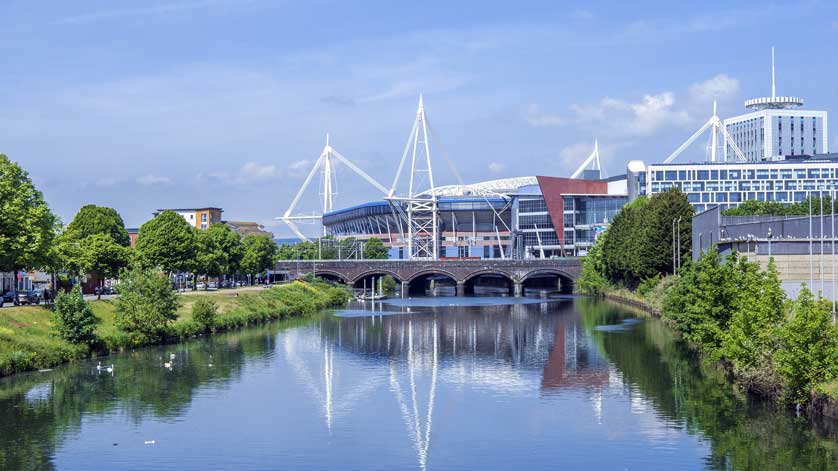
The National Stadium of Wales formerly known as the Millennium Stadium and from 2016 the Principality Stadium is the largest stadium in Wales with a capacity of 73,931. It is the home of the Wales national rugby union team. The venue will stage the opening match of Euro 2028 and five other games (4 group matches, a Round of 16 tie and a quarter-final).
Originally constructed to host the 1999 Rugby World Cup, the stadium replaced the former National Stadium at the historic Cardiff Arms Park site. Since its opening, it has hosted a wide range of events and concerts including the 2017 UEFA Champions League final between Juventus and Real Madrid. Between 2001 and 2006, it also served as the venue for the FA Cup, League Cup and Football League play-off finals while Wembley Stadium underwent redevelopment.
Access: The stadium is centrally located on Westgate Street in Cardiff (CF10 1NS), making it easily accessible by public transport. Cardiff Central railway station is just a five-minute walk away, with direct services from London, Birmingham and other major UK cities, while Cardiff Central bus station is similarly close. Drivers can reach the city via the M4, Junction 28 and A48, although there is no dedicated spectator parking at the stadium, so city-centre car parks or event-day park-and-ride facilities are alternatives. The stadium provides step-free access, accessible entrances, lifts, wheelchair seating and dedicated facilities for disabled spectators.

Dublin Arena, Ireland
The Aviva Stadium, known as the Dublin Arena during UEFA competitions, is Ireland's national stadium and home to both the Republic of Ireland football team and the Irish rugby union team. Located on Lansdowne Road in the Ballsbridge district, it occupies the site of the historic Lansdowne Road Stadium, which dates back to 1872. The old ground was demolished in 2007 and replaced by the modern stadium, which opened in May 2010. With a capacity of 51,711, it is one of Ireland's most recognisable sporting landmarks.
The stadium features a distinctive curved, translucent roof that rises above the stands and gives the ground its distinctive wave-like silhouette. Designed by Populous and Scott Tallon Walker Architects, the four-tier structure accommodates spectators on three sides, while the lower northern stand respects the neighbouring residential buildings. Its design creates an enclosed atmosphere while allowing natural light onto the pitch.
Aviva Stadium has hosted numerous major sporting occasions, including the 2011 Europa League final, when Porto defeated Braga 1-0 in an all Portuguese affair and the 2024 final with Atalanta defeating Bayer Leverkusen 3-0. It was also a proposed venue for the Euro 2020 tournament, but UEFA dropped Dublin as a host city because Irish authorities could not guarantee a minimum spectator capacity due to COVID-19 restrictions. Its four scheduled matches were reassigned. At Euro 2028 it will stage seven matches in all, the most after Wembley with eight.
Access: The stadium is approximately a 25-minute walk from central Dublin and just a few minutes from Lansdowne Road DART station, which has services along the city's coastal railway line. Several Dublin Bus routes also serve the surrounding area. Drivers should note that public parking is extremely limited, particularly on match days, when road closures operate. The stadium provides wheelchair spaces, lifts, accessible toilets and dedicated entrances, with facilities distributed throughout the stands.

Related
London Football Stadiums
All of London's Football Stadiums.
10 Oldest Stadiums in the UK
10 Largest Stadiums in Britain
10 Largest Stadiums in Britain
Football Grounds in Scotland
Non-League Grounds in the UK
Buy tickets for soccer matches around the world