
Improving Athletic Performance for Summer Tournaments
Playing a long season in club football undoubtedly takes a lot out of professional players, meaning many are heavily fatigued by the time the fixtures have been completed.
This can have a knock-on effect on the international game, with many of the world's top stars expected to keep performing to a high level when the big summer tournaments are played.
The demands placed on players means that bespoke training regimes designed to maximise each individual's performance have now become the norm within the modern game.
Managing fatigue levels and recovery have also become an integral part of a professional footballer's life as players have to contend with an increasing number of fixtures each year.
Read on as we look at some of the different ways that clubs and national teams try to improve athletic performance for summer tournaments.
Rest and Recovery
One of the biggest challenges presented by tournament football is managing fatigue levels and ensuring that players have sufficient time to recover with so little time between the games.
For instance, England's three group matches at the 2018 World Cup in Russia were crammed into just a 10-day period.
This meant that they had four days to recover between the Russia and Wales games and just three days between the Wales and Slovakia fixtures.
With outfield players covering around 4-6 miles per game and undertaking numerous high-intensity actions along the way, adequate recovery time is crucial if they are to maintain their levels of performance.
This is where the national team's sports science department comes into its own, establishing recovery protocols that are tailored to each individual player's needs.
This will be done in conjunction with the club's own fitness experts who will possess detailed information about the best ways to manage the recovery of different players.
A prime example of this in action is Leicester City star Jamie Vardy. The striker falls into a category of player who is pacey, powerful and has high neuromuscular demand.
The Foxes' highly respected head of sports science, Matt Reeves, identified Vardy's particular traits and built additional recovery time into his fitness schedule to ensure he maximised his on-field performances.
Increasing Muscle Mass
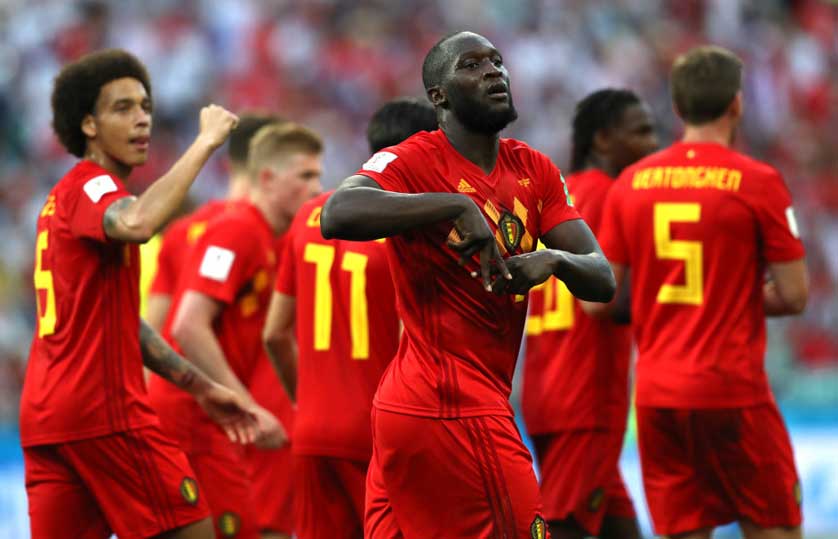
Manchester United star Romelu Lukaku might not seem like the type of player who needs additional muscle, but he admitted to bulking up ahead of Belgium's World Cup campaign in Russia last summer.
The forward was United's top scorer last season with 27 goals in all competitions, but Belgium decided that they wanted him to add extra muscle mass to give him a better chance of fending off international defenders at the tournament.
The decision worked a treat as Lukaku four scored goals in six appearances in Russia to help Belgium reach the semi-finals where they were beaten narrowly by France.
Using a combination of the best supplementation and additional sessions in the gym, Belgium turned Lukaku into an almost unstoppable battering ram.
However, his form dipped when he returned to the Premier League and he ended up losing his place in the United first team.
Lukaku admitted back in December that he'd had to shed some of the muscle he had gained in order to rediscover his scoring touch for his club.
The Red Devils' fitness management team put Lukaku on a different regime and the Belgian has looked back to his best over the past few weeks.
He had scored 15 goals in all competitions by the start of April and a strong end to the campaign would see him get close to another 20-goal season.
Beating the Heat
The major European leagues play during the winter months, meaning temperatures are generally cooler and far more manageable.
However, tournaments like the World Cup and European Championships are staged in the summer and excessive heat conditions are often a major factor.
Bodies have trouble cooling down on hot days and players are at a far greater risk of suffering from heat exhaustion.
The 2022 World Cup in Qatar will be one of the most challenging tournaments ever played in respect of heat, with temperatures in excess of 30°C expected over the course of the four weeks.
Players will be encouraged to drink plenty of water both before and during the tournament, as this will ensure they don't become dehydrated in the extreme temperatures.
They will also be given time to acclimatise to their new surroundings, with a period of around a week usually sufficient to tune the body in to the change in climate.
Sports drinks will also be used to replenish electrolytes, such as sodium and potassium, which are lost through sweat.
The best way to replace these nutrients in addition to others such as carbohydrate and protein is by eating a balanced diet, and the teams will use nutritionists at the 2022 World Cup to ensure the needs of their players are fully met.