
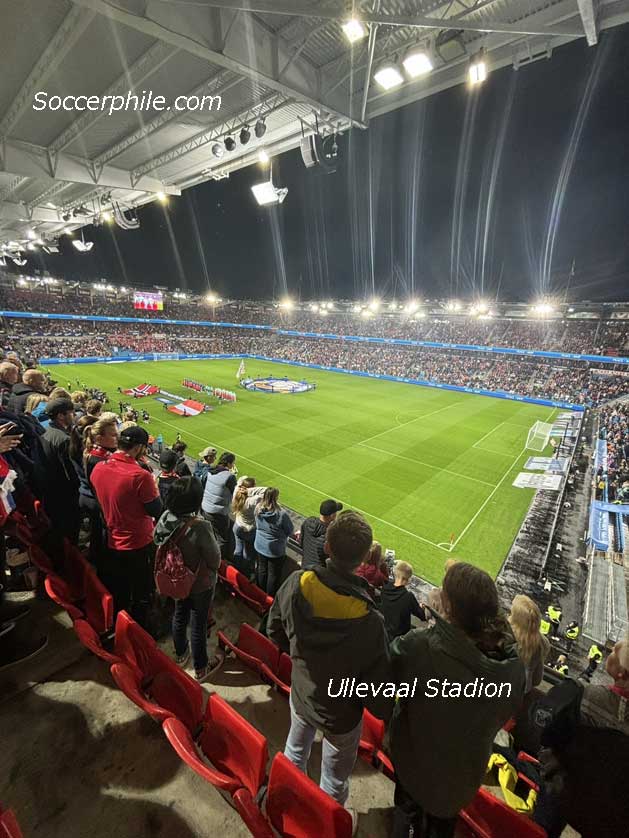
Norway did not enter 2026's World Cup with a loud parade or display; rather, it made its arrival with red shirts, wool hats, and an electric storm of fan support in Bergen in June. While Norway boasted stars on its team roster, its fans treated this tournament like an important holiday, and Haaland shirts became ubiquitous across Norway for supporters to show their pride during matches, and fan gatherings attracted large audiences during them all.
The online buzz had its odd corners too. Some supporters comparing platforms with quick payouts could check meilleurs casinos sans vérification for clear transaction fees before planning watch-party bets. The tip spread fast. Other fans studying payment methods quickly tested Skrill casino for card rules in Germany as away groups planned stops near Munich and Hamburg on the road to the USA.
The atmosphere that made neutrals pay attention
Norway has quickly emerged as one of the tournament's stand-out teams during the early stages. Following an emphatic 4-1 win against Iraq, they went on to beat Senegal 3-2 with Erling Haaland scoring twice against them, leaving Norway well placed after two matches and raising hopes that it could reach the knock-out phase for the first time since the 1998 World Cup.
Norway's supporters quickly made themselves known wherever their team competed, becoming easily noticeable wherever their fans would gather to support. One moment that became incredibly viral on social media was its celebratory "Viking rowing" celebration with supporters after victories. Players and supporters moved together, synchronised rowing motions synchronized with drumbeats, creating an image which has come to symbolize Norway's tournament run despite not necessitating elaborate choreography or giant displays; its significance being due simply to an irreplaceable drumbeat coupled with players supporting players, making an impressive event.
Haaland was the face, but not the whole tale
Erling Haaland made for an easy subject for cameras; his unique combination of size, speed, and finishing ability caused few defenders difficulty. But Norway's supporters refused to allow this tale of one player alone to become their focus.
Martin Odegaard's composure on the ball and Haaland's goals have drawn praise, while Sander Berge's midfield work earned them praise alongside more offensive stars from within their squad. Even players outside the starting eleven appeared fully immersed in team spirit.
Haaland's goals have rightfully garnered international headlines, but much of the discussion around Norway has focused more heavily on their collective atmosphere among both players and supporters - often drawing more interest than even results themselves.
Small-country math made the party feel bigger
Norway boasts a population of roughly 5.5 million people, which gave their World Cup run an especially personal feel. Every camera shot felt intimate; someone from the family or an old teammate seemed to appear somewhere within it.
Norwegian fans travelling to matches have organized meetups and shared travel details via fan groups and social media - nothing flashy - useful beats glossy when carrying tired children and flags purchased at the airport.
Diaspora groups brought a welcoming, festive spirit. Norwegian communities abroad organized watch parties and fan events throughout the tournament that felt more local, informal, and community-driven than branded or staged - no sponsor board, no formal script required; just pride with an abundance of leftover food on the table!
Videos showing players celebrating victories alongside fans have gone viral online, while images showing coach Stale Solbakken celebrating after winning against Senegal are widely circulated among supporters online.
The Viking image finally grew up
Norway's Viking nickname could easily have devolved into something silly quickly: plastic helmets, fake axes, and offensive TV graphics were waiting in the wings, but its fans avoided that misfire by emphasizing endurance rather than costume when discussing Viking culture.
There were costumes aplenty; some were even outlandish. Yet what stood out more were more subdued fashion statements: rainproof jackets and sea blue scarves were seen around campus during national anthems, alongside red flags folded neatly onto laps during national anthems as people crossed time zones together like seafarer mythical heroes would.
Reporters and rival fans took notice, prompting many others to ask whether other federations might follow suit and adopt similar practices.
Norway stands out due to how organic its fan support appears compared with more heavily managed fan campaigns at major tournaments. No enormous campaign was necessary - rather, pieces like passionate support, strong player-fan interactions, moments that felt genuine rather than staged, and clips shot by real people instead of media rooms were repeated throughout their support of Norway on screen. That charm, with all its imperfections intact, was what truly charmed this tournament!
Lesson 1: Avoid Manufacture of Folklore. Fans can sense manufactured folklore instantly. Norway gave people enough room to craft their own jokes, songs, and rituals, then let those habits spread - often, bigger impacts were achieved than just with slogans alone.
Norwegian staff should take note of their next match: it would be prudent for them to stay out of sight as much as possible and let fans create the atmosphere before unleashing red shirts to cause chaos.
