

Bigger! Better! Faster! More! sums up the prevailing ethos at the top levels of the English game at present. As more billionaires move to take over Premiership clubs and large sections of the sporting press are given over to discussions of who will be the first player to be paid two hundred thousand pounds a week, the 'new Wembley', built at a cost of around £800 million ($2.16 billion), fits in with this nicely in terms of media coverage, being touted as 'the biggest' and 'the best' - something which puts English football firmly back where it belongs, 'on top of the world'. Such views blithely come from many of the same publications which in the recent past have relentlessly criticised both the England team and those involved in the rebuilding of the stadium for their greed and incompetence, evidenced by repeated failures to keep to deadlines and budgets.
Few appraisals of the new Wembley, and its role as the symbol of the English national game, position themselves between ludicrous self-congratulatory bombast and its 'modern life is rubbish' counterpoint.
A lot of the debates in this regard mirror the long-standing growth versus equity arguments concerning economic development.
The growth plaudits desperately roll out statistics about the stadium in the manner of an accountant propping up the bar of a mid-range hotel at 3.20 in the morning trying to stave off weltsmerz by blahing on to a barman who went home mentally over four hours ago.
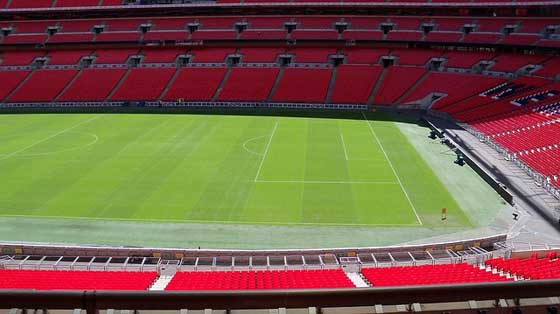
Wembley Stadium is the biggest in the world in terms of covered seating - all 90,000 seats should remain bone dry whatever the weather. The arch over the stadium is the largest in the world, standing 133 metres high. Three thousand jobs were created during the construction process and many part-time and full-time jobs have been brought into being at the stadium since it opened. The seats are 50cms wide and 80cms deep compared to 41cms and 64cms respectively at the old Wembley. There are 2,618 toilets compared to 361 at the old stadium. The four dressing rooms can each accommodate up to 26 players. There are 1,628 miles of cables in the ground. Players run around on two million blades of grass. An in-house ice factory produces 96 tons of ice on match days - that'll help with the left-side of the midfield problem then.
On the other hand a lot of media coverage and fan annoyance is focused in an equally hysterical manner on 'rip-off Wembley'. A portion of hot dogs and chips costs £7.50. Taxi drivers routinely charge around £20 for journeys to the stadium of less than 3 miles. Match day programmes cost £10. Manchester United and Chelsea were given a tiny allocation of 25,000 tickets each for the 2007 FA Cup Final and of these only 4,000 were in the cheapest £35 bracket, with the rest priced at £60, £80 £95.
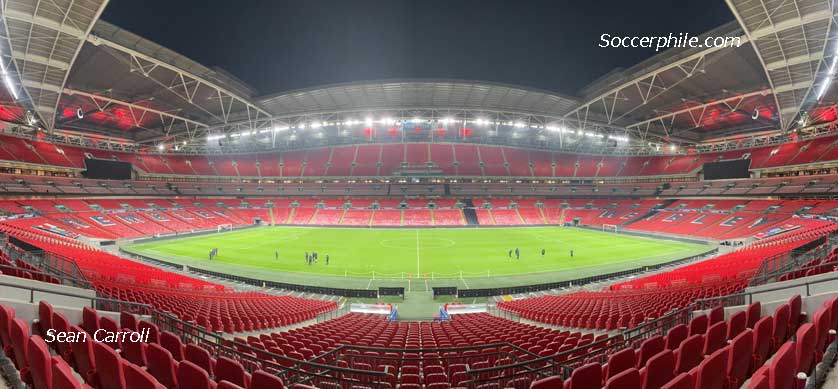 Wembley stadium is the biggest football ground in England
Over fourteen thousand seats in the main stadium and two thousand more in Executive Boxes are part of the Club Wembley scheme and given over to corporate junkets rather than being made available to real fans. Purchase of user rights for executive boxes can cost £260,000, showing that the corporate Wembley experience is totally divorced from the reality of the lives of real football fans.
What are the key issues that can be picked out from these two opposing viewpoints? The architect, Lord Norman Foster, wanted to create a Wembley with a distinctive character and one conducive to a passionate atmosphere, arguing that too many newly built or re-built British football grounds in recent years have become anonymous in design.
Most agree that he has succeeded in bringing more fans closer to the pitch, thereby creating the potential for a better atmosphere, than at the old Wembley and at many other national stadia worldwide, where too many fans are far from the action. The only criticism in this respect is that the stadium banks are so steep that fans on the top rows have complained that their tickets should be sold as 'restricted view'.
Overall, however, most fans who have attended matches so far have been much more positive than negative about the quality of the experience once inside the ground. The National Association of Disabled Supporters (NADS) and the disabled branch of the Official England Supporters Club are also by and large happy with the way the new stadium accommodates people with disabilities. Their only major concern is that the management of the stadium have designated it as a public transport destination and thus it is very hard to park. Blue badge holders have to pre-book spaces and pay £10 to do so.
Claims that merchandise and catering prices are extortionate are true, but sadly twas ever thus. Fans organizations are better organised now than ever before and need to use the media and their collective purchasing and organizational powers to stop the worst excesses in terms of price rip-offs occurring.
Chelsea and Manchester United fans made an abortive start in this respect, in attempting to arrange a boycott of the recent FA Cup Final between the two sides in protest at unfair ticket allocations and high prices. This was done at short notice and not taken up to any great extent, though many fans must be regretting their decision given the (lack of) spectacle that they were served up.
 Welcome to Wembley
However, with careful planning and good leadership fans can be successful in forcing prices for merchandise and catering down. When goods are allocated through supply and demand, it there is no demand, the mode of supply has to change. Stuff the anodyne programmes, buy food and drink well outside the stadium area and ignore the tacky souvenirs - a re-run of the match on DVD from time to time with your mates is all you need.
The more serious problem in terms of equity of provision concerns the Executive Boxes and Club Wembley corporate seating. Fans have been re-classified as 'customers' - a harbinger of doom in any sport in terms of passion inside the stadium ('wow, just listen to the cheers of those customers as the waiter brings more champagne and seafood').
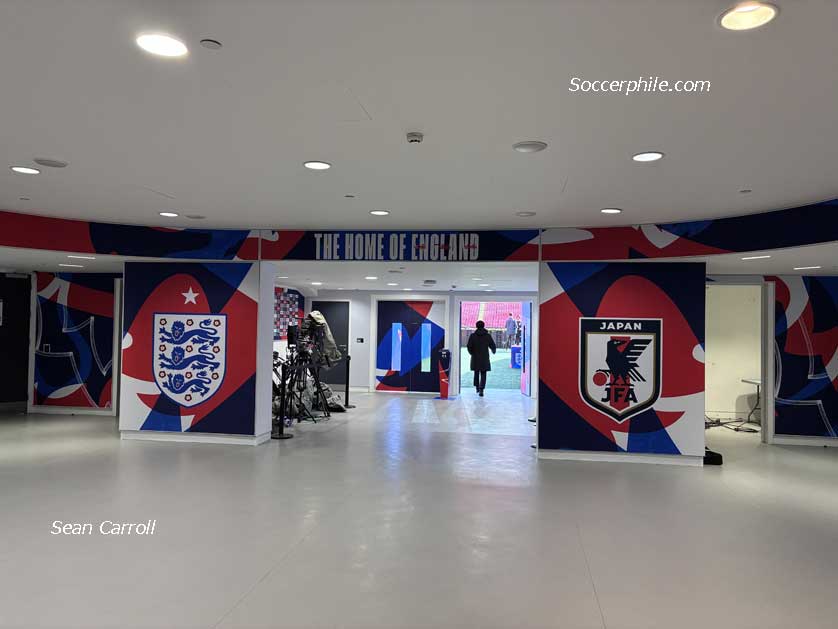 The home of England
The corporate customers are seen by the management, desperate to claw back quickly some of overspend on the stadium, as vitally important cash cows. This leads to the danger that as the seats for true fans are squeezed, prices will creep up as demand exceeds supply amongst the faithful.
The half-empty Club Wembley seating section long after half time had ended at the England versus Brazil Friendly on June 1st could be a depressing vision of a future where the corporate 'customers' prefer to eat, drink and network in the hospitality rooms rather than watch the match. Meanwhile true fans face the frustration of not being able to get a ticket or having to pay outrageous prices to touts. Management at the stadium may rue the lack of atmosphere a little but would rather have the champagne and caviar set paying huge prices to boast about having been to the new Wembley than more true fans who are going to get behind the team vocally but are only paying £35 a ticket.
The management at the new Wembley may want more corporate packages sold in order to bring in loot as fast as possible but it is up to Fans Organizations to stop this, by being as organised and active as possible and by making maximum use of the media to get their message across.

Editorial April 06 | Editorial May 06 | Editorial June 06 | Editorial July 06 | Editorial August 06 | Editorial September 06 | Editorial October 06 | Editorial November 06 | Editorial December 06 | Editorial January 07 | Editorial February 07 | Editorial March 07 | Editorial April 07 | Editorial May 07 | Editorial June 07 | Editorial July 07 | Editorial August 07 | Editorial September 07 | Editorial October 07 | Editorial November 07