Oktoberfest
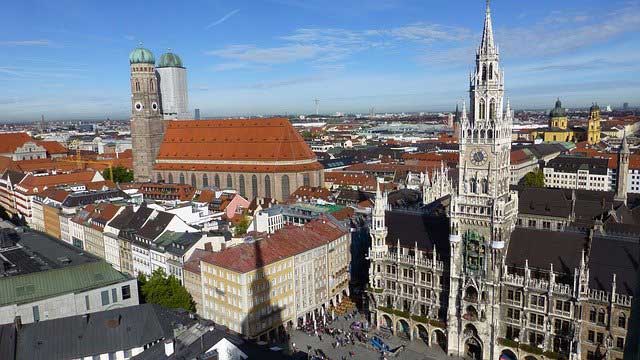 Munich
Search Hotels in Germany - Booking.com - hotels throughout Germany.
Book Hotel Accommodation in Germany - Agoda - hotels throughout Germany.
Find Hotels in Berlin - Booking.com - cheap accommodation in Berlin
Munich, the capital of Bavaria, is a tourist's dream, particularly in the clement summer months of June and July. The city boasts a collection of world-class museums, theaters, expansive parks, and the ghosts of many great artists, from Klee to Kandinsky, Strauss to Ibsen. Moreover, the city's annual Oktoberfest draws in hundreds of thousands of revelers.
Now a hi-tech modern metropolis and headquarters of Seimens and BMW, Munich has much to offer and is a magnet for tourists and Germans alike. The city is now approximtely comprised of 20% foreign nationals. In addition, Munich is home to many painters and filmmakers, students and the jet-set--and, of course, the born-and bred as well.
The city officially dates its origins to 1158, but settlements have existed in the area that is modern Munich since Roman times. Aside from plagues that tormented the city several times in the 14th and 15th centuries, the city has grown steadily in wealth and importance as a trading center. Bavaria also owes a debt of gratitude to Napoleon, who made the state a kingdom.
In the 19th century, King Ludwig engaged in a huge rebuilding of Munich, thus creating the grand city that would be recognizable to modern-day residents. By the beginning of 20th century, Munich was attracting artists and becoming an increasingly vital center. In the dark days leading up to World War II, though, it was a center of Hitler's rise to power and the Nazi legacy saw half of Munich bombed to the ground during the war.
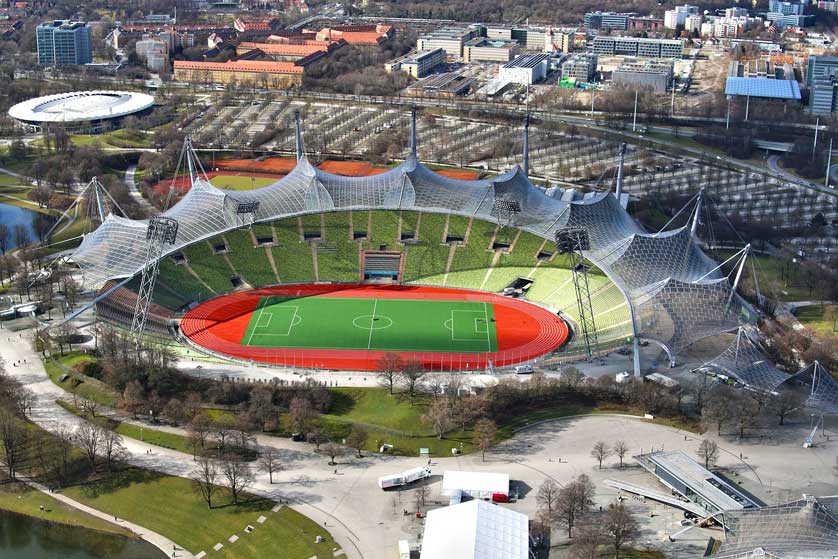 Olympic Stadium, Munich
The post-war rebuilding of Munich was capped by the hosting of the 1972 Olympic Games. Like Tokyo in 1964, this was to welcome the city back into the community of great world cities. It was marred however by the murder of 11 Israeli athletes. Munich was also the venue of the 1974 World Cup final, fondly remembered by Germans to this day.
The stadium boasts a unique tent-like canopy roof, designed by architect Frei Otto, which gracefully stretches over the seating areas.. With a seating capacity of nearly 70,000, the Olympiastadion has hosted numerous memorable events, including the Olympic Games themselves and various concerts and major football matches. Nottingham Forest won the first of their consecutive European Cups here in 1979 and the stadium saw Borrusia Dortmund win the 1997 Champions League final.
Olympiapark is the location for the Euro 2024 fan zone in Munich.
 Glockenspiel, Marienplatz, Munich, Germany
 The Bayerische Staatsoper, Max Josef Platz, one of the world's leading opera houses
Today, Munich is among the most livable and popular cities in Germany with a great film festival and world-class art.
Among its many attractions are Marienplatz, the heart of the city and home to many cafes; Residenz, in which the great Residenzmuseum is housed; the Alte Pinakothek, which has a collection that includes works by Titian, Durer, Rembrandt, and Rubens.
Marienplatz is surrounded by architectural gems, including the iconic Neues Rathaus (New Town Hall) with its captivating Glockenspiel. The mechanical performance takes place daily at 11am and 12pm. From March to October there is an extra show at 5pm. Visitors can hear four different pieces or songs. The program changes monthly. The show recreates two events from Munich's history: Firstly, the wedding of Duke Wilhelm V to Renate of Lorraine, celebrated in 1568. In honor of the bride and groom, a knight's tournament took place on Marienplatz. The Bavarian knight triumphed over his opponent from Lorraine. The lower floor shows the Schäffler dance. After a severe plague epidemic, the barrel makers are said to have been the first to venture out onto the streets again and dance to cheer up the population frightened by the plague.
The carillon in the New Town Hall consists of a total of 43 bells, powered by solar power. In 2007 it was renovated, cleaned and retuned for the first time in almost 100 years.
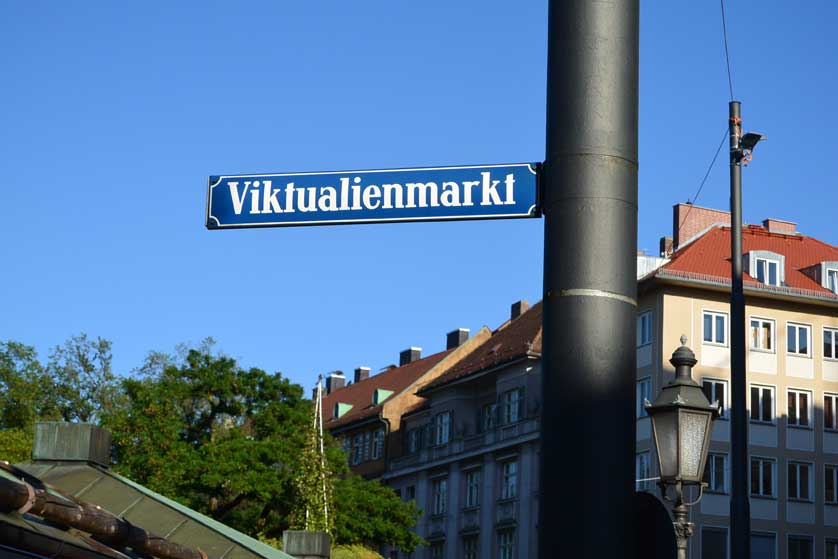 Viktualienmarkt, one of the great food markets in Europe
Other must-sees are Viktualienmarkt, one of the great food markets in Europe; the Schloss Nymphenberg, the largest rococo palace in Germany; and the English Garden, one of Europe's largest parks.
The Viktualienmarkt is a colorful hub of culinary delights nestled in the heart of the city. Steeped in history dating back to 1807, this open-air market is a feast for the senses, offering a plethora of fresh produce, artisanal cheeses, aromatic spices, sausages of all kinds known to (Ger)man plus Bavarian specialties.
The colorful stalls brim with fruits and vegetables, while the tantalizing aroma of freshly baked breads and pastries wafts through the air. Enjoy a refreshing beer in the beer garden, or simply stroll and soak up the lively atmosphere.
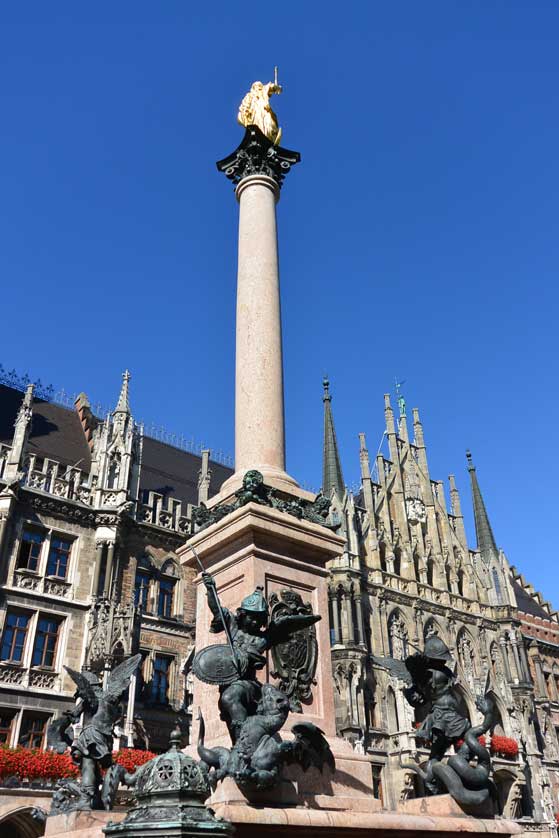 Mariensäule ('Mary's Column') in Marienplatz
Following the Marienplatz, perhaps Munich's most well-known symbol is its Frauenkirche church (known simply as Dom), which stands just off the Rathaus and dominates the skyline with its onion dome.
Also in Marienplatz is the Mariensäule ('Mary's Column'), a Marian column dedicated to Mary, the Protector of Bavaria, and erected in 1638 to commemorate the end of Swedish occupation of the city during the 30 Years War (1618 to 1648).
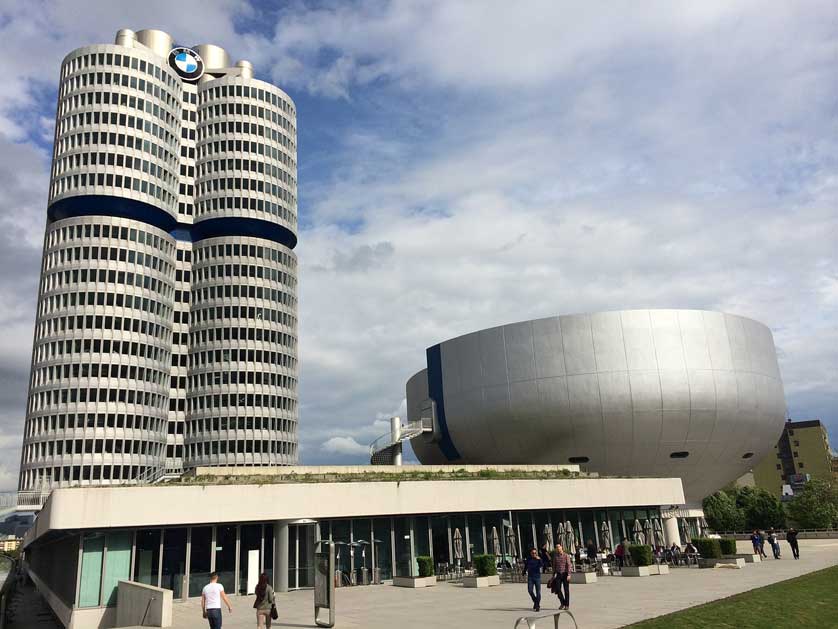 BMW Museum, Munich, Germany
The city's museums include the Alte Pinakothek, an architectural gem housing one of the world's most significant collections of European paintings from the Middle Ages to the end of the Baroque period. Established in 1836 by King Ludwig I of Bavaria, the museum showcases masterpieces by renowned artists such as Albrecht Dürer, Rembrandt, and Rubens, offering visitors a comprehensive journey through the evolution of European art.
The Pinakothek der Moderne was designed by architect Stephan Braunfels and opened in 2002. It houses an extensive collection of modern art, design, architecture, and works on paper.
The Old Town Hall (Altes Rathaus) houses the Toy Museum, offering visitors a whimsical journey through the world of toys and playthings from different epochs.
 The 17th century Theatine Church of St. Cajetan and Adelaide
As the world's largest museum of science and technology and the largest museum in Munich, the Deutsches Museum has a huge collection of artifacts and exhibits spanning various fields, from aerospace to telecommunications.
The BMW Museum, housed in a futuristic building, celebrates the legacy of one of Germany's most famous automotive brands. Take an immersive journey through the history of BMW anbd its cars either going it alone or on a guided tour. The museum opened in 1973.
Lenbachhaus is renowned for its impressive collection of modern art by prominent artists such as Wassily Kandinsky, Paul Klee and Franz Marc. The Lenbachhaus is most famous for its collection of paintings by Der Blaue Reiter (The Blue Rider), a group of expressionist artists based in Munich in the early 20th century of which Kandinsky was a member.
The Residenz Museum is a testament to Bavaria's rich cultural heritage and royal history. Formerly the royal palace of the Wittelsbach monarchs, it now serves as one of Europe's most impressive palace museums. The complex of buildings contains ten courtyards and has 130 rooms. Stepping through its grand halls, visitors are transported through centuries of art, architecture, and regal splendor. The museum's vast collection showcases exquisite furnishings, tapestries, and artwork from various periods, including the Renaissance, Baroque, and Rococo eras. Highlights include the opulent Antiquarium, the largest Renaissance hall north of the Alps, and the breathtaking Treasury, home to priceless jewels and artifacts.
The Siegestor, or Victory Gate, is a majestic architectural landmark on Leopoldstraße. Built in the 19th century to commemorate Bavaria's victories in battle, the Siegestor stands as a symbol of resilience and triumph. Adorned with intricate sculptures and reliefs, this neoclassical triumphal arch exudes grandeur and prestige. Its central archway is flanked by four imposing columns, while the pediment above bears inscriptions celebrating peace and victory. Despite bearing scars from World War II, the Siegestor has been lovingly restored.
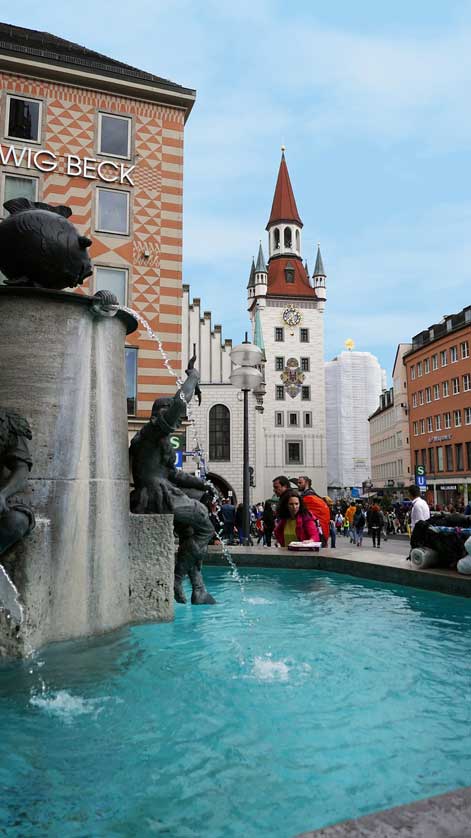 Fischbrunnen Fountain
50 km south of Munich, the pretty spa town of Bad Tölz on the Isar River can be reached by direct train (Bayerische Oberlandbahn) from Munich Hauptbahnhof in about an hour. Renowned for its healing thermal springs, which have been utilized for centuries for their purported health benefits, Bad Tölz has attracted visitors seeking rejuvenation and wellness since Roman times. The town's thermal baths and spa facilities offer a range of treatments and therapies, from hydrotherapy to mud baths, providing visitors with a holistic approach to health and well-being.
Dachau Concentration Camp Memorial can be accessed by S2 from Munich Hauptbahnhof in about 22 minutes, then take bus no #724 or #726 or walk. The town of Dachau, itself is very pretty with a lovely Altstadt and a small Renaissance Palace set in an ornamental, strolling garden.
 Pretty town of Dachau, Bavaria, Germany
The Memorial stands as a solemn reminder of one of the darkest chapters in German history. Dachau was the first Nazi concentration camp, beginning first with German political prisoners and then serving as a prototype for the network of oppression and suffering that would engulf Europe during World War II.
Visiting is a haunting experience, as one confronts the harrowing reality of the atrocities committed within its walls. Rows of barracks, gas chambers, and crematoria bear witness to the unimaginable suffering endured by prisoners subjected to starvation, torture, and systematic extermination. The memorial serves not only as a tribute to those who perished but also as a stark warning against the dangers of hatred, prejudice, and indifference. In the somber silence of Dachau, visitors are compelled to reflect on the fragility of human dignity and the imperative to ensure that such horrors are never repeated.
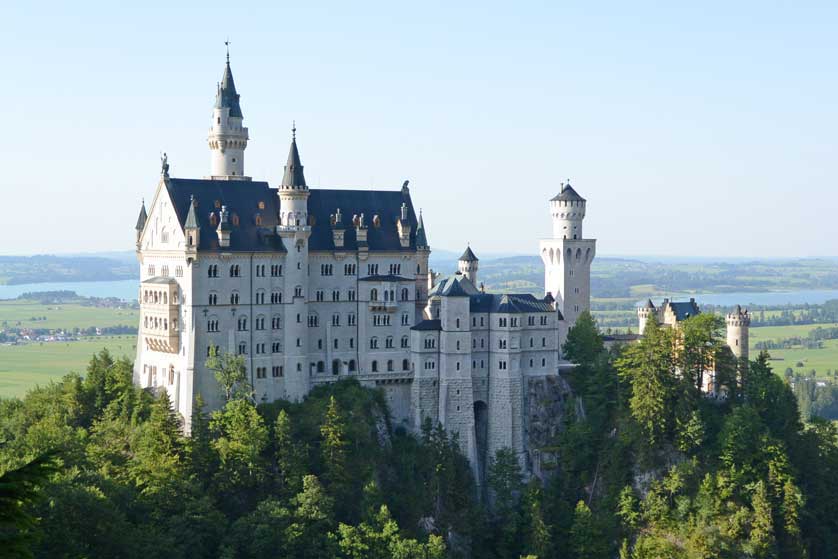 Neuschwanstein Castle, perched atop a rugged hill in the Bavarian Alps, epitomizes the romanticism of 19th-century architecture
 The picturesque Alpsee Lake near Neuschwanstein
Neuschwanstein is around 120 km southwest of Munich and can be visited on a day trip. Although to get the most out of Neuschwanstein Castle and Hohenschwangau Castle it is best to spend a night in nearby Füssen.
Nestled amidst the picturesque Bavarian Alps in Germany, Neuschwanstein Castle stands as a testament to both the romanticism of the 19th century and the architectural prowess of King Ludwig II of Bavaria. Commissioned in 1869 and completed in 1886, this enchanting castle was intended as a retreat for the reclusive king, inspired by the romantic operas of Richard Wagner.
Designed by architect Eduard Riedel and later modified by Georg Dollmann, Neuschwanstein blends various architectural styles, including Romanesque and Gothic Revival, creating a fairytale-like structure that seems straight out of a storybook. Its soaring towers, intricate carvings, and lavish interior decorations reflect Ludwig's fascination with medieval chivalry and fantasy. Beyond its aesthetic appeal, Neuschwanstein also served as a technological marvel of its time, featuring innovative amenities such as central heating and running water. Today, the castle attracts millions of visitors annually, captivating them with its timeless beauty and the intriguing legacy of its enigmatic creator.
 Marienbrücke (Mary's Bridge) offers great views of Neuschwanstein Castle
Nearby Hohenschwangau Castle represents a quintessential example of 19th-century neo-Gothic architecture and holds significant historical and cultural importance. Constructed on the ruins of a medieval fortress in the early 19th century, Hohenschwangau was the childhood residence of King Ludwig II of Bavaria and served as a royal retreat for the Wittelsbach family. Designed by architect Domenico Quaglio and later renovated by Julius Hofmann, the castle's imposing yet elegant facade, adorned with turrets, battlements, and ornate decorations, reflects the Romantic ideals of the era. Its interior boasts richly decorated rooms, adorned with frescoes depicting medieval legends and Bavarian folklore, as well as a vast collection of period furnishings and artworks. Hohenschwangau Castle offers visitors a glimpse into the lavish lifestyle of Bavarian royalty and provides valuable insights into the cultural and historical heritage of the region.
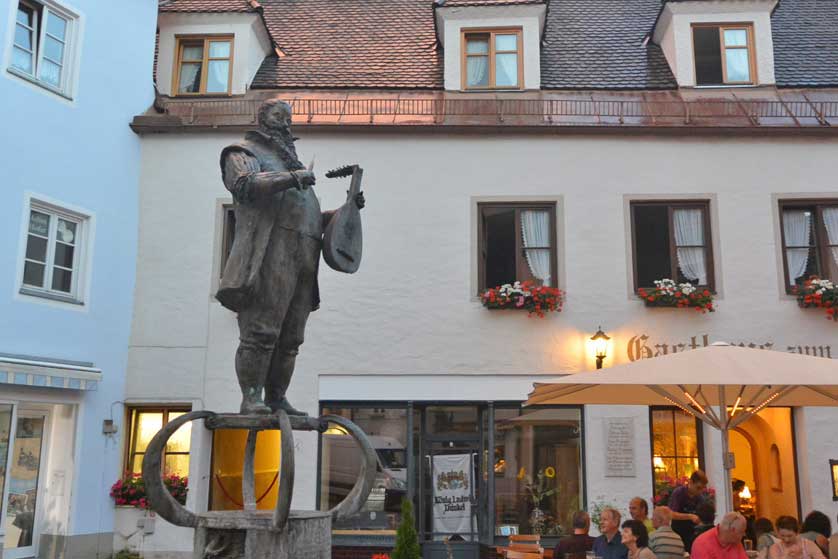 Statue of Kaspar Tieffenbrucker (born near Füssen), one of the first to produce the violin in its modern form in the 16th century
To visit both castle spend the night in the small town of Füssen which is not without its own charms. These include the well-preserved medieval Old Town, featuring colorful buildings, cobblestone streets, and picturesque squares.
Füssen also holds a special place in the history of the lute, a stringed instrument popular during the Renaissance and Baroque periods. With a tradition dating back centuries, the town has long been a hub for lute and violin production and performance, with skilled artisans crafting instruments and musicians honing their craft in the town. Today, Füssen continues to celebrate this musical legacy through festivals, concerts, and workshops dedicated to the lute.
In addition, Füssen (just 1 km from the Austrian border) also offers ample opportunities for outdoor activities such as hiking, cycling, and skiing.
Hotel Schlosskrone, Prinzregentenplatz 4, Füssen, 87629, Tel+49 (0) 83 62 930 180 is an excellent hotel to base in the town.
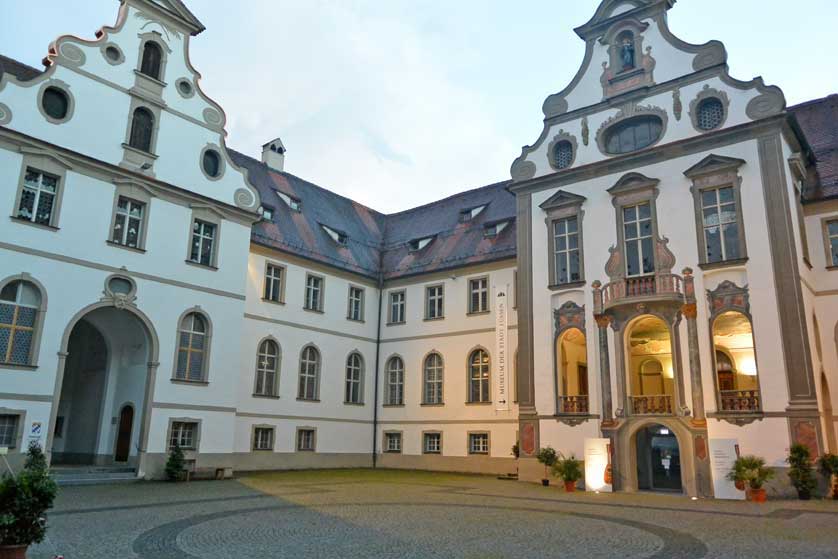 St. Mang's Abbey, Old Town, Füssen, inside the Heritage Museum displays one of the largest collections of historical lutes and violins in Europe
Munich Tourist Office, Sendlinger Str. 1, D-80331 Munich
Phone: ++49/ 89 / 233 03 00, Fax: ++49 / 89 / 233 30 233
Email: tourismus@muenchen.de
Bad Tölz Tourist Office, Max Höfler Platz
Phone: ++49 8041 78670
Konrad-Adenauer-Straße 1
Phone: ++49 (0)8131 75286
May to October: Monday to Friday 10 am to 5 pm (and July to September, Sunday 10 am - 2 pm; November to April: Monday to Friday 10 am to 4 pm, plus Saturday 10 am - 2 pm
Kaiser-Maximilian-Platz 1,
87629 Füssen
Tel. ++49 8362 93850
Monday to Friday 9 am to 5 pm; Saturday 9 am to 1 pm.
 Dachau Memorial, Germany
Munich International Airport (Franz-Josef Strauss) has flights bound for cities all over Europe, New York, and Asia. The airport (28 km from the city) is connected by the S1 & S8 trains to the Hauptbahnhof.
The trip takes 40 minutes and runs every 20 minutes from 4am to 1 am. The fare is €8. There is also an airport bus to and from Arnulfstrasse, on the north side of the Hauptbahnhof, between 6:50 am and 7:50 pm; it takes about 45 minutes. A taxi into town costs about €70.
Munich is well-connected on the autobahn network. The A9 to Nuremberg, the A8 to Salzburg in Austria, the A95 to Garmisch and the A8 to Stuttgart.
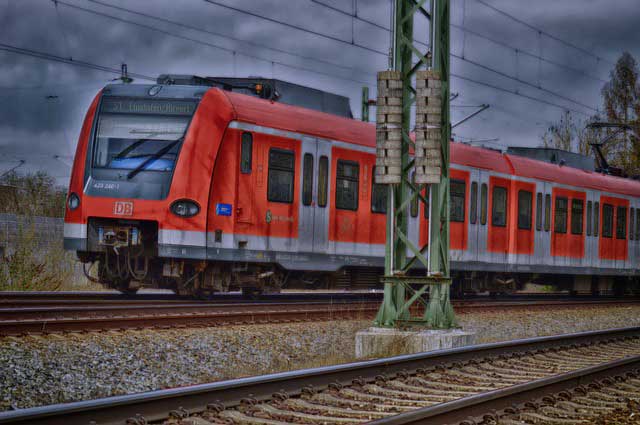 S-Bahn
The Hauptbahnhof, which is the main railway station, is located on Bahnhofplatz in the center of town. There are 20 daily trains to Frankfurt, 23 to Berlin. Salzburg is 90 minutes away by train.
Getting Around Munich
Munich's excellent public transport system (MVV) is zone based with tickets valid for the U-Bahn, S-Bahn, trams and buses.
Day passes for individuals and groups are available, including the Munich Welcome Card which gives unlimited travel on public transport. The U-Bahn closes at 12.30 am on weekdays and 1.30 pm at weekends, though a network of night buses (Nachtbusse) still operate.
 Tram, Munich, Germany
Hotel Atrium: 4 Star Hotel with 160+ rooms near the main railway station.
Book this Hotel
Search Hotels in Germany - Booking.com - hotels throughout Germany.
Book Hotel Accommodation in Germany - Agoda - hotels throughout Germany.
Find Hotels in Berlin - Booking.com - cheap accommodation throughout Germany
Hotels in Germany - Agoda.com - find hotels in all locations.
Hotels in Munich - Booking.com
Michelin restaurants in Munich include Little London Bar & Grill, Mountain Hub Gourmet, La Bohème, Broeding, Restaurant Kafer-Schänke, Essence Restaurant, Le Stollberg, Vinothek By Geisel, Schwarzreiter Tagesbar & Restaurant, Esszimmer Munchen, Les Deux Restaurant & Brasserie by Kieffer and Mountain Hub Gourmet.
List your restaurant here for FREE. Contact Us
There are numerous bars and eateries close to Mariensplatz and Munchner Freiheit and there are over 20 traditional Bavarian beer halls including the world-famous Hofbrauhaus, although the Augustiner-Keller is the oldest in the city.
List your bar, cafe or club here. Contact Us
List your cafe here for FREE! Contact Us

Munich has three Bundesliga teams: FC Bayern München, TSV 1860 München and SpVgg Unterhaching. Bayern is one of the perennial powerhouses of German soccer and European Cups, whereas TSV (nicknamed 'The Lions') rarely growl.
Great players of the past such as Beckenbauer, Maier, Müller, Breitner, Hoeness, Rummenigge, Matthaus and Klinsmann are associated with the glory days of Bayern in the 70s and 80s.

After sharing the old Olympiastadion Bayern and TSV will play their home matches at the new 66,000-seat Allianz Arena, which also has an excellent museum with displays on the history of Bayern Munich and tours of the impressive stadium. TSV later moved out and now play at 15,000 capacity Grünwalder Stadion.
Unterhaching, located in Munich's suburbs, are currently in the third division (3. Liga) and struggle to pull in the crowds with two other Munich teams to compete with.
A Football Fan's Guide to Munich
 Allianz Arena, Munich, Bavaria, Germany
 Map of Munich
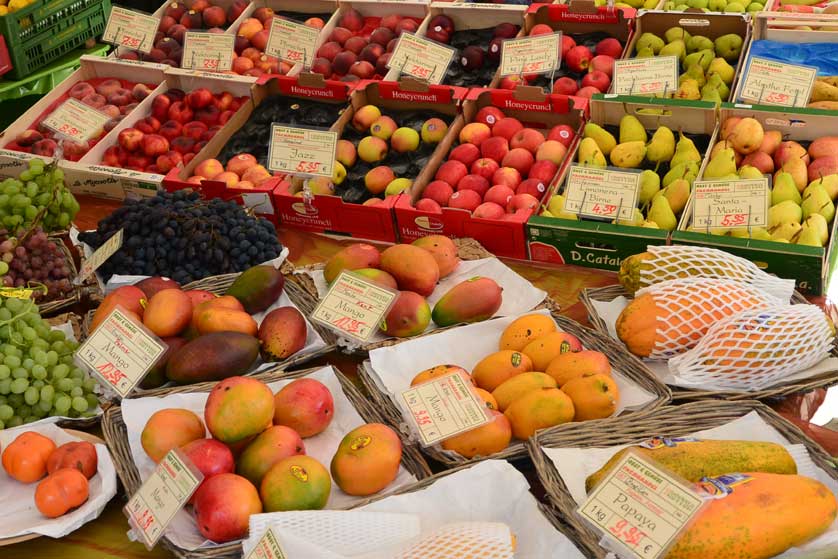 Fruit stall at the Viktualienmarkt
 Königsbau, Residenzmuseum
 Maximilian I Joseph Monument, Max Josef Platz
 The Altes Rathaus houses the Toy Museum
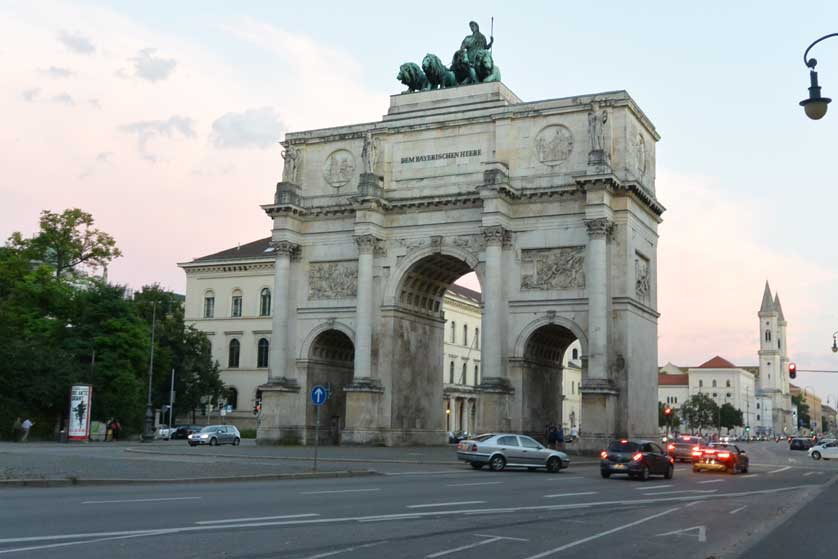 The Siegestor stands 21 meters tall and dates from 1852
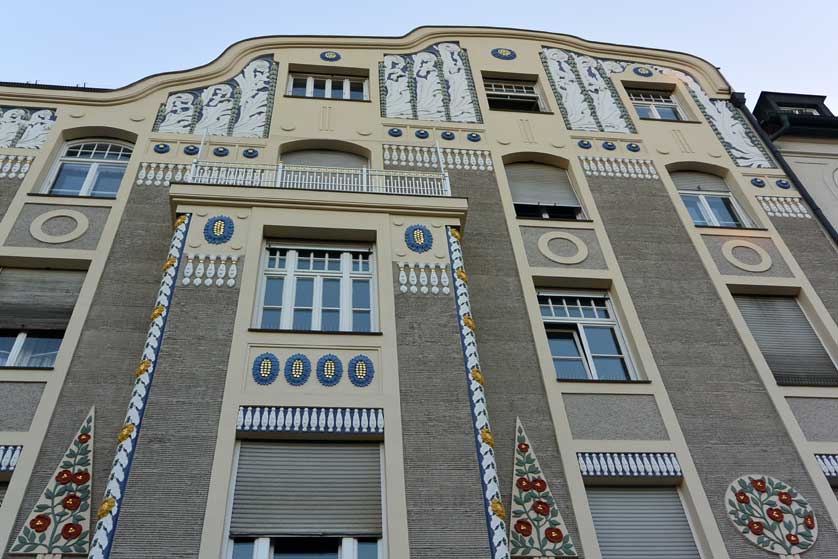 Art Nouveau Dülferhaus building on Leopoldstraße
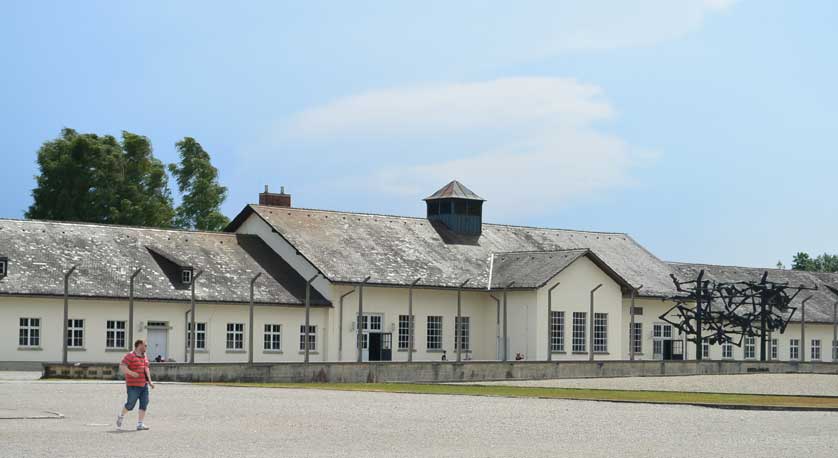 Dachau Concentration Camp