
Things to do in Busan: Busan Attractions
Daniel Allen
Sun, Sand, Springs & Seafood: Busan's natural wonders draw the crowds

Home to nearly 4 million people, Busan is South Korea's second largest city, and is actually closer to Japan than the capital Seoul.
Although the city does have some cultural sights, Busan is best known for other attractions, such as its numerous beaches, hot springs and fish markets, and its international film festival held each autumn.
Resting at the southern tip of the Korean Peninsula, Busan has a relaxed, cosmopolitan feel, with sailors from around the world passing through, and increasing numbers of tourists (mostly from Japan, China and Russia).
Due to its natural harbor and gentle tides, Busan is the largest port in the country and the third largest in the world. It nestles in the Nakdong River Valley, surrounded by the ocean on one side, mountains on the other, with hot springs scattered throughout. Busan is known as South Korea's summer capital, and its six beaches attract hundreds of thousands of Korean holidaymakers from all over the country.
As Busan has developed between mountain and coastline it is unusually elongated, and, as a result, it has more than one city center. The area around Busan's ports bustles with energy as boats arrive daily from all over Asia, and nearby Nampodong is home to the massive Jagalchi Seafood Market.
The tourist center of Haeundae boasts some of the country's finest resort hotels, while the Seomyeon neighborhood is a paradise for fashionistas and anyone who loves to shop. And the old city center, Dongnae, in the north toward the mountains, is a great place to experience hot springs and Korean-style bathhouses (jjimjilbang).
Eating in Busan
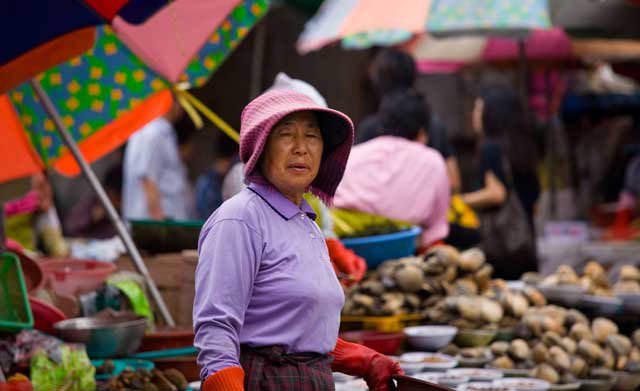
Located in Busan's venerable Nampodong area, Jagalchi Market takes its name from a time when it stood beside a pebble beach. Jagal means "small rocks," and chi - a pure Korean word - denotes a village next to the seashore. During the Japanese occupation concrete wharves and jetties replaced the beach, allowing catches to be unloaded and transported more easily, but the name remains as a reminder of less commercial times.
Today Jagalchi is southeast Asia's biggest fish market, reliant on the richness of the ocean like never before. Fishing ports all around the Korean coastline supply a cornucopia of live, wet and dried marine produce, which often resembles something out of a Jules Verne novel rather than a potential meal. An array of sights, smells and sounds often combine to produce an overpowering first-time experience.


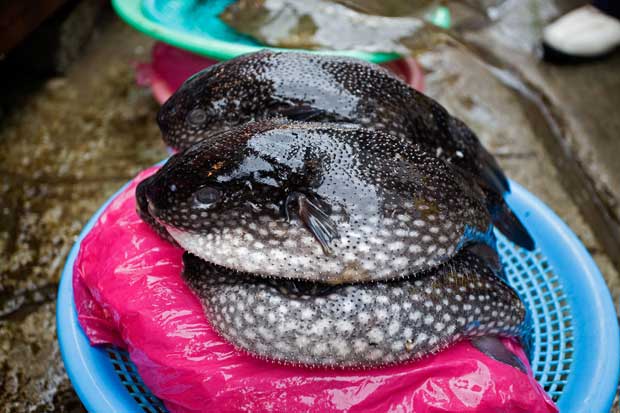
The narrow walkways outside Jagalchi's two main buildings are where the action is most hectic. Dried flatfish, moray eels and cuttlefish adorn al fresco stalls, while tables groan under the weight of huge purple octopi, buckets of garish sea squirts and spiny sea urchins, and bowls of assorted crabs, shrimp and shellfish. Live baby octopi make spirited bids for freedom across the wet floor, while local residents haggle over wriggling eels and iridescent anchovies.
The newer, multi-storied buildings of Jagalchi, which house the live seafood stalls and restaurants, make for a less frantic yet equally diverting experience. In overcrowded aquaria massive spider crabs delicately pick their way through tangles of encrusted limbs. Fish of all shapes and colors thrash about in glass and metal tanks. Ajimae and younger workers in gaudy yellow aprons mix up thick seafood stews and sauces, fillet fish with razor sharp blades, and take the latest customer orders.

A stone's throw from downtown Busan, the small fishing village of Dabyeon is now thriving off the demand for Korean seafood. Before the 1950's Dabyeon was just a strip of white sand and a row of weather-beaten fishing skiffs. These days the village has swelled to 500 households, and its well-protected harbor is home to a diverse flotilla of fishing craft, from bobbing rowboats through to sizeable, rust-streaked trawlers.
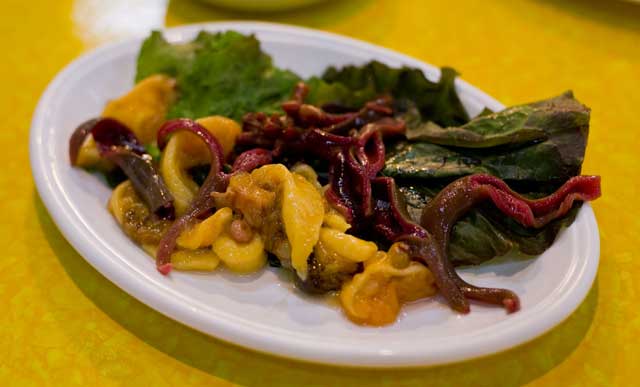
The specialty of Gijang is undoubtedly its huge anchovies, estimated around 10-15cm in length. Rich in fat, the delicious tender flesh of anchovy is used to prepare mouth watering dishes. Here you can also taste anchovy sushi, which is rarely found in other areas. There are numerous raw fish restaurants run by local villagers in the port area.
Things to do in Busan: Beaches
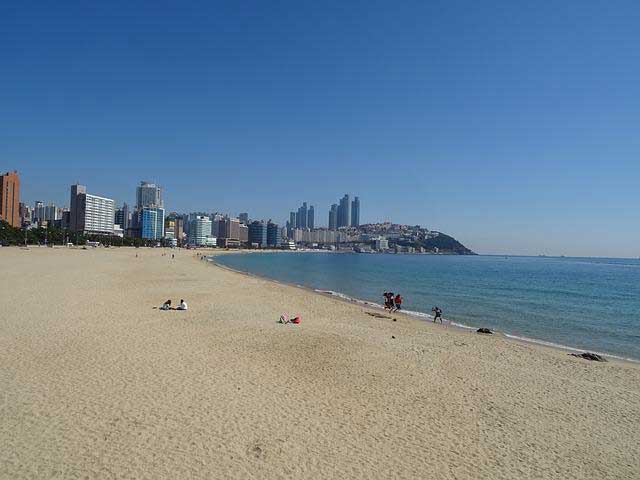
Busan is best known for its seven beaches, although these can get very crowded in summer. Haeundae Beach is a very popular spot and home to the Busan Aquarium, the largest in the country. It is also famous for the various cultural events and festivals held throughout the year. At Haeundae Beach there is a Folk Square where visitors can enjoy traditional games such as neoldduigi (see-saw jumping), Korean wrestling, tuho (arrow throwing), tug-of-war and yutnori (a traditional Korean board game).
Directly behind Haeundae beachfront, the Pusan (as Busan was once known) International Film Festival is held during the first part of October. The Pusan International Film Festival (PIFF) was launched in 1996 and was the first film festival to ever take place in Korea.
It is currently Korea's largest film festival and is known as one of the most dynamic in the world, making it the film festival in Asia. Last year it attracted over 1100 movie professionals and 400 film companies.

Hosted in Busan's (Pusan's) beach resort area of Haeundae this area comes alive during PIFF with film viewings, festival parties and of course many of the stars of Asian cinema.
Another notable feature is the appeal of the festival to young people, both in terms of the large youthful audience it attracts and through its efforts to develop and promote young talent.
Haeundae Beach Resort
Haeundae Beach Resort is a great area to stay with many luxury beachside hotels such as the Commodore Hotel, The Lotte Hotel and The Paradise Hotel, as well as a top attraction in the evening with its many seafood restaurants.
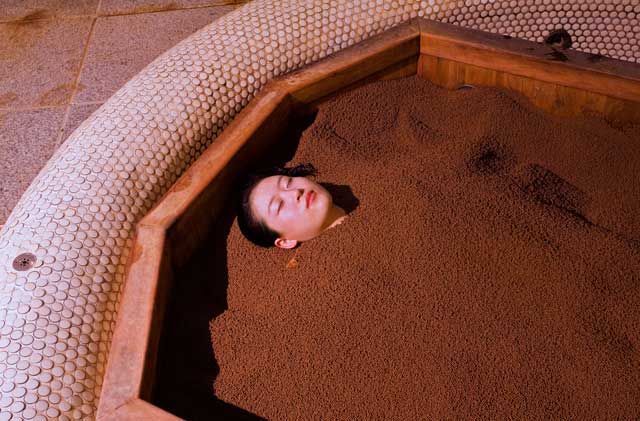
In Busan's Dongnae area, Hurshimchung Spa is one of the largest spas in the world, and is a great place to pamper yourself for an afternoon. The spa has multiple levels - one floor is just jjimjilbang (traditional Korean sauna), with igloo-shaped structures made out of clay where you can alternately steam yourself alive or sit in freezing temperatures.
There is also a "doctor fish" facility where shoals of small fish remove dead skin from your immersed feet. On an upper floor are the "grand hot springs", a huge atrium full of pools and waterfalls of varying temperatures, plus an excellent heated sand bath - don't fall asleep!
Further Busan (Pusan) Info & Access
Busan is Korea's second largest city and is well-served by a range of international airlines. Apart from direct flights there are also many flights each day between Seoul's Gimpo Airport and Busan on national carriers Korean Air and Asiana - these only take 45 minutes. Another option from Seoul is the KTX high-speed train which takes just over 2 hours and departs regularly from Seoul Station.
Jagalchi Market is easily reached by subway - get off at either Jagalchi or Nampodong stations on Line 1 and then ask for directions (5 minutes from either station). Dabyeon is a short taxi ride from Busan, and should cost no more than US$10.
Korea has a bilingual, 24-hour tourist helpline with information on dining, accommodation, events, transport etc. In Busan dial 051 1330.
The annual Jagalchi Cultural Festival takes place in late October. A parade to the market marks the opening of the festival , while on the night before the Yongwang and P'ung-o rituals seek to ensure a good catch and the well-being of local fishing crews. Visitors can try catching a fish with their bare hands, although most consider the real treat to be eating them, either raw or cooked in Korean barbecue style.
Busan Related
View more images of Korea
Book Hotel Accommodation in Busan South Korea
Busan offers a wide range of accommodation from five-star hotels along Haeundae Beach to cheaper alternatives in the city center and near the railway station. Here are some recommendations.
Part of the Japanese Toyoko Inn chain, Toyoko Inn Busan Station No.1 offers three-star lodgings in a convenient location.
Similarly, Toyoko Inn Busan Seomyeon is close to Seomyeon subway station in the heart of the city.
Arban Hotel in Busanjin-gu is a three-star property with a restaurant and a bar close to Seomyeon Medical Street and Bujeon Market.
Going upmarket, the Ananti Hilton Busan offers five-star accommodation complete with rooftop pool, a fitness centre, and sauna.

Stay in South Korea
Hotels in Korea - Booking.com
Hotels in Seoul - Booking.com
South Korea Hotels - Agoda
Seoul Hotels - Agoda
Find Hotels in Daegu - Agoda
Hotels in Busan - Agoda
Book Daegu Hotels - Booking.com
Incheon Hotels - Agoda
Book Incheon Hotels - Booking.com
Pyeongchang Hotels - Agoda
Suwon Hotels - Agoda
Search Suwon Hotels - Booking.com
Ulsan Hotels - Agoda
Uncover Ulsan Hotels - Booking.com