
UK Stadiums: Home Park Stadium, Plymouth, England

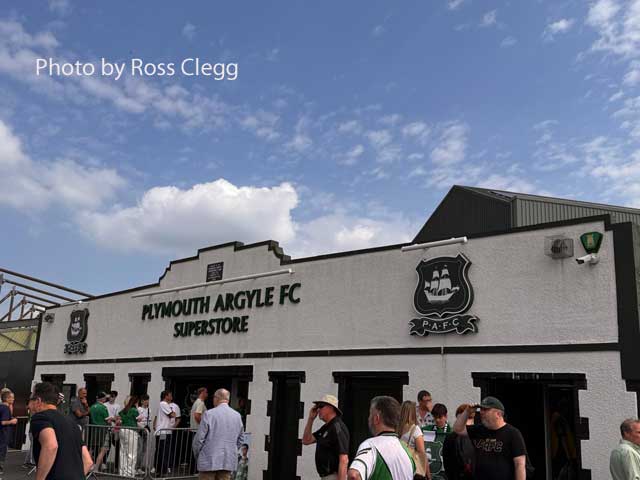
Home Park Stadium, located in Plymouth, Devon, England, is the home ground of Plymouth Argyle Football Club. With a seating capacity of 17,900, it has been the club's home since 1903. The ground itself dates from 1892.
Capacity & Stadium Overview
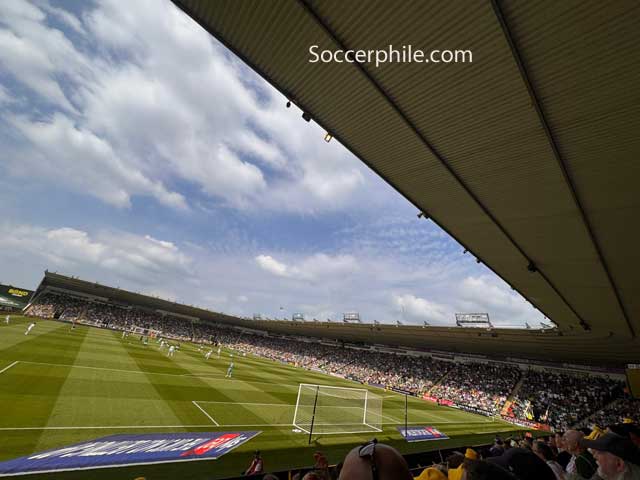
The current capacity of Home Park is 17,900. The ground underwent significant redevelopment during the 1920s and 30s. It suffered heavy bombardment in World War II. It opened in time for the resumption of the Football League in 1945. The stadium remained unchanged for long periods until 2001, when construction of three new all-seater stands began. The Mayflower Grandstand, the oldest part of the arena, was redeveloped in 2019.
Home Park holds the record attendance of 43,596 to date, set in 1936 during a Second Division match against Aston Villa. The stadium was also part of the FA's bid to host the 2018 FIFA World Cup.
Stands
Home Park has two stands and two ends, which is the norm in professional English football. The stands are the Beacon Electrical Mayflower Grandstand and the Portcullis Legals Lyndhurst Road Stand. The names of the ends are Babcock International Devonport End and the Kawasaki Barn Park End.
The Beacon Electrical Mayflower Grandstand: The oldest part of the stadium, this two-tiered stand houses hospitality areas, executive seating, and the family zone. It has a capacity of 5,403 seats.
The Babcock International Devonport End has a seating capacity of 2,832.
The Portcullis Legals Lyndhurst Road Stand is the largest stand, seating 7,072 spectators, including the Zoo Corner and a dedicated family area.
The Kawasaki Barn Park End accommodates both home and away fans, with a seating capacity of 2,907.
Most of the hardcore Argyle fans are located in the Devonport End, which has a capacity of 2,832 seats. Away fans are housed in the Barn Park End, but Plymouth only allow half of the end to be occupied by the away support.
The stadium is equipped with two pitch covers - one for rain and another for frost - to shield the playing surface from harsh winter conditions.
The stadium underwent significant redevelopment in 2001 and 2019, enhancing facilities and seating arrangements.
Stadium Miscellaneous
The city of Plymouth was targeted by Nazi Germany incessantly during the Second World War due to its proximity to HMNB Devonport, a key naval base for the British. Although Home Park did not have militaristic significance, it suffered heavy collateral damage. The ground was devastated in April 1941 after a series of Luftwaffe bombing raids, known as the Plymouth Blitz. The Grandstand was severely damaged, leaving Argyle with a significant reconstruction task ahead of the post-war Football League season.
The impact of the war was felt at Home Park even during peacetime, as disused army huts became temporary changing rooms, and railway sleepers were used for terracing.
The 1945-46 season is typically excluded from official records because of its exceptional circumstances. But we do know Argyle's first official match back at the ground was against West Ham United in the Second Division in August 1946. Over 25,000 spectators were in attendance to see Argyle win 3-1.
Home Park became an unusual venue for a European Cup Winners' Cup tie between Manchester United and AS Saint-Etienne in October 1977. Following the unrest caused by United supporters during the away tie in France, UEFA imposed a sanction requiring the Red Devils to play their home match no closer than 120 miles from Old Trafford. United were, in fact, lucky to still be in the competition as they were initially expelled, only readmitted on appeal. Goals from Steve Coppell and Stuart Pearson were enough to secure a 2-0 win for United, the English side advancing 3-1 on aggregate.

A Futile Attempt
Argyle announced in August 2009 that Home Park would undergo major redevelopment and regeneration of the surrounding area in time for the 2018 FIFA World Cup. Global architectural firm Populous Holdings would design a 46,000-capacity all-seater arena, with an indoor facility and hotel built into the complex. It was reported that the cost would be at least £50m.
The city of Plymouth presented the bid at Wembley Stadium in November 2009. Numerous businesses and clubs from Devon and Cornwall endorsed the proposal. Sadly for the FA, it was announced on 2 December 2010 that England had lost out to Russia. The decision proved to be calamitous for Argyle, which entered administration due to the withdrawal of funds from the consortium that was in charge of the club.

Club History
Plymouth Argyle Football Club dates from 1886. Argyle joined the Football League in 1920 and quickly established itself as a competitive side, achieving notable successes such as winning the Third Division South title multiple times. The club's nickname, "The Pilgrims," reflects the city's historic association with the Mayflower ship. Over the decades, Argyle has experienced various highs and lows, including promotions to higher divisions and challenging relegations.
The club is the southernmost and westernmost league club in England, and the only professional football club in the country with the name "Argyle."
Argyle Football Club was founded in 1886, marking the beginning of the club's history. They would lose their first match against Caxton 0-2. But they were off the mark a week later, beating Dunheved College by two goals to one.
It was at Marsh Mills, on the city's edge, that Argyle first found a sense of stability. The club adopted its current name in 1903, the same year they became a professional outfit. Their first game after the status change was against West Ham United, resulting in a 2-0 win. Their first home match also ended 2-0, overcoming Northampton Town.
Argyle toured South America in 1924, a trip etched into folklore. They dismantled the Uruguay national team 4-0, an extraordinary result considering La Celeste became World Cup champions six years later. They grabbed a commendable 1-0 win over Argentina and held powerhouses Boca Juniors to a 1-1 draw. The tour raised the profile of Moses Russell, a Welsh full-back who spent the majority of his career at Argyle. Although Russell's skill was unquestioned, he drew criticism after the Boca match for scoring a penalty intended to miss, an arrangement made by Patsy Corcoran to prevent further pitch invasions that had already marred the game multiple times. The goal of Russell prompted another invasion and subsequent abandonment.
Ups and Downs of the 1960s
In 1964-65, Plymouth enjoyed a magnificent League Cup run as a second-tier side. After seeing off the likes of Stoke City and Northampton Town, they faced Leicester City in a two-legged affair. Leicester were a respectable team, containing Colin Appleton and Gordon Banks in their ranks. The Foxes came on top in both legs, but fell short after losing to Chelsea in the final. Argyle are yet to reach the final of either the League Cup or the FA Cup.
Argyle finished rock bottom in the 1967-68 Second Division standings.
Highlights of the 1970s
On March 14, 1973, 37,639 spectators at Home Park witnessed an unforgettable encounter between Argyle and Santos FC, and the later playing years of Pele. Santos, at this time, used Pele's name to increase their brand, and had played Fulham at Craven Cottage just two days before. They also had games at Villa Park and Hillsborough in previous years. Financial issues arose before kick-off, as the agreed flat fee of £2,500 was considered insufficient by the Santos hierarchy, given the large crowd in attendance. Santos threatened to go on strike unless Plymouth doubled their amount. Backed into a corner, Plymouth felt they had no choice but to pay.
The match had a dream-like quality for Argyle, leading 3-0 at one stage. However, goals from Pele and Edu made Plymouth sweat in the late stages, but ultimately held out for a win.
1973-74 was another joyous campaign on the League Cup front, reaching the semis after overcoming Queens Park Rangers at Loftus Road in Round Four and then Birmingham City at St Andrew's in the following round. But Manchester City proved too much of an obstacle. Plymouth earned a credible 1-1 draw at home, but the tie at Maine Road got away from them after conceding a goal each from Francis Lee and Colin Bell. It was an incredible achievement by the Third Division team.
Positivity of the 1980s
Ten seasons after that amazing League Cup run, Argyle rekindled that spirit by getting to the semi-final again, this time in the FA Cup. Again, a third-tier side, they defeated teams such as Darlington, top-flight West Brom and Derby County after a replay.
The semi-final date was with Watford, who had their own fairytale story to tell. Inspired by Sir Elton John's business acumen, Graham Taylor's side were dangerous, with Plymouth defenders especially alert to John Barnes.
The crucial goal at Villa Park came relatively early, George Riley on the end of a cross from Barnes, who would debut for England a month later. Argyle legend Kevin Hodges and co kept it tight at the back, but Plymouth found it hard to carve out scoring opportunities. In the end, the gulf in class between a top-flight club and a third-tier club was on display. Watford were later denied at the last hurdle, losing to Everton 0-2 in a famous final at the old Wembley Stadium.
In 1985-86, which was Dave Smith's first full season in charge, Plymouth gained promotion from the third division by finishing second. The following season, Argyle sprung a surprise by ending the campaign in seventh. Smith would leave Argyle fans in shock by choosing to manage Dundee FC in 1988.

The Turbulence of the 1990s
In October 1991, businessman Dan McCauley became chairman, instantly making consequential decisions. McCauley had amassed his fortune through the development of the Tiverton-based engineering firm Rotolok. Ahead of the 1991-92 Second Division campaign, McCauley dismissed Dave Kemp and appointed Peter Shilton as player-manager. Plymouth accumulated a miserly 48 points in 46 games, suffering relegation alongside Port Vale and Brighton. Shilton looked to have rebuilt the team somewhat in the third tier of 1993-94 by finishing third, playing some entertaining football along the way. But the bubble burst in the playoff stage, losing to Burnley 1-3 on aggregate. In a dramatic fall, Argyle were relegated the following season. Shilton was relieved of his duties in early 1995. The former goalkeeper has not managed a team since.
McCauley opted for a more experienced head to guide Plymouth out of the fourth tier in 1995-96, Neil Warnock. After a fourth-place finish, Plymouth had to dig deep in the playoffs, firstly against Colchester United. Down 0-1 from the first leg, Argyle produced a memorable comeback, winning 3-2 on aggregate. Warnock was forced to watch portions of the second leg from the stands after being sent off. In Argyle's first ever Wembley occasion, Trinidad and Tobago international Ronnie Mauge bagged the only goal of the game in the final versus Darlington to clinch promotion.
Sturrock Stabilizes Argyle
Warnock subsequently fell out with McCauley, and the chairman hired and fired Mick Jones and Kevin Hodges in a short space of time. The appointment of Paul Sturrock, though, proved to be smart. Succeeding in the middle of 2000-01, Plymouth were in a dire situation, sitting fourth from bottom in the fourth division. But Argyle rose to 12th, and were in the third tier by the start of 2002-03.
Plymouth were superb in 2003-04. Aided by a solid defense keeping 21 clean sheets, the club stormed to win the championship. However, Plymouth were reminded of the cutthroat nature of the football pyramid as Sturrock was pinched by Premier League Southampton in March 2004.
Argyle enjoyed six-seasons of stability in the EFL Championship between 2004-05 and 2009-10.
In the 2006-07 FA Cup, Plymouth were dreaming of earning a place in the semis and a return to Villa Park but as fate would have it, Watford would prove to be a challenge too far, just like the 1984 semi-final. Algerian winger Hamer Bouazza struck gold for Watford at Home Park, allowing The Hornets the right to play Manchester United at the expense of Argyle.
2007-08 was the best league campaign during this period, with Sylvan Ebanks-Blake chipping in with 13 goals. This was also the season Sturrock returned to the dugout after quitting Swindon Town. But Sturrock couldn't recreate the magic he performed in his first spell, and Plymouth were perilously close to relegation in 2008-09.
2009-10 started with a bang, Krisztián Tímár scoring just five minutes into the season at Selhurst Park against Crystal Palace. But Argyle lost seven games on the spin from matchday three, and never looked like surviving the league. Sturrock was let go in December 2009, replaced by ex-player Paul Mariner. Relegation to League One was confirmed in the penultimate home game, losing 0-2 to Newcastle United. It was a day of contrasting emotions in Devon, as the away side secured a return to the Premiership at the first time of asking. Argyle rounded off the campaign disappointingly, losing to rock bottom Peterborough United 1-2 at home.
Losing Championship Status
The 2010-11 League One season kicked off with Peter Reid in the dugout. They got off to a strong start by defeating Southampton 1-0 at St Mary's Stadium. But their home form was appalling with Brentford, Brighton and Peterborough all collecting easy wins at Home Park before the turn of the year. What derailed Plymouth's season was the run-in during January and February, losing nine out of eleven matches. These were dark days for the club, as the financial situation had become even more complicated. On 21 February 2011, Argyle issued a notice of appointing an administrator and were immediately docked 10 points, falling to last place. Relegation was confirmed with a 1-3 home loss versus Southampton.
In September 2011, Plymouth's joint administrators agreed to sell the club to the Akkeron Group, led by local businessman James Brent. Around the same time, Argyle sold the ground to Plymouth council for £1.6m and agreed to pay £135,000 a year for rent. After exiting administration, Plymouth's form greatly improved, securing safety with three matches remaining. This was a magnificent achievement considering Argyle were cut adrift for the majority of the campaign.
The club were now on an upward trajectory, qualifying for the promotion playoffs in 2014-15. However, Wycombe Wanderers stopped Argyle in their tracks, winning both legs.
Plymouth's performance improved the following season, reaching Wembley Stadium and the playoff final after eliminating Portsmouth 3-2 on aggregate in the semi-finals. The occasion was to be marked with disappointment, however. Lyle Taylor and Adebayo Akinfenwa were the heroes by handing AFC Wimbledon a 2-0 victory.
Argyle were not to be denied, however, in 2016-17. Under the management of Derek Adams, Plymouth had transformed into a formidable side in the division. They went toe-to-toe with Portsmouth for the league crown throughout the season, ultimately losing out on goal difference. Plymouth earned a glamorous FA Cup third-round tie at Anfield to face Jurgen Klopp's Liverpool.
Klopp at this stage of his career preferred to use weakened teams in the early cup rounds, which allowed Plymouth to draw 0-0 and were rewarded a replay. Back at Home Park, Liverpool scraped past a spirited Pilgrims team courtesy of a goal from Lucas Leiva.
Plymouth's yo-yo status was confirmed with relegation to League Two in 2018-19, followed by a swift return the very next season.
Schumacher Comes and Goes
Argyle enjoyed tremendous success in 2022-23 with Steven Schumacher at the helm. Although the 2-5 loss at The Valley against Charlton Athletic on matchday four was worrying, Plymouth kept on accumulating points steadily. Plymouth won the division, earning 101 points in the process. Argyle also ground out results in the EFL Trophy, but were demolished by Bolton Wanderers 0-4 in the final.
The club were hot favourites to go straight back down in the 2023-24 EFL Championship, and they were given a major setback when Schumacher was poached by Stoke City in December. Yet, Argyle could count on the goals of Morgan Whittaker and Ryan Hardie to bail them out regularly. After collecting three wins in their final six matches, including a 1-0 win against Champions Leicester, Plymouth survived by the skin of their teeth.
2024-25 and Beyond
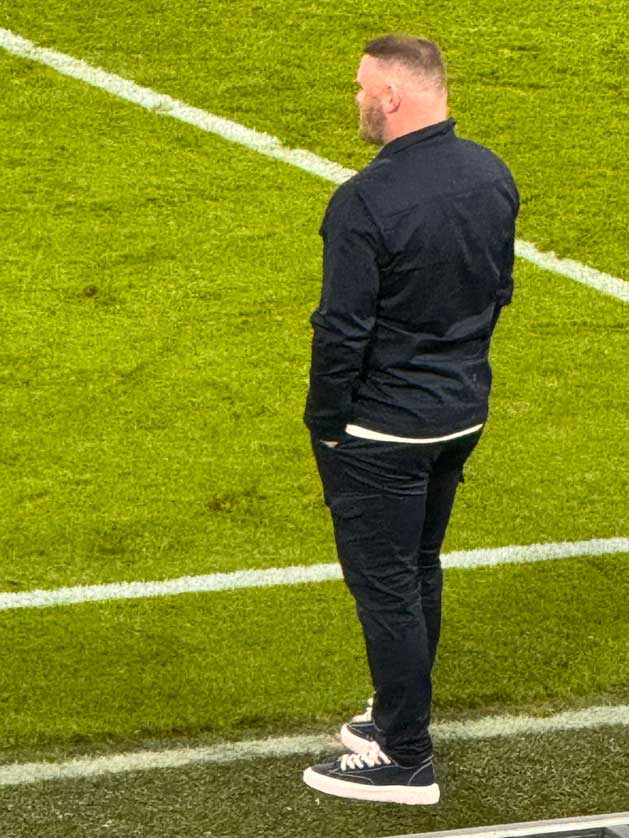
Plymouth were in the news more often than not throughout 2024-25. Championship fans were aghast at the appointment of Wayne Rooney on a three-year deal ahead of the season, having fared so poorly as manager of Birmingham City in his previous role.
Argyle were busy in the transfer market, signing Victor Pálsson in the summer and Andre Gray in October, both on a free transfer. In January, Maksym Talovierov was brought in from LASK Linz. The Ukrainian has since signed for Stoke City.
Rooney's competence was called into question on day one after Sheffield Wednesday put Argyle to the sword at Hillsborough. They were also beaten 0-5 at the Cardiff City Stadium against a beleaguered Cardiff. Supporters had to endure further misery at Carrow Road (losing 1-6), at Ashton Gate (losing 0-4), and at Coventry Building Society Arena (losing 0-4) before Rooney's contract was terminated. Austrian-Bosnian coach Miron Muslic was appointed to replace him. Plymouth had become much more competitive under Muslic, but they were still susceptible to heavy losses, with a 0-5 home loss against Burnley being the prime example. But, joy was to be found at Home Park towards the climax, defeating Norwich and Coventry but most famously Sheffield United in spectacular fashion, with Muhamed Tijani scoring the winner two minutes from time. The season culminated with a 1-2 home loss to Leeds United.
Although results in the league were mostly unremarkable, Plymouth caused a stir in the FA Cup. Brentford were eliminated following a 0-1 defeat at the Brentford Community Stadium, and Plymouth defeated an off-colour Liverpool by the same scoreline. Their dreams were dashed as Manchester City emerged victorious 3-1 at the Etihad Stadium.
Despite the disappointing results, Muslic enhanced his reputation throughout Europe, as he transferred to Schalke 04, one of the many sleeping giants of second-tier German football.
Reports surfaced in mid-June 2025 across several sports media outlets that a US consortium, with Gareth Bale among its members, is in takeover talks with Argyle owner Simon Hallett. Hallett had previously mentioned the limitations of Plymouth's ambitions if they continued to have him as owner, citing his relatively modest wealth.
Plymouth will start 2025-26 with Tom Cleverley in charge as manager.
Club Icons
Jack Leslie is immortalised in Plymouth. Joining the club in 1921 from Barking Town, Leslie broke the glass ceiling as the only black professional player in England during his time. He formed a deadly partnership with Sammy Black, appearing together 327 times.
Leslie was born in Canning Town, London. His father was a boilermaker, while his mother was a seamstress.
Argyle scouted Leslie after seeing his impressive scoring form for his local club, and he scored his first goal for the club against Gillingham in 1923.
He was called up to feature for the England national team in 1925 as a travelling reserve for a fixture against the Republic of Ireland in the Home Nations Championship. However, the invitation was subsequently withdrawn. It is speculated that the members of the FA had been unaware of his ethnicity before sending the invitation. England distanced themselves from Leslie soon after. It was only in 1978 when a black player appeared as a full England international when Viv Anderson made his debut in a friendly against Czechoslovakia.
His legacy has been politicised somewhat. Following the 2020 George Floyd protests in the UK, Plymouth City Council had reportedly proposed to rename Sir John Hawkins Square in the city centre to the 'Jack Leslie Square'.
On 7 October 2022, the commissioned bronze statue of Leslie was unveiled outside the ground. Sculptor Andy Edwards, known for statues of Brian Clough outside Pride Park and Bob Marley in Liverpool, took the lead on the project. The statue is 12 feet tall.
The FA awarded Leslie a posthumous honorary England cap on the same day. The cap was presented to Leslie's family at Wembley Stadium before England faced Ukraine for Euro 2024 qualification.
His most prolific season was in 1928-29, recording 21 goals in 41 league games in the third tier.
For a more recent audience, David Friio deserves a shoutout. The man who worked as the sporting director of Olympique Lyonnais from 2023 to 2024 is an unknown quantity in the general football world, but he is beloved by the Plymouth faithful. After featuring for three relatively small French clubs, he signed for Plymouth in 2000 after Paul Sturrock scouted the defender. But Friio became a box-to-box midfielder at Home Park.
In the following season, the Frenchman had a memorable campaign, as he won the 2001-02 Third Division, the fourth tier of the English game. He was selected in the division's Team of the Year by the PFA alongside his teammates Romain Larrieu, Paul Wotton and Graham Coughlan.
2003-04 Second Division was his best season at the club. He bagged a noteworthy hat-trick in Plymouth's 7-0 demolition of Chesterfield, and recorded a brace each against Sheffield Wednesday and Port Vale. The Pilgrims were in the second tier after they were crowned champions of the division.
2004-05 was to be his last campaign. He scored his last goal for the club in a 1-1 draw with Wolves on 1 January 2005 and his last appearance came a month later at the Madejski Stadium versus Reading.
As it became clear that Friio was not to extend his contract, Plymouth cashed in by allowing him to move to Nottingham Forest for a fee of £100,000 in the 2005 winter transfer window. He closed his playing chapter at the City Ground.
Club Miscellaneous
The number 12 shirt is retired to commemorate the dedicated and loyal fanbase of Argyle. They are often called "Janners,” which is a nickname for the people of Plymouth.
Plymouth's main rivals are Exeter City. But matches against Portsmouth, Swindon, Torquay and the two Bristol clubs are important for bragging rights.
Major Honours
League:
Third tier, Champions: 1929-30, 1951-52, 1958-59, 2003-04, 2022-23
Fourth tier, Champions: 2001-02
Southern League, Champions: 1912-13
Cup:
Runners-up of EFL Trophy: 2022-23
Accessibility
Argyle have dedicated personnel for accommodating disabled supporters. To contact the Supporter Liaison Officer, use the supporters@pafc.co.uk email address. The Disability Liaison Officer can be reached using accessibility@pafc.co.uk.
Plymouth Argyle Disabled Supporters Association, or PADSA, is an organisation committed to improving the matchday experience of all disabled supporters. Their handle is info.padsa@gmail.com.
At Devonport and Lyndhurst Stands, there are a maximum of 80 spaces for wheelchair users. These spaces are at pitch level.
For visiting fans, 28 spaces are on offer at the Barn Park Stand.
For supporters who use wheelchairs but are not confined to them, Argyle have categorised them as 'ambulant disabled supporters'. If you are unsure where to be positioned, please contact the Ticket Office, as they will discuss your needs.
Visually impaired supporters can enjoy the game through Soccer Sight, the club's dedicated audio description service. The club has 10 headsets available, and to access them on matchday, contact the Disability Liaison Officer. Head to the edge of the Milehouse Park & Ride car park to collect the headsets. The commentary will commence around 15 minutes before kick-off. It is a free service.

Access - Getting There
The nearest railway station to the ground is Plymouth Station about 25-30 minutes or so on foot to the south.
If you are up for a hike, exit the station and head down Saltash Road to the roundabout at the bottom of the hill. After that, approach Russell Place, then turn left onto Holdsworth Street. Continue straight to join the path leading into the park, and eventually, the stadium will appear.
Although the route is picturesque, a portion of the path is uphill, and so those with mobility issues may find the journey too difficult to handle. The alternative is to use the number 61 service of the Plymouth Citybus and exit at the Outland Road bus stop, near the stadium.
Taxi services could surprisingly come in handy in Devon. The Argyle website recommends Need-a-cab (01752 666222) or Tower Cabs (01752 252525), partners of the football club. The travel time should be around five minutes, and the cost will be no more than £5.
Parking is an option, but competition for spaces is fierce. The Milehouse park and ride car park is free and large, but it is used by people heading into the city centre, not just football fans. Stuart Road (PL1 5LH) is usually more spacious, but it is not free.
Plymouth Station has trains to London Paddington, Edinburgh Waverley via Birmingham New Street, and one train per day north to both Glasgow Central and Aberdeen. There are local trains to Newton Abbot and Exeter St Davids.
Several buses also stop near the ground including the 43A and 61 services.
Address: Mayflower Drive, Plymouth PL2 3DQ
Nearby Hotels
See here for a complete listing of hotels in Plymouth.
More UK Stadiums
Gallery

©Soccerphile.com
Buy tickets for soccer matches around the world