
Oita Stadium (Crasus Dome Oita)

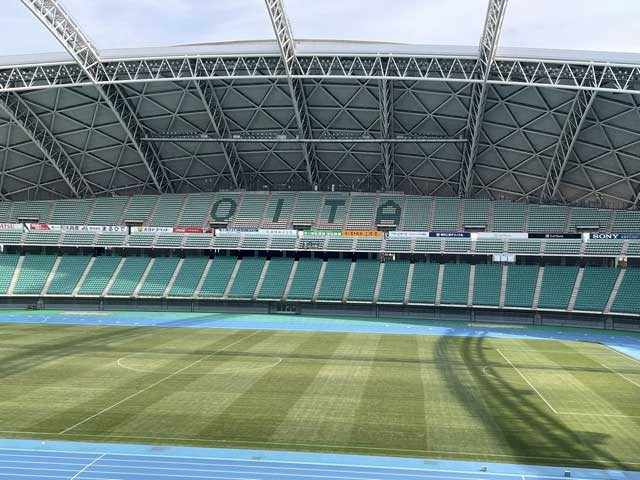
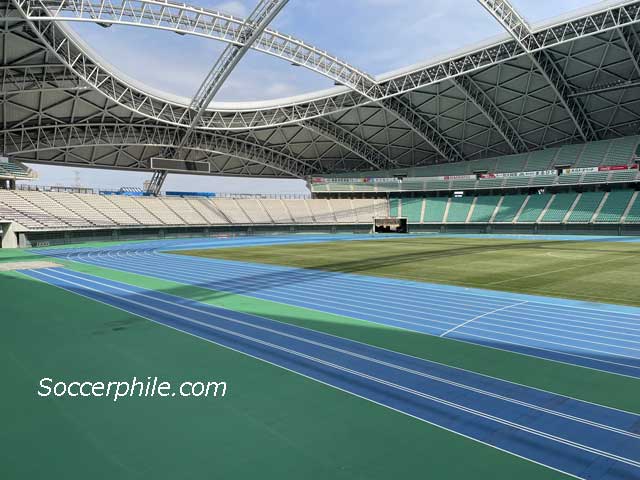
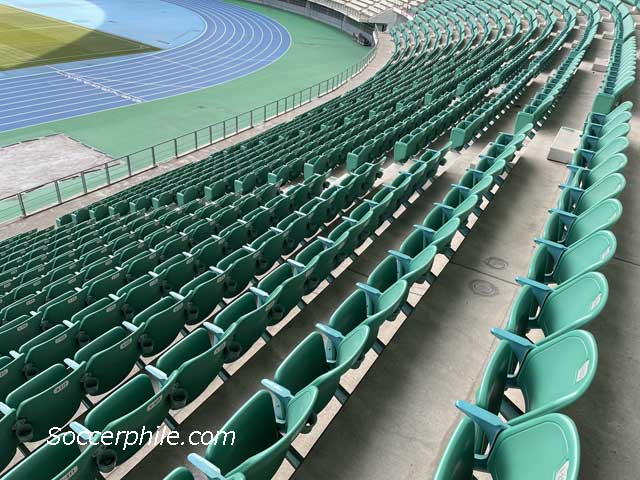
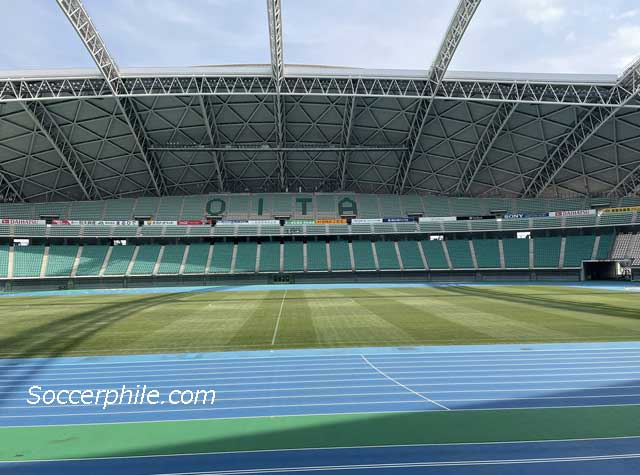
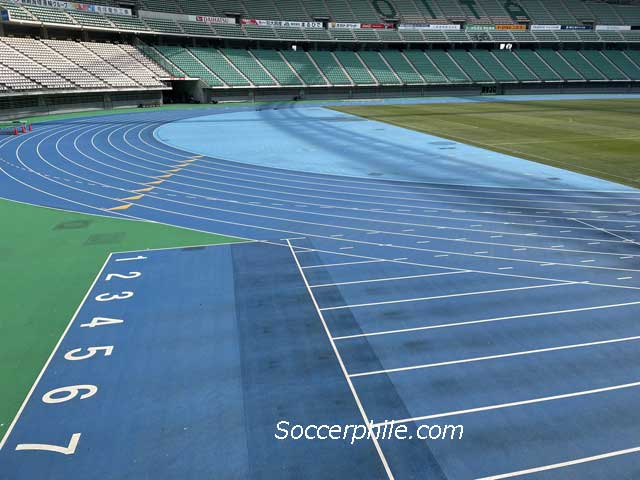
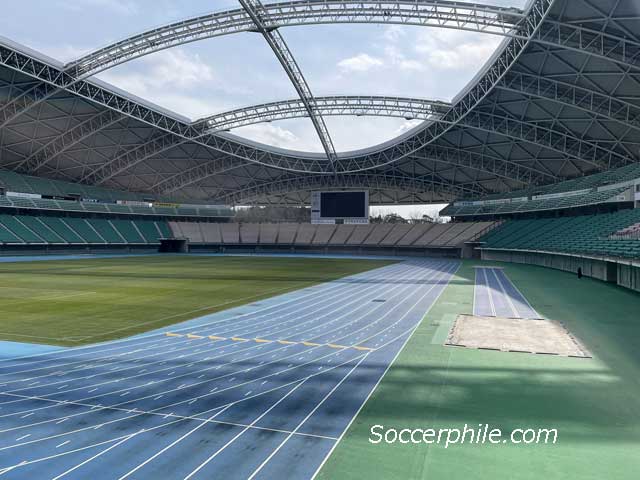
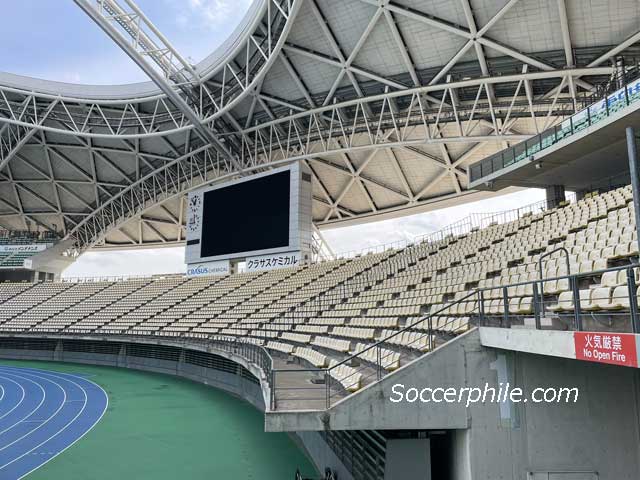
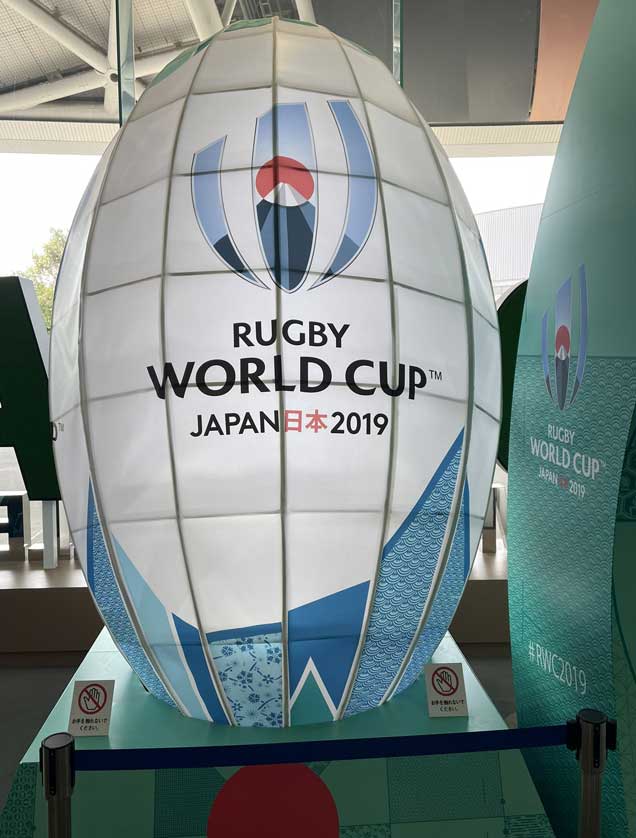
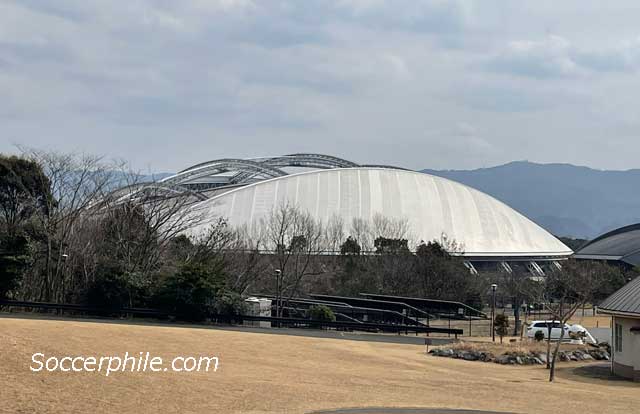
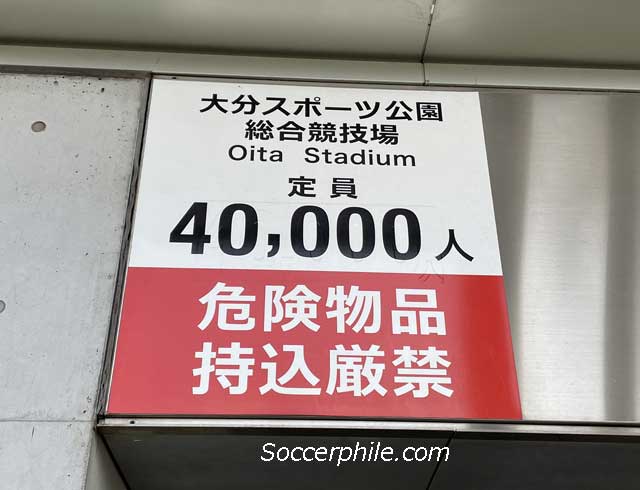
Oita Stadium (currently under the name of Crasus Dome Oita; クラサスドーム大分) in Oita, Kyushu, Japan, is a 40,000-seater stadium. It is the home of Ōita Trinita, a professional J. League outfit. The venue was built in preparation for the 2002 FIFA World Cup. It also hosted five 2019 Rugby World Cup games, with two of them being quarter-final matches. The capacity of the Dome is reduced to 31,997 on Trinita match days.
Design
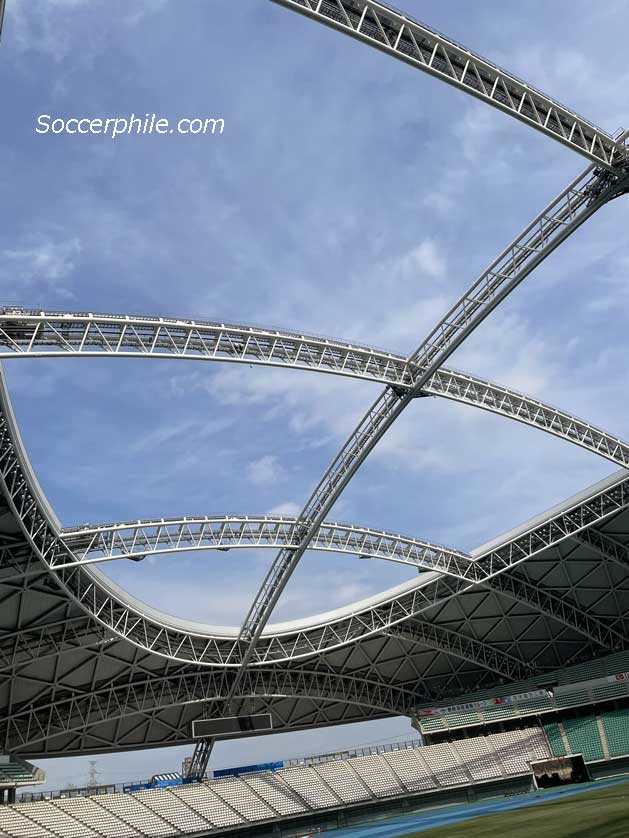
The stadium was built in an area described as satoyama, a cross between arable flat land and mountain foothills. The architect Kisho Kurokawa (1934-2007) was responsible for the design.
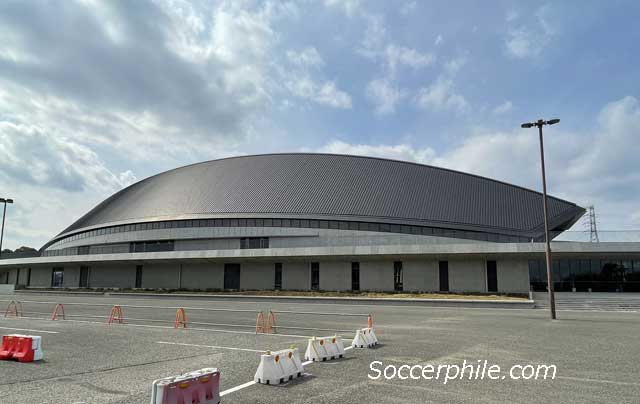
The multi-purpose stadium is part of the Oita Sports Park complex which also includes the modernistic Crasus Martial Arts Sports Center completed in 2019.
Playing Surface
As the pitch is laid out on a semi-basement structure, there have been many occasions where the authorities have struggled to maintain healthy grass.
In the stadium's debut 2001 fixture between Trinita and Kyoto Sanga, the pitch was repeatedly cut up, concerning World Cup fans whether it was worthy of hosting high-level football.
Oita Stadium was about to host Japan's Kirin Cup game against Togo in October 2009, but an unstable turf forced the Japanese FA to make a last-minute switch to play the match at the Miyagi Stadium instead.
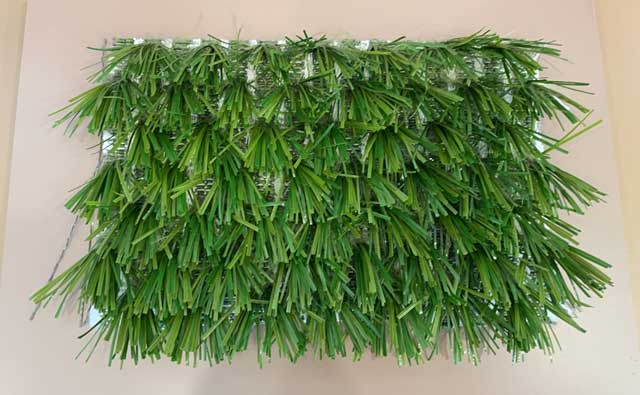
To make the ground optimal for rugby, Oita prefecture installed reinforced natural grass (hybrid turf; 95% natural, 5% artificial) and improved lighting and audio equipment.
Naming
Since 2006, Oita Stadium has had many name changes due to sponsorships. Kyushu Oil Dome was the first of its kind, with the name "Stork" branded on many pieces of equipment around the park to promote Kyushu Oil's most notable product.
The whole 2010s went by Oita Bank Dome to endorse the regional bank.
The current name is Crasus Dome Oita, although English information that is slow to update may note the stadium as Resonac Dome Oita, reflecting the previous sponsorship.
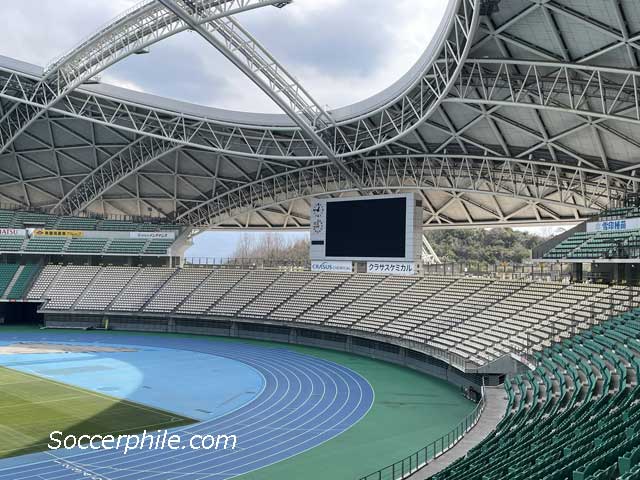
The venue is nicknamed the Big Eye as when looking down from higher ground, Oita Stadium looks like an eye with an aperture.
Before the construction of the Dome, Trinita called the Oita Athletic Stadium their home ground, located 30 minutes away from Oita Station on foot.
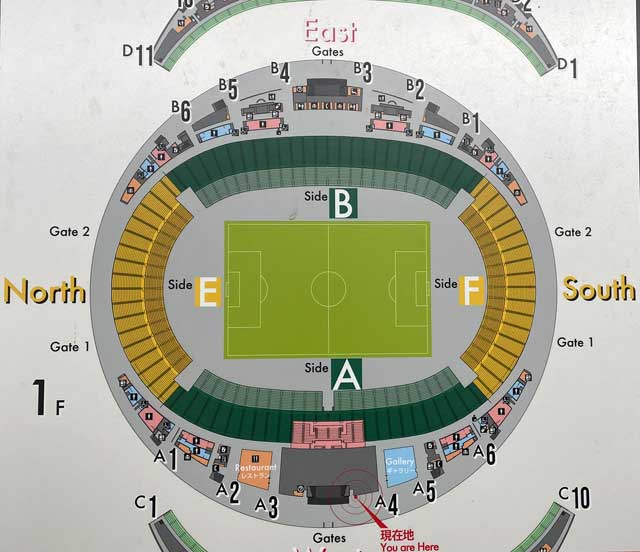
As is the case with most J. League stadiums, the majority of seats at the Dome are non-reserved, called jiyuseki in Japanese. The most expensive ticket, at the Main SS, sets you back approximately 43 US dollars.
Mascot
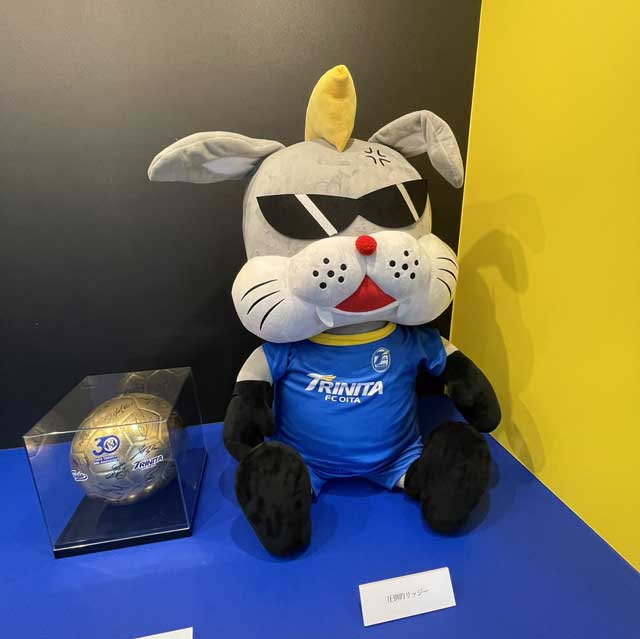
The mascot character of the club is Neetan, introduced in 2008. The mascot is a turtle (or kame in Japanese) as a motif for stable progression. At first, there was scepticism since it lacked aggression for a football-related character but quickly gained popularity for its quirkiness. Rumours surfaced Trinita's defence became better in Neetan's first season after conceding only 24 goals, earning the nickname of kamenaccio ever since. Before Neetan was Ridgee, a rabbit in sunglasses. Neetan calls him Ridgee senpai (リッジー先輩).
Club History
The origins of Trinita go back as far as 1994 but the club only became a professional outfit in 1999. Established as Oita Football Club Co. Ltd., their first J. League season started in the second tier. Trinita made light work of J2, finishing third in the first and second campaigns, but missed out on promotion by a point on both occasions. In the fourth season, Oita blitzed through opposition and won the championship at a canter. Manager Shinji Kobayashi scouted a gem from Gamba Osaka in the shape of Andradinha, a powerful striker who shined for Trinita.
In Trinita's first J1 campaign, goals were hard to come by, with Andradinha struggling. The future Korona Kielce legend left for Consadole Sapporo midway through the season, returning to play J2 football. Their relegation battle went down to the wire, facing fellow J1 minnows Vegalta Sendai on the final day. The stakes couldn't be high enough, as whoever emerged as losers would guarantee demotion. The game ended in a 1-1 draw, condemning the Tohoku outfit to J2.
In 2005, the Kyushu club appointed Brazilian coach Péricles Chamusca, a serial journeyman who had managed 17 teams before he took over a Japanese team for the first time. The four-year reign of Chamusca added Oita an exuberant Brazilian feeling. Trinita had the likes of Edmilson Alves, who had three separate spells at the club, holding midfielder Roberto and, of course, Ueslei, who had given J. League defenders nightmares whilst playing for Nagoya Grampus and Sanfrecce Hiroshima before joining Trinita. Ueslei along with Daiki Takamatsu, got the goals in the 2008 J.League Yamazaki Nabisco Cup Final versus Shimizu S-Pulse at the old National Stadium to secure Oita's first major cup. It was the first time a team from Kyushu had ever won the League Cup.
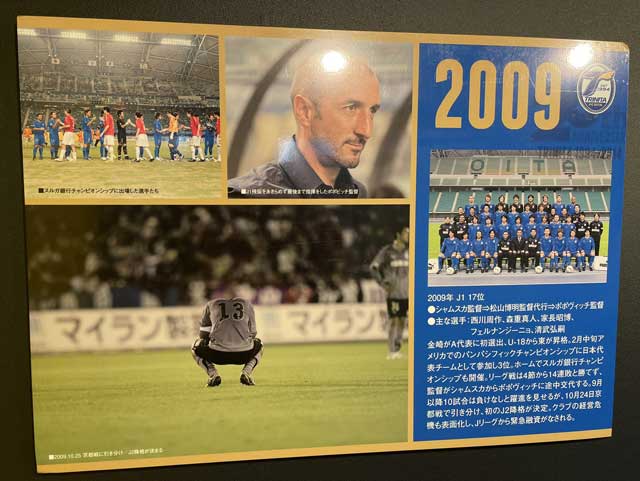
2009 started woefully for Trinita, losing their tenth league game in a row in May against Sanfrecce. Excluding the days when J. League games could have gone to extra time, a rule scrapped in 2003, this defeat broke the longest losing streak record set by Yokohama FC in 2007. The Oita hierarchy could not tolerate Chamusca's incompetence and replaced him with Ranko Popovic, a Serbian coach who would go on to have a long J. League managerial career. Trinita's form improved under the Serbian's stewardship, but it was too little, too late and they suffered relegation, finishing second bottom.
Financial Woes
2009 was also the year the club's financial woes had become serious. Alongside the release of Popovic, key players such as Mu Kanazaki, Shusaku Nishikawa, and Masato Morishige were all let go before the 2010 season. With Trinita needing a coach signed on the cheap, they sought Hwangbo Kwan, a player during the Oita Trinity days and was ex-manager for a short stint in 2005. To strengthen the midfield, Trinita signed a young Kim Bo-Kyung on loan.
Kim would later feature for Cardiff City in the Premier League and Wigan Athletic in the Championship. However, as it panned out, the wages of coach Kwan were exorbitant relative to Trinita's budget, and the club also had to pay out large sums of money to end Fernandinho's contract prematurely.
An emergency loan from the prefecture bailed the club out, but the saga had made Oita residents extremely displeased. In June, news came that Kim was selected for the final 23-man squad for Korea Republic for South Africa 2010. It was the first time a Trinita player represented his county at a World Cup stage.
2012 Season
Trinita fans would have happy memories of the 2012 campaign. In coach Kazuaki Tasaka's second season in charge, Trinita assembled a solid squad. After Oita defeated their bogey team, Giravanz Kitakyushu, in a derby on matchday 21, they briefly topped the table on matchday 23. However, they lost some momentum at the end of the season and finished sixth, squeezing into the playoffs. Oita were away to Kyoto Sanga at the Kyoto Nishikyogoku Athletic Stadium, needing a win as they finished below the Kansai team in the final standings. The day belonged to Yasuhito Morishima, scoring four goals in a 4-0 annihilation. The final against JEF United was a much closer affair, with the scores tied at 0-0 until the 86th minute when Takenori Hayashi bagged the winner, culminating the season with an unexpected promotion.
2013 Season
Back in J1, 2013 was a nightmarish campaign. Failing to record victory until matchday 12 versus Albirex Niigata, Oita were rooted to the bottom from matchday eight until the end. Trinita mustered only two wins, the least the league has ever seen, bettering, or in this case, worsening Shonan Bellmare's record of three victories. Oita failed to win a single match at home throughout the campaign.
In the 2015 J2 campaign, a season where Jay Bothroyd finished as league top scorer for Jubilo Iwata, Trinita suffered relegation. As they finished second bottom above only Tochigi SC, Trinita contested a two-legged playoff against Machida Zelvia, yet to be sponsored by the advertising conglomerate CyberAgent. The first leg at the Machida Gion Stadium turned ugly for Trinita, ending the match with nine men. Zelvia emerged victorious in both legs, Trinita having to endure an ignominious relegation to the third tier.
As one of the biggest teams to contest J3 in its history, Trinita were expected to bounce back to J2 straight away in 2016. It was not plain sailing for Oita, however, losing to rock bottom Y.S.C.C. Yokohama and were third in the standings at the halfway stage. Tochigi, at that point, were dominant and looked as though they would win the league comfortably. Trinita clawed back superbly by winning the final five matches of the season and claimed the division title.
That J3 victory was led by Tomohiro Katanosaka, the current Trinita coach. In the 2018 J2 season, Oita had an opportunity to achieve promotion to the top flight but were fifth after 21 games. Katanosaka switched to a 3-5-2 formation, giving chances to Kazushi Mitsuhira and Tomoki Iwata, both of whom used sparingly up until then. Iwata now plays for Birmingham City and scored a stunning long-range goal against Newcastle United in the FA Cup in 2025. The season finished level on points with Yokohama FC and Zelvia, but Oita clinched promotion automatically by superior goal difference. Katanosaka was voted J2 manager of the season.
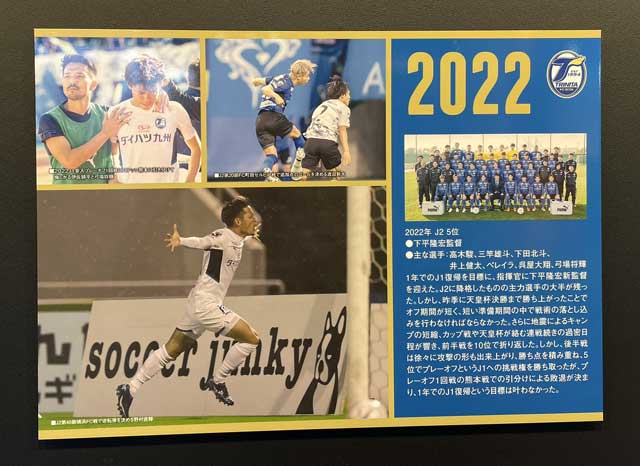
J1 in 2021 was sure to be competitive, as there were four relegation slots following adjustments from the previous Covid-hit campaign. Trinita's morale was low throughout the season as they never occupied a place outside the relegation zone and confirmed demotion with two games to spare. Joy would be found in the Emperor's Cup, especially when they defeated Kawasaki Frontale on penalties in the semi-final, a team that had dominated the league. Their next opponents were Urawa Reds, playing at the new National Stadium on a cold December day. There was elation in the Trinita end when Matheus Pereira equalised in the last minute of normal time. But Urawa centre-back Tomoaki Makino, a man so often reliable in the big moments, deflected a Kai Shibato volley with his head to secure glory for the Reds.
Since relegation from J1 in 2021, Oita have failed to return to the top flight.
Players
Daiki Takamatsu is Trinita's greatest player and current Oita city council member. A player with magnificent aerial ability, Takamatsu was first choice ahead of wunderkind Sota Hirayama for the 2004 Athens Olympics. He was on the scoresheet for a group-stage match versus Italy, but Japan crashed out early as Paraguay and Gli Azzurrini went through. Takamatsu was chosen club captain in 2008 and won MVP for that year's J. League Cup tournament, where Oita were crowned champions. He had a short loan spell at FC Tokyo in 2011, but injuries hindered his performance.

Although considered a bigger legend at Sanfrecce Hiroshima and Urawa Reds, goalkeeper Shusaku Nishikawa made significant contributions to his home town club. He became first choice in 2005 as a teenager, and though at times he had to contend with injuries, it was clear he was too good for J2 when Trinita were relegated in 2009 and transferred to Sanfrecce. He has won two J1 titles in Hiroshima and was twice an ACL champion with Urawa. Earned 31 caps for Japan.
Centre-back Yoshinori Suzuki has experienced the good and the bad with Trinita from 2015 to 2020. After graduating from Miyazaki Sangyo-keiei University, Suzuki was culpable in Trinita's demotion to J3 when red-carded in the first leg of the playoffs. Capable of playing as an old-school sweeper, he earned the trust of his managers as an ever-reliable defender. Currently on the books of Kyoto Sanga.
2002 World Cup
The arena hosted three World Cup 2002 matches, two being group-stage games. The other was for a Round of 16 clash between Sweden and Senegal. Sweden topped Group F, which was dubbed the "Group of Death" containing Marcelo Bielsa's Argentina and England, managed by the late Sven-Göran Eriksson.
Senegal were an unknown quantity, qualifying for the first time, but caused a major shock on the opening day by defeating reigning champions France in Seoul.
Sweden started the brighter, with Henrik Larsson getting his third tournament goal with a header. But Senegal entered the half-time break level after Henri Camara's effort. The underdogs' fairy-tale run would continue when Camara scored his second with a scuffed shot and put a dagger through Swedish hearts with a golden goal. Senegal were subsequently eliminated in the following round in Osaka by Turkey.

Stadium Facts & Memorial Gallery
Kisho Kurokawa also designed Toyota Stadium in his home prefecture of Aichi as well as the Saint Petersburg Stadium (Krestovsky Stadium aka Gazprom Arena) in Russia, used for the 2018 World Cup.
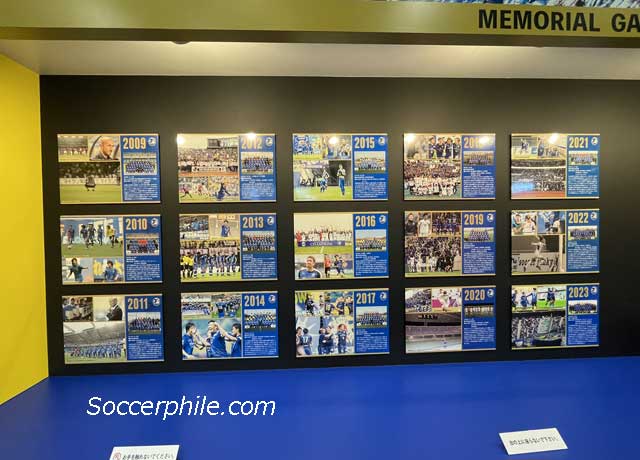
The interesting, free-to-enter Memorial Gallery has video displays on the 2019 Rugby World Cup as well as memorabilia from the 2002 World Cup (signed match balls and shirts, photographs etc) as well as information on Oita Trinita and the stadium itself.
Access - Getting There
The nearest train station from the ground is Takio, a stop from Oita on the JR Hōhi Main Line. It takes 55 minutes from Takio to the stadium on foot.
From Oita Station, head to the North Exit and find either bus terminal 3 or 6. From those terminals, hop on the buses bound for Park Place Oita. The only difference between the two is that they take separate routes, with services leaving terminal 6 taking five minutes longer. The most convenient bus stop will be Oita Sports Park East. The distance between the Park East bus stop and the arena is about 700 meters.
On match days, buses depart from Kaname-machi Expressway Bus Stop at Oita Station approximately every 15 minutes from 3 hours before kick off until 15 minutes before kick off.
Address: 1351 Yokoo, Oita, 870-0126

Nearby Hotels
The HOTEL MYSTAYS Oita is a 3-star hotel close to JR Oita Station. Other nearby accommodation options include the 4-star Rembrandt Hotel Oita and the 3-star Daiwa Roynet Hotel Oita.
See a listing of hotels in Oita.

Oita - Things To See & Do
Beppu Onsen - Beppu is one of Japan's most famous hot spring resorts, boasting a variety of baths, from mud baths to sand baths. The "Beppu Hells" (Jigoku Meguri), a collection of uniquely colored and styled hot springs, are a must-see along with Takegawara Onsen, built in 1879 and known for its hot sand baths.
Usa Jingu Shrine - this important Shinto shrine, dedicated to Futsunushi no Mikoto (the god of war and protection), is a historic and spiritual landmark in Oita. The shrine is one of the oldest and most significant in Japan and is part of the larger Usa Shrine complex.
Yufuin is another popular hot spring town located near the picturesque
Mount Yufu. The town is known for its relaxing rural atmosphere, scenic streets, and several trendy art galleries, cafes, and boutiques. It also offers incredible views of the surrounding mountains.
Takasakiyama Monkey Park located near Beppu, is home to over 1,000 wild Japanese macaques. Visitors can observe the monkeys in their natural habitat on a guided tour, and there are scenic walking trails nearby that provide a great view of Beppu Bay.
Kijima Kogen Park is a large amusement park, southwest of Beppu, offering thrilling rides, a beautiful landscape, and fun for all age groups. The park also features a picturesque view of Mount Tsurumi, which can be accessed by cable car for a panoramic view.
Joji Imamiya
J.League Stadiums
Stadium Video
©Soccerphile.com
Buy tickets for soccer matches around the world