
Toyota Stadium, Toyota, Aichi Prefecture

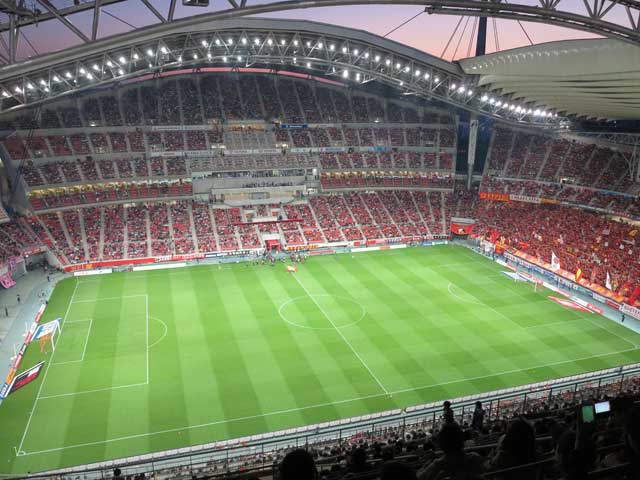
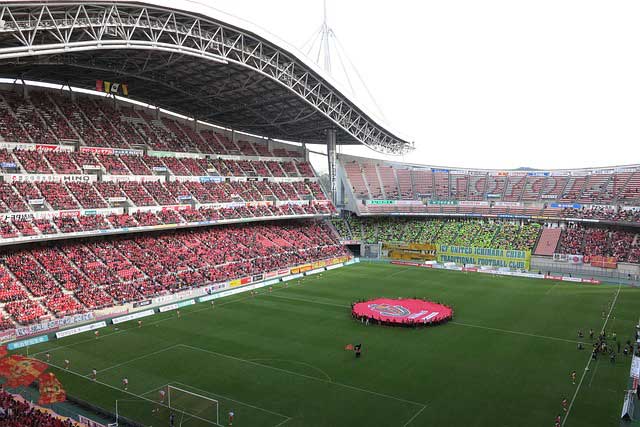
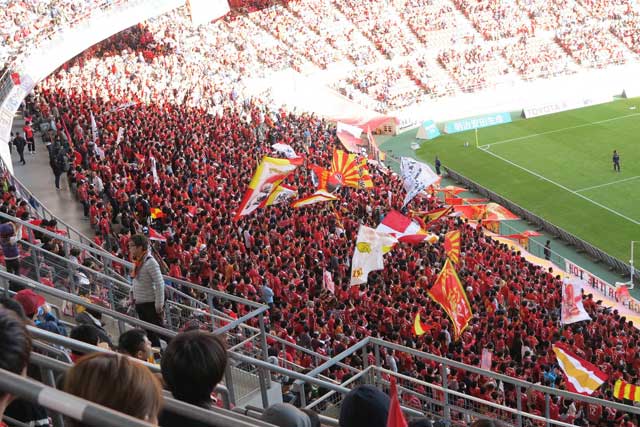
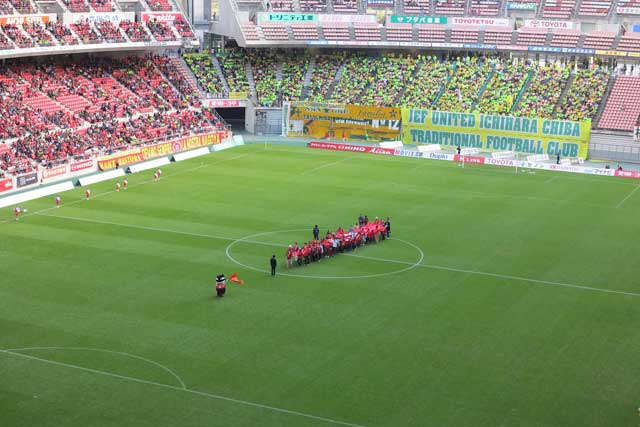
Toyota Stadium (豊田スタジアム) in Toyota City, Aichi Prefecture, central Japan is a home ground of J.League club Nagoya Grampus along with Mizuho Stadium in nearby Nagoya. Toyota Verblitz, a rugby union team in the Japan Rugby League One, also uses the stadium. Indeed, it is Japan's largest rugby-specific stadium.
History & Capacity
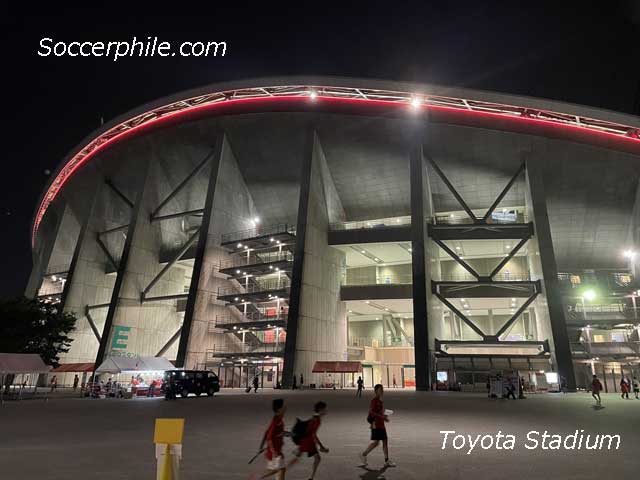
The stadium was built as a venue for the 2002 World Cup but was not used for that tournament. It was designed by Kisho Kurokawa Architect and Associates who also designed Oita Stadium in Kyushu, southern Japan and Zenit Arena in St Petersburg, Russia. The latter is an enlarged and modified version of the same architect's Toyota Stadium.
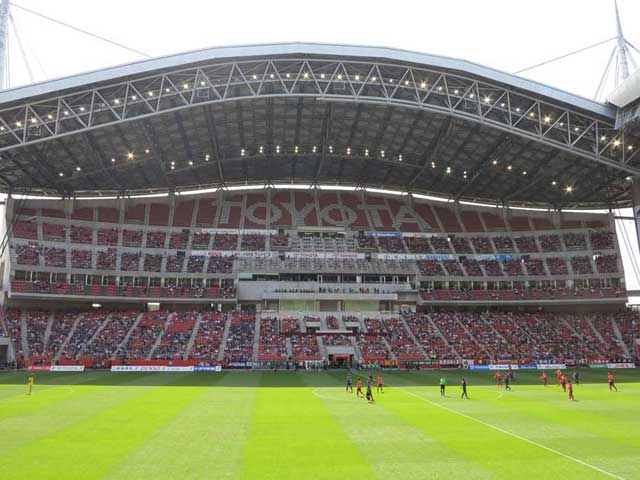
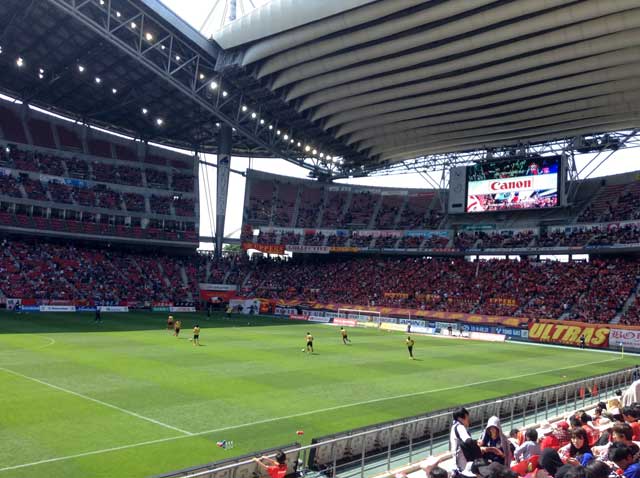
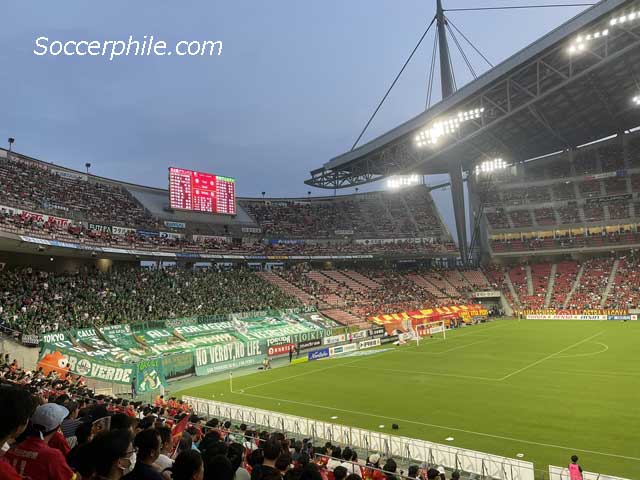
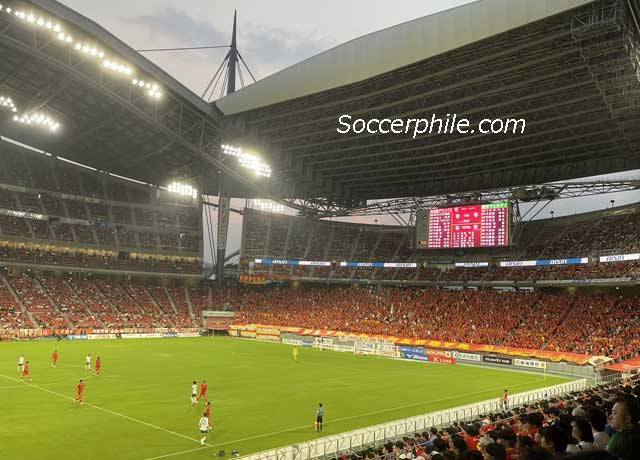
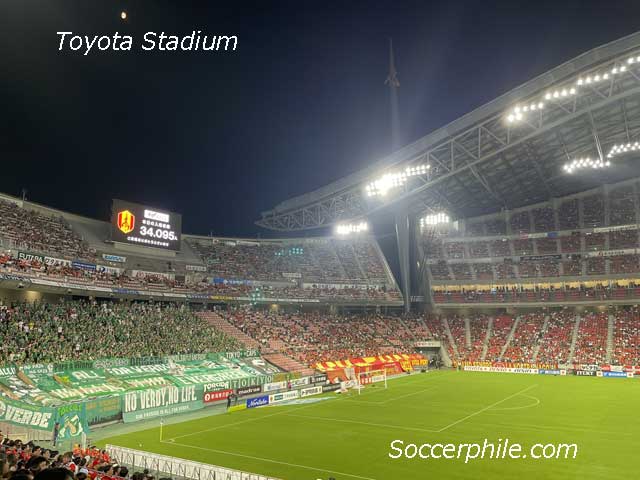
With a retractable roof designed to resemble the traditional curves of a temple roof, large video screen and excellent views for the spectators, Toyota Stadium is one of the most impressive in Japan. It has a maximum capacity for 45,000 spectators.
The nearby Toyota Bridge spans the Yahagigawa River and was also designed by Kisho Kurokawa.
As well as J-League games, the ground has also hosted matches in the FIFA Club World Cup, international fixtures and 2019 Rugby World Cup games.

Nagoya Grampus
The club was founded in 1939 as the company team of the local Toyota Motor Corporation, originally known as Toyota Motors Soccer Club. In 1993, the team was renamed Nagoya Grampus Eight (8 is a lucky number in Japan). The name "Grampus" refers to a species of orca, reflecting the maritime heritage of Nagoya, a major port city. The animal is the team's mascot and a symbol of the city as a whole. The club have been called simply 'Nagoya Grampus' since 2008.
Nagoya Grampus has experienced some domestic and international success over the years. They have won several domestic titles, including the J.League in 2010 and the Emperor's Cup (Japan's oldest football competition) twice in 1995 and 1999. They have also participated in the AFC Champions League.
Some famous names associated with the club include Arsène Wenger who managed the team in 1996 before moving to Arsenal. They won the Emperor's Cup and finished second in the J.League under Wenger. The club captain and J.League MVP under Wenger, Dragan Stojković, went on to manage the club and secure their first title with a solid team of Japanese internationals. They included Marcus Tulio Tanaka, goalkeeper Seigo Narazaki, winger Keiji Tamada and Australian striker Josh Kennedy.
Gary Lineker also spent an injury-plagued time with the club in the first season of the J.League.
Access - Getting There
The stadium is located in Toyota city and can be reached in about 50 minutes from Nagoya on the Tsurumai subway/Meitetsu Toyota Line. To get to the Tsurumai Line from Nagoya Station take the Higashiyama Line to Fushimi.
If the train does not run through to Meitetsu Toyotashi Station change at Akaike Station the last stop on the Tsurumai Line before it becomes the Meitetsu Toyota Line.
There are also buses from Nagoya Station to Toyota City. From Toyota Station it is a 15 minute walk to the ground or there are shuttle buses on match days.

Nearby Hotels
You can stay in Toyota itself (see a listing of hotels in Toyota) but Nagoya Station (Meieki) and the entertainment area of Sakae offer a much wider choice of places to stay.
Choose from the Mitsui Garden Hotel Nagoya Premier, Hotel Unizo Nagoya Ekimae or the more budget Hotel Mystays Nagoya Nishiki.
Attractions in and around Toyota include the Toyota Municipal Museum of Art and nearby Sanage Onsen, a hot-spring resort, Korankei in Asuke famous for its autumn leaves and Matsudaira-go, an area of historic interest and natural beauty.

Nearby Nagoya has more to see and do. Options include wining, dining and shopping around Nagoya Station, Osu Kannon or Sakae as well as visiting the grounds of Nagoya Castle.


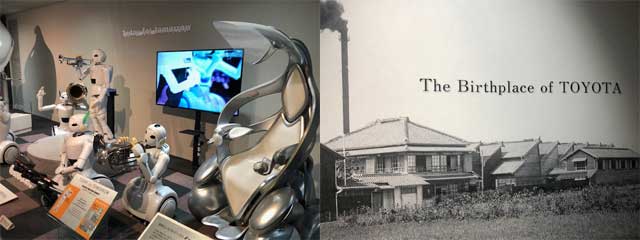
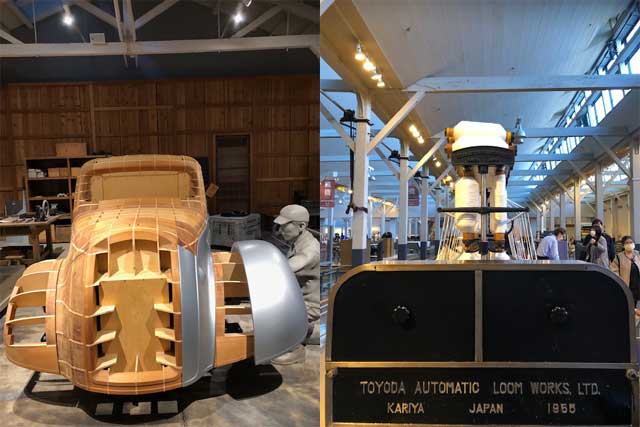
The city's museums include the delightful Tokugawa Art Museum and attached garden, Toyota Automobile Museum and the standout Toyota Commemorative Museum of Industry and Technology not far from Nagoya Station.
Atsuta Shrine, Heiwa Koen and Higashiyama Zoo & Botanical Gardens are areas of glorious green in the generally unremitting concrete sprawl.

J.League Stadiums
Gallery



©Soccerphile.com
Buy tickets for soccer matches around the world